ITANAGAR, 9 Sep: Vice President of India C.P Radhakrishnan said that Arunachal Pradesh has immense strategic importance and plays a vital role in safeguarding the nation's borders, noting that the security of the rest of the country is closely linked to the protection of the borders by the people of the state.
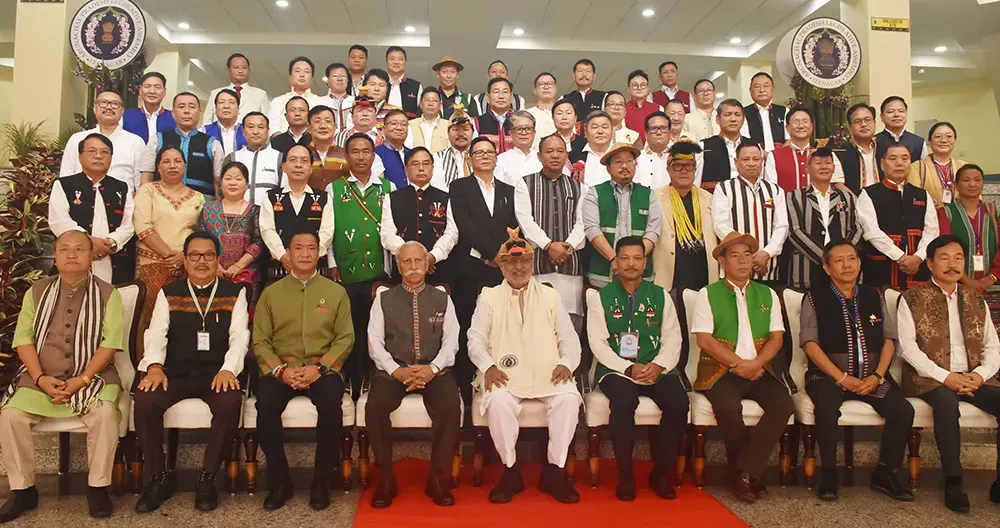
Addressing the special session of the Arunachal Pradesh Legislative Assembly here on Wednesday, the Vice President urged legislators to place public service above electoral success, saying that elections may be won through votes, but the respect and trust of people can only be earned through dedicated service.
Recalling India's rich democratic heritage, Radhakrishnan described India as the Mother of Democracy and urged legislators to live up to this legacy.
Emphasising the importance of dialogue, debate and discussion in legislative functioning, he said that healthy debate strengthens democracy and constructive cooperation advances the state and the nation.
He congratulated the government and people of Arunachal Pradesh for the state's development achievements, including its emergence as the country's leading producer of kiwi, expansion of road infrastructure, issuance of over one lakh Soil Health Cards and significant progress in education and per capita income. The Vice President appreciated initiatives such as making the Legislative Secretariat plastic-free and establishing the Assembly Library and Museum.
Stating that there can be no Viksit Bharat without a Viksit Arunachal Pradesh, he said that development must be inclusive and no tribal or marginalised community should be left behind.
Referring to Arunachal's significant hydropower potential, he said, its appropriate utilisation could generate greater revenue and accelerate the state's development.
Earlier on his arrival at the Assembly premises, the Vice President paid floral tributes to the statues of Mahatma Gandhi and Babasaheb Dr. B.R Ambedkar.
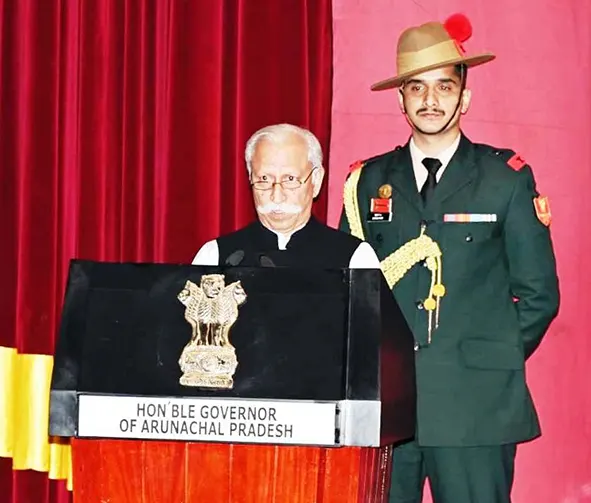
Governor K.T Parnaik, Chief Minister Pema Khandu, and Speaker Tesam Pongte also addressed the members, highlighting the state's developmental progress, democratic values, and collective commitment towards the growth and prosperity of Arunachal Pradesh.
In his address, the Governor said that Arunachal Pradesh is committed to building a prosperous, inclusive, self-reliant and secure future where development goes hand in hand with environmental conservation and cultural preservation.
Highlighting the state's progress, the Governor said that the state has witnessed unprecedented transformation over the past decade. Significant investments in connectivity, healthcare, education, tourism, digital infrastructure, border area development, skill development and green energy have accelerated the state's socio-economic growth, he said.
"The operationalization of Donyi Polo Airport, expansion of national highways, strategic border roads, railway links and digital infrastructure have improved accessibility, strengthened economic opportunities and integrated Arunachal Pradesh more closely with the national growth trajectory," he said.
He also said that the state government has brought governance closer to the people through initiatives such as Sarkar Aapke Dwar, Seva Aapke Dwar and Cabinet Aapke Dwar. These programmes have improved service delivery and ensured that the benefits of development reach even the remotest villages, Parnaik said.
He also highlighted the state government's focus on harnessing the strengths of youth power, green power and security as the key pillars of Arunachal Pradesh's development journey. The Governor said that sustained efforts in education, livelihood promotion, self-help groups, financial inclusion, entrepreneurship and skill development have empowered women to play a more active role in the state's socio-economic advancement. Their growing participation is enhancing family and community well-being and also contributing significantly to economic growth and social progress, he added.
Khandu said the state has witnessed a major transformation in its economy and connectivity over the past decade, with its GSDP rising by nearly 149 per cent and annual road construction increasing six-fold.
Khandu said the state's GSDP increased from around Rs. 20,373 crore in 2016 to more than Rs. 50,651 crore.
The state budget grew by over 238 per cent, while per capita income more than doubled during the period, he said.
The state's own resources have also grown by more than five-and-a-half times, reflecting the strengthening of its economy, Khandu said.
The CM said connectivity has seen unprecedented expansion, with road construction increasing from around 300 km annually to 1,800 km now.
The rural road network has expanded from 4,131 km to nearly 14,000 km, while the national highway network has increased from 1,043 km to 2,538 km, with another 4,060 km under various stages of construction, he said.
"Better roads, tunnels, railways, air connectivity and digital infrastructure are reducing distances and opening new opportunities for our people," Khandu said.
Khandu credited Prime Minister Narendra Modi's leadership and the Centre's sustained attention for the transformation, noting that Modi has visited Arunachal Pradesh several times since 2014 and that regular visits by union ministers have strengthened the Centre's ties with the Northeast.
Khandu said the state has immense potential in hydropower, tourism, agriculture, horticulture and other sectors, which can generate growth and employment.
He stressed that development must remain in harmony with nature, saying forests, rivers and mountains are an inseparable part of the state's identity and way of life.
Emphasising the importance of indigenous culture, he said modernisation should not come at the cost of traditional identity. Guided by 'Vikas, Sewa and Virasat,' the government aims to balance economic progress with social responsibility and preservation of indigenous heritage.
He said 21 products from the state have received GI tags, providing recognition to traditional knowledge, craftsmanship and local products while creating livelihood opportunities.
Khandu also underlined the role of youth in shaping the state's future, saying the government wants to provide them with quality education, skills and opportunities in academics, sports, entrepreneurship, innovation, creative industries and public service.
Welcoming the VP to the Assembly, Khandu said his presence reaffirmed the strong bond between national institutions and the people of the state.
Later, the Vice President visited Nyedar Namlo in Itanagar and offered prayers at the prayer hall and was briefed on the Nyishi indigenous faith, beliefs and prayer systems, the Yerko indigenous Gurukul system, preservation of traditional knowledge and medicinal practices, and efforts to promote the mother tongue.
Addressing a community gathering at Nyedar Namlo, the Vice President described Arunachal Pradesh as a proud embodiment of India's unity in diversity, where ancient traditions and modern aspirations walk together. He said that the people of Arunachal Pradesh stand as proud sentinels of India's territorial integrity.
Highlighting the values of the Donyi-Polo tradition, the Vice President said its emphasis on nature, truth, harmony and community remains deeply relevant to the modern world. He stressed that development must go hand in hand with cultural preservation.
Appreciating the efforts of the Nyishi Nyidung Mung-jwng Rallung, he said its work in documentation, research, traditional festivals, cultural activities and preservation of customary laws and social values is making an important contribution to the community's cultural future.
He also highlighted the Yerko Gurukul system, saying it offers an important model of combining contemporary education with indigenous knowledge, enabling children to embrace modern opportunities while remaining connected to their roots.
"Preservation of indigenous culture is not about resisting change. It is about ensuring that change does not come at the cost of identity," he said.
Calling upon the youth to embrace modern science, technology and global skills while remaining connected to their mother tongue and traditions, the Vice President said India must be modern in its aspirations but deeply rooted in its civilisational and cultural values.
He extended his best wishes to the Nyedar Namlo movement and expressed hope that the sacred place would continue to inspire peace, harmony, respect for nature, social unity and a strong sense of community.
The governor, the chief minister and the deputy chief minister Chowna Mein were among those present during the programmes.
Later, the Vice President planted a sapling of Indian Sandalwood in the front lawn of Lok Bhavan, marking the conclusion of his maiden visit to the state. (Agencies)