
[ Bini Yurom ]
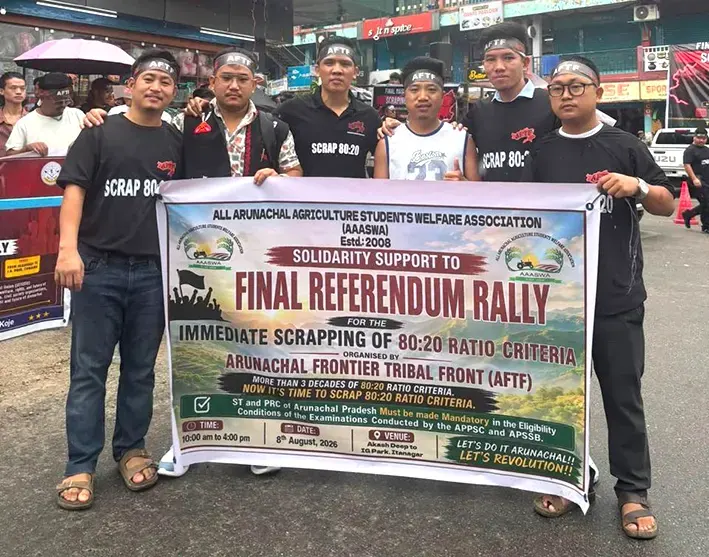
ITANAGAR, 3 Jul: The Arunachal Frontier Tribal Front (AFTF) has sought scrapping of the 80:20 reservation ratio, and demanded 100 per cent reservation for the tribal communities of Arunachal Pradesh.
Addressing a press conference at the Arunachal Press Club here on Friday, AFTF president Tadak Nalo announced that the AFTF will organise a peaceful march on 11 July from Akashdeep to IG Park to press for the implementation of the reservation ratio. He appealed to all student organisations, community-based organisations, political parties, civil society groups, and the people of Arunachal Pradesh to join the march.
Nalo claimed that around 62,000 candidates had registered for a recent special recruitment examination conducted by the APSSB, out of which approximately 53,000 appeared. He further alleged that around 35,000 of the candidates were non-APST applicants, saying the figures highlight the need for stronger reservation policy for tribals.
Nalo said the organisation had submitted a memorandum to the government on 17 June, seeking an appointment to discuss the issue, but has not received any response. He alleged that the government is taking the matter lightly despite its importance, and urged the authorities to address the issue without delay.
He further claimed that, while the present 80:20 reservation ratio exists only on paper, it is not being properly implemented in some recruitment. According to him, “certain recruitments are allegedly being conducted on a 50:50 basis, defeating the very purpose of the reservation policy.”
Explaining the significance of the policy, Nalo said the 80:20 ratio reserves 80 per cent of government posts for Arunachal Pradesh Scheduled Tribe (APST) candidates, while the remaining 20 per cent is open to other eligible candidates. He alleged that this provision is not being followed in some departments.
Referring to the background of the policy, Nalo said that in 1990, the literacy rate in Arunachal was comparatively low and many candidates from outside the state appeared in recruitment examinations, making the policy appropriate at that time. However, he said, literacy in the state has increased considerably over the years, while unemployment has also risen.
He warned that failure to implement the reservation policy properly could create further problems in the future, and appealed to the state government to look into it seriously.