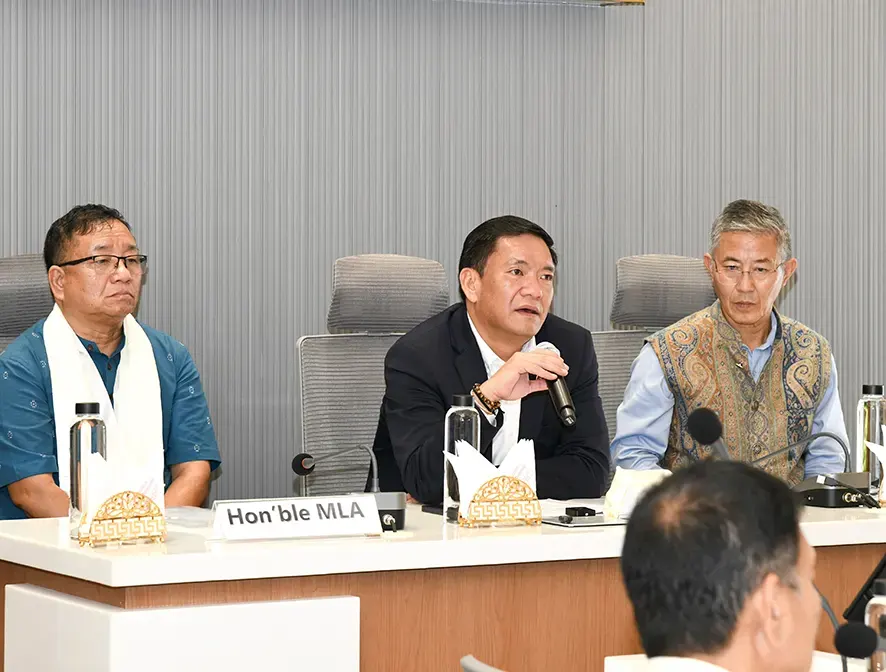
ITANAGAR, 23 Sep: Chief Minister Pema Khandu described the creation of the Arunachal Pradesh Staff Selection Board (APSSB) as one of the most significant and far-reaching reforms undertaken by his government in the area of public recruitment, stating that the recruits selected through the Board are brilliant, digitally equipped and part of a new generation.
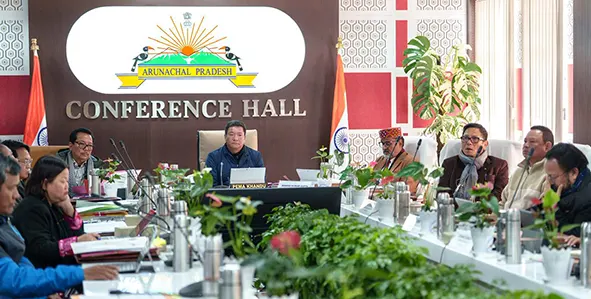
Speaking after inaugurating a newly added conference hall at the office premises of the APSSB on Wednesday, Khandu said that the establishment Board was conceived to create a transparent and equitable recruitment mechanism for Group C and D posts, replacing the earlier system under which departments themselves undertook recruitment to such positions.
"The objective behind creating a dedicated recruitment institution was to ensure an equal playing field for all candidates, irrespective of their social or political background," he said.
The chief minister said, while individual departments had their own requirements and processes, a decentralized recruitment system could leave room for inconsistencies and concerns regarding fairness and external influence.
He said the reform was conceived after he assumed office in 2016 and was deliberately institutionalized through legislation rather than merely through an executive or Cabinet order.
The APSSB was established under the Arunachal Pradesh Staff Selection Board Act, 2018 (Act No. 14 of 2018). It is an ISO-certified organization.
"I still believe that the reform we brought into the recruitment system by creating the APSSB is historic in itself. Perhaps we do not realize its significance fully today, but in the years to come we will understand it much better," he said.
The chief minister said that since beginning its examinations in 2019, APSSB has conducted 38 examinations and recommended 5,836 candidates for appointment against various vacancies, with lakhs of candidates having participated in the recruitment process.
The 39th examination, the Common Higher Secondary Level Examination (CHSLE), 2026, is currently in progress.
Recalling the recruitment system that existed before APSSB, Khandu said recruitment to Group B and C posts was largely undertaken departmentally. Referring to his own experience as a minister, he recalled how he had advocated routing recruitment for certain posts through the Public Service Commission to ensure greater transparency and merit.
The chief minister said the introduction of APSSB has had a wider impact beyond recruitment itself, as young people now understand that securing a government job requires preparation, study and hard work. He said the merit-based recruitment system has helped create a healthy competitive environment among the youth, while also contributing to improvement in the educational orientation and preparedness of aspiring candidates.
Khandu also referred to the government's efforts to strengthen pathways for Arunachali youth aspiring for higher-level competitive examinations.
He said the government introduced a common preparation framework, including the CSET system, after consultations with experienced civil servants and an assessment of why Arunachali candidates were finding it difficult to transition from state-level to UPSC examinations.
He said the intervention has subsequently helped more Arunachali youth qualify for All India Services and Group A services through UPSC.
Khandu said APSSB is also increasingly becoming a stepping stone for young government employees aspiring to higher services. He noted that some candidates who enter government service through the Board subsequently compete for APPSC and other higher-level examinations.
He appreciated the Board's initiative to strengthen the career progression of its recruits and said the government has accepted its proposal to increase the weightage and duration of relevant experience, helping avoid repeated disruption in the recruitment cycle.
Khandu also emphasized the need to strengthen the Board's infrastructure and manpower capacity in view of the increasing volume of recruitment. He said several new posts are being created across departments and APSSB would consequently have to handle a growing recruitment workload.
He directed the chief secretary to examine the requirement for a new and dedicated infrastructure for APSSB, including the possibility of shifting the existing establishment if necessary.
He also stressed the need for adequate technical manpower and staff support for the Board, noting that APSSB is expected to undertake a substantial share of government recruitment in terms of the number of posts involved.
"There can be no compromise when it comes to the Public Service Commission and the Staff Selection Board. Strengthening these two institutions is the responsibility of the government," he added. (CM's PR Cell)