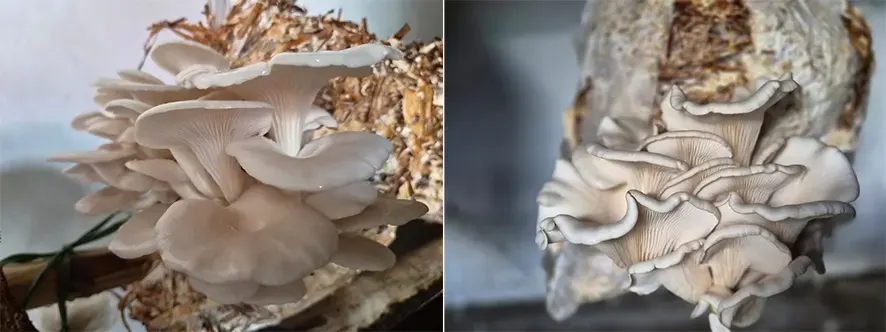
HAYULIANG, 24 Aug: A comparative farm-level trial conducted by the Anjaw KVK has successfully demonstrated the cultivation of oyster mushroom using four different agricultural substrates: banana straw, paddy straw, millet straw, and large cardamom residue.
The trial was undertaken to assess the suitability of locally available agricultural biomass for oyster mushroom production under the agro-climatic conditions of Anjaw district. The pinhead initiation was observed across all four substrates within 15 to 20 days after spawning, followed by successful mycelium growth, confirming their suitability as potential substrates for oyster mushroom cultivation.
The comparative performance of the substrates demonstrated that millet, large cardamom and paddy straw performed well while banana straw also showed encouraging performance with comparative yield potential under the trial conditions.
The encouraging performance of millet straw and large cardamom residue, in particular, highlights the potential of utilising locally available crop residues that may otherwise remain underutilised. The findings demonstrate that oyster mushroom cultivation need not depend exclusively on conventional substrates and farmers can select suitable substrate materials based on their local availability, accessibility and production potential.
The successful comparative validation of all four substrates represents an important farm-level technology intervention by the Anjaw KVK, demonstrating that oyster mushroom cultivation can be adapted to locally available biomass resources. The encouraging performance, particularly of millet straw and large cardamom residue, provides a strong basis for further farmer training, demonstrations, and wider dissemination of technology.
"The intervention has considerable potential to promote waste-to-wealth conversion, livelihood diversification, nutritional security, and sustainable utilisation of agricultural residues in the hill farming systems of Arunachal Pradesh and other suitable regions of the Northeastern hill region," the KVK stated in a release.
The technology concept was conceived by KVK Head Dr Debasis Sasmal, and the validation was undertaken by agricultural economics expert Dr S Peter Singh.
The KVK is planning horizontal expansion of the technology among farmers, farmwomen and rural youths, with the objective of promoting agriculture residue utilisation as a productive source of income and employment generation.