
National Handloom Day
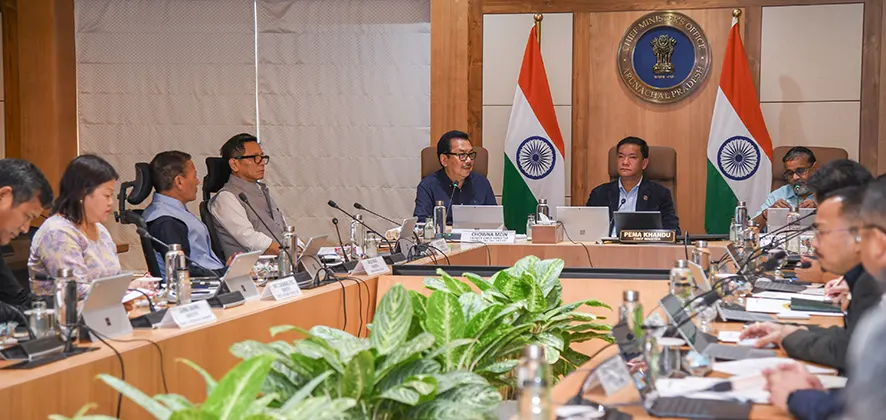
ITANAGAR, 7 Aug: Chief Minister Pema Khandu on Friday reaffirmed the state government's commitment to transforming Arunachal Pradesh' rich handloom tradition into a vibrant economic sector, announcing that the government is working towards integrating traditional weaving with modern design, entrepreneurship and global market access while preserving the state's unique tribal heritage.
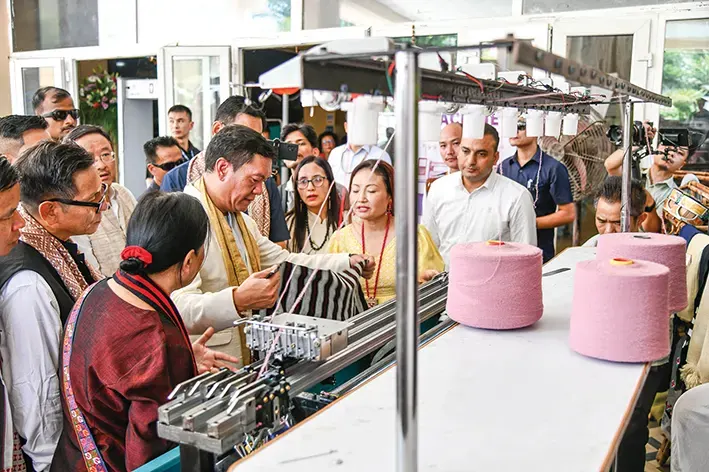
Addressing the inaugural function of a three-day celebration of the 12th National Handloom Day (NHD) at the DK Convention Centre here, the chief minister described handloom as far more than a livelihood activity, calling it the cultural identity and living heritage of the indigenous tribes of Arunachal.
"Every woven fabric of Arunachal tells the story of our people, our traditions, and our identity. Our handloom sector has the potential to become a major driver of rural livelihoods, women empowerment and sustainable economic growth," he said.
Highlighting the state's rich weaving tradition, Khandu informed that Arunachal is home to over 32,000 handloom weavers, the majority of whom are women, making the sector one of the largest sources of livelihood for rural households.
He said the state government has been consistently strengthening the handloom ecosystem through improved infrastructure, skill development, design innovation, marketing support, and entrepreneurship promotion.
Khandu said the government has established common facility centres (CFCs), upgraded weaving infrastructure, and introduced modern equipment to improve productivity while maintaining the authenticity of traditional designs.
He further informed that weavers are being provided training in contemporary design techniques, natural dyeing, quality improvement, and product diversification to enable them to compete in national and international markets.
Khandu highlighted that various state and central government schemes are providing financial assistance, raw materials, modern looms and marketing support to weavers and artisan groups across Arunachal.
He urged young entrepreneurs to explore the enormous opportunities in the handloom and handicrafts sector by combining traditional craftsmanship with modern branding, digital marketing and e-commerce platforms.
Emphasising the role of women in preserving Arunachal's textile traditions, the chief minister said that handloom has always been an instrument of women empowerment, with generations of women sustaining the state's unique cultural identity through their weaving skills.
"Our women have preserved our heritage through handloom for centuries. It is now our responsibility to ensure that this heritage also provides sustainable income and economic independence," he said.
The chief minister called for greater collaboration among government departments, designers, educational institutions, self-help groups (SHGs), cooperatives and private entrepreneurs to develop Arunachal's handloom products into globally recognised brands.
He also stressed the importance of innovation without compromising the originality of indigenous designs, stating that value addition and quality enhancement would enable local products to access premium domestic and international markets.
The chief minister also underscored the importance of protecting and promoting Arunachal's indigenous textile heritage through geographical indication (GI) registration. He said several traditional textile products from the state have either secured or are in the process of securing GI tags, which would enhance their authenticity, protect traditional knowledge and significantly improve their market value in national and international markets.
Khandu said GI certification would not only preserve the unique weaving traditions of different tribes but also enable artisans and weavers to command premium prices for their products while preventing imitation and misuse of indigenous designs.
Highlighting the enormous scope of sericulture, the chief minister described it as a natural extension of Arunachal's handloom ecosystem and a sector capable of generating sustainable livelihoods across rural areas.
He noted that Arunachal possesses favourable climatic conditions to produce eri, muga, mulberry and oak tasar silk, making the state one of the few regions in the country with the potential to produce all four commercially important varieties of silk.
Khandu observed that the sector provides sustainable employment opportunities through activities such as host plant cultivation, silkworm rearing, reeling, spinning and weaving. He stressed that strengthening the entire sericulture value chain would not only increase rural incomes but also provide quality raw material for the state's growing handloom industry.
Calling for greater convergence between the handloom, textiles and sericulture sectors, the chief minister urged officials to promote value addition, branding and market linkages, so that Arunachal emerges as a leading producer of premium silk and handloom products in the country.
Khandu expressed confidence that with continued government support, technological intervention and active participation of artisans and entrepreneurs, Arunachal can emerge as one of India's leading handloom destinations.
As part of the programme, Khandu launched the Department of Textiles & Handicrafts' website and artisan data bank, along with 'Atii - Arunachal Honey', besides felicitating outstanding weavers and artisans. He also distributed SAMARTH certificates and yarn passbooks to support and empower artisans.
The inaugural programme was attended by ministers, legislators, senior government officials, representatives of the handloom sector, master weavers, artisans, SHGs, and other stakeholders from across the state.
The NHD was celebrated also in Cheta Rehko in Lower Dibang Valley district by NGO AMYAA, under the LIC HFL Sangam Project, to promote traditional handloom skill development and cultural heritage.
The celebration featured hands-on skill development workshops on beaded jewellery making, basic crochet, and small bag tailoring.
These practical sessions provided students and women weavers with valuable exposure to traditional craftsmanship while encouraging creativity, entrepreneurship, and awareness of sustainable livelihoods.
LIC Housing Finance Ltd's Northeast zone CSR regional lead Ltd Abhinav Das encouraged young people to preserve their cultural heritage while embracing innovation and creativity to build sustainable livelihood opportunities through traditional crafts.
Iduli ZPM Sami Mickraw spoke on the importance of weaving, saying it is as important as education, as it preserves culture, strengthens identity, and supports livelihoods.
She urged students to value and continue the weaving traditions passed down through generations.
Agricultural Development Officer Gracy Linggi encouraged both boys and girls to learn and practice traditional weaving, saying that equal participation would help preserve indigenous crafts and create wider livelihood opportunities.
Students, women weavers, teachers, and community members attended the celebration.
The NHD was celebrated also at Jona Kachari village in Namsai, during which solar-powered Abha eri silk spinning machines were distributed to local weavers.
On the occasion, three producers' groups (PGs) were formed in Jona Kachari village through the efforts of Bethel Life Care Charitable Trust (BLCCT), in close coordination with ArSRLM.
Each PG received a grant of Rs 2 lakh from the ArSRLM, taking the total financial support to Rs 6 lakh.
Each machine, with a market price of Rs 25,500, received a subsidy of Rs 13,575 from Resham Sutra and Selco Foundation, reducing the beneficiary contribution to Rs 11,925 per machine.
The machines are expected to improve productivity, reduce the physical effort involved in spinning, particularly for women artisans, and enhance the quality of eri silk yarn.
NABARD District Development AGM Kamal Roy encouraged the weavers to adopt modern technologies, work collectively through producers groups, and focus on quality production, value addition, branding, and better market access to improve their incomes.
BLCCT CEO Chandan Prasad spoke about transforming traditional weaving into a sustainable enterprise through entrepreneurship development, capacity building, and proper business planning.
ArSRLM Block Mission Manager Ronald explained the objectives and benefits of forming PGs, and encouraged the members to work together for collective growth.
Our correspondent adds: In honour of traditional weavers and to cherish the rich weaving heritage of the Sherdukpen community, the Seinthuk Women Self-Help Group (SWSHG) celebrated the National Handloom Day (NHD) in Shergaon in West Kameng district on Friday.
Speaking on the occasion, North Eastern Council member TN Thongdok emphasised the crucial role of the younger generation in preserving and revitalising the traditional culture and weaving heritage of the Sherdukpen community.
He stressed that cultural traditions can survive only when they are actively practised, valued, and passed on to the next generation. He particularly encouraged the youths of Shergaon to take a greater interest in learning traditional weaving techniques, indigenous patterns, designs, and motifs from senior and experienced weavers.
Meanwhile, West Kameng honorary wildlife warden Dr Lobsang Tashi said, "By empowering local women, honouring the wisdom of senior weavers,and creating opportunities for younger learners, Shergaon is taking meaningful steps towards safeguarding its distinctive weaving traditions for generations to come."
Earlier, a member of the SWSHG said that the objective of celebrating the day was to acknowledge the invaluable contribution of local weavers, encourage younger generations to learn traditional weaving skills, and preserve the unique cultural identity of the community.
The SWSHG further said that the celebration was not merely a commemoration of the NHD but also an important community initiative towards reviving traditional weaving skills among the women of Shergaon.
With changing lifestyles and the gradual decline of traditional practices, several indigenous weaving techniques, patterns, and designs are increasingly at risk of being forgotten. The SHG aims to encourage women to reconnect with the knowledge passed down by their ancestors while creating opportunities for younger generations to learn, practise and carry forward these traditional skills.
Apart from receiving several recognitions and awards at the village and district levels, the SWSHG was honoured with the Governor's Commendation Award in 2021, in recognition of its contribution to community development and the preservation of traditional skills. The SWSHG also represented the state at the G20 celebration held on 24 March, 2023 in Namsai.
NGOs, including Garung Thuk, lauded the SWSHG, stating that such recognition through celebrations serve as an important reminder that preserving culture begins within the community itself.
Among the guests were aii manepus - elderly grandmothers - along with other senior women and elders of the village, whose knowledge, memories and experiences represent an important link between the present generation and the community's traditional heritage.
The event was attended also by members of the Shergaon Village Council, officials from various government departments, members of NGOs, and villagers. (With inputs from CM's PR Cell and PTI)