
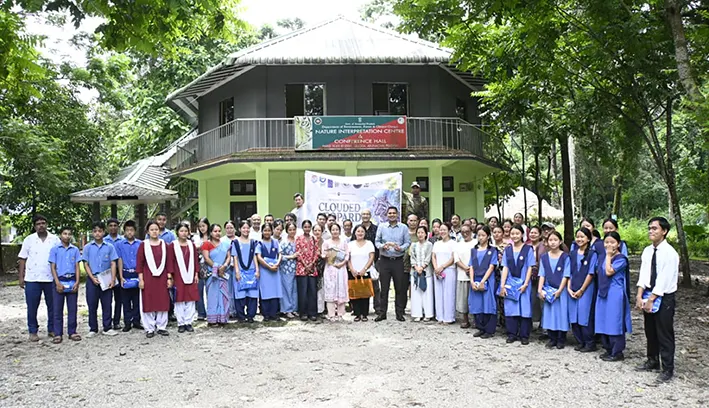
SEIJOSA, 4 Aug: The Pakke Wildlife Sanctuary & Tiger Reserve celebrated the International Clouded Leopard Day here on Tuesday with a series of awareness and capacity-building programmes highlighting the importance of conserving the clouded leopard (Neofelis nebulosa), a flagship species of the Pakke-Eaglenest-Sessa Landscape in Arunachal Pradesh.
The programme was held at West Bank, Seijosa, under the chairmanship of Pakke Wildlife Sanctuary & Tiger Reserve Divisional Forest Officer (DFO) Dhawan Kumar Rawat, and witnessed enthusiastic participation of Eco-Development Committee (EDC) members, school students, teachers, officials from the tiger reserve, frontline forest personnel, conservation partners, and local community representatives.
Among the participants were Niraj Kakati from WWF-India, Dr Panjit Basumatary from the Wildlife Trust of India (WTI), and Bassang Waghe, honorary wildlife warden, Seijosa, along with officials of Pakke Wildlife Sanctuary & Tiger Reserve.
The event also saw active participation of members of the Soming Narming Eco-Development Committee (Seijosa), Kusum Eco-Development Committee (Tippi), and Rilloh Eco-Development Committee (Rilloh) and range forest officers of Seijosa and Tippi wildlife range, highlighting the strong partnership between protected area management and local communities in conservation efforts.
The celebration commenced with an inaugural session emphasising the ecological significance of the clouded leopard as an apex arboreal predator and an indicator of healthy tropical and subtropical forest ecosystems. Speakers highlighted the species’ unique adaptations, its role in maintaining ecological balance, and the importance of safeguarding contiguous forest landscapes through collaborative conservation involving local communities.
A wildlife quiz competition for students of Class 8 to 10 was organised to promote environmental awareness and inspire young minds to appreciate the rich biodiversity of the Pakke Tiger Reserve. Students from various schools participated with great enthusiasm, demonstrating their knowledge of wildlife, forest ecosystems, and conservation issues.
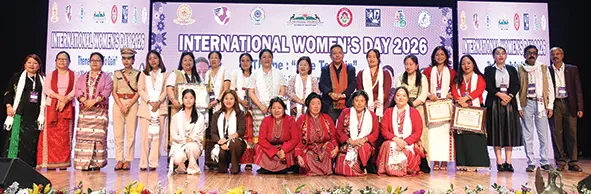
A major highlight of the celebration was the inauguration of a two-day capacity-building and skill development workshop for members of the Eco-Development Committees (EDCs). The workshop aims to strengthen community participation in conservation by equipping EDC members with practical skills in sustainable livelihood development, value addition to local products, enterprise development, product design, branding, and market linkage.
The workshop is being conducted by expert resource persons from the Zankala Foundation, a renowned organisation working across India to empower rural and indigenous communities through sustainable livelihood initiatives. The foundation has earned recognition for promoting women-led enterprises, enhancing traditional craftsmanship, and supporting community-based conservation by creating alternative income opportunities that reduce dependence on forest resources.
Through hands-on training and interactive sessions, participants are being introduced to innovative approaches for developing eco-friendly products, improving product quality, and building financially sustainable community enterprises.
Addressing the gathering, DFO Rawat highlighted the ecological importance of the clouded leopard as an indicator of healthy forest ecosystems, and emphasised that the long-term survival of this elusive species depends on collaborative conservation involving government agencies, conservation organisations, and local communities. He noted that conservation cannot be achieved through protection measures alone but must also be supported by improving the socioeconomic well-being of forest-dependent communities. In this context, he stated that the two-day capacity- building and skill development workshop is being organised to strengthen the capacities of EDC members, particularly women, by equipping them with practical skills in sustainable livelihood generation, entrepreneurship, product development, value addition, branding, and market linkages.
The initiative aims to promote women-led community enterprises, reduce dependency on forest resources, enhance household incomes, and foster greater community stewardship in the conservation of the unique biodiversity of the Pakke-Eaglenest-Sessa landscape. He further emphasised that empowering local communities with sustainable livelihood opportunities is an essential pillar of modern wildlife conservation, ensuring that conservation and community development progress hand in hand.
Through this initiative, Pakke Wildlife Sanctuary & Tiger Reserve is aiming to enhance the skills of local communities, promote sustainable and women-centric livelihood opportunities, and further strengthen community participation in biodiversity conservation and protected area management.