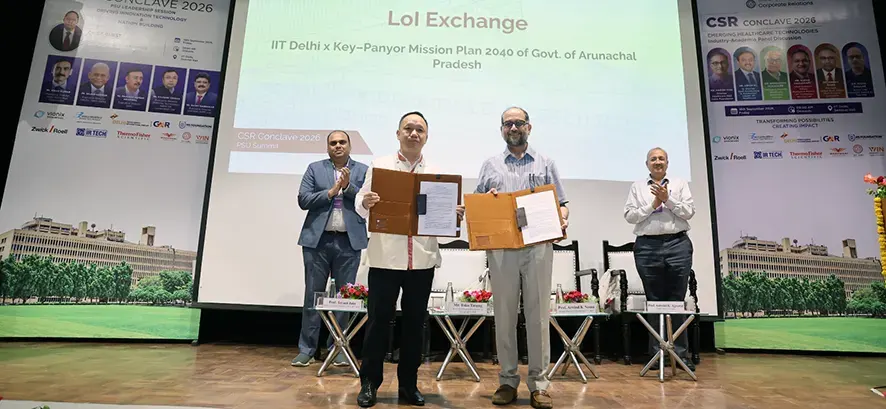
ITANAGAR, 15 Sep: Keyi Panyor district on Tuesday initiated a major collaborative process to build a scientific and community-owned knowledge base for its long-term development under the Keyi Panyor Mission Plan 2040 (KPMP 2040).
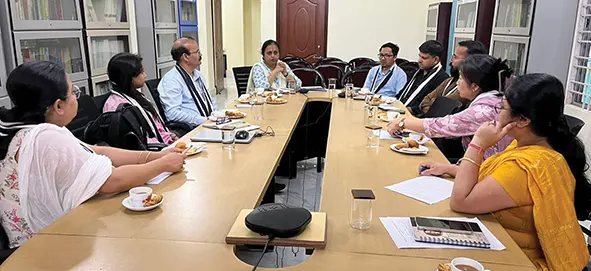
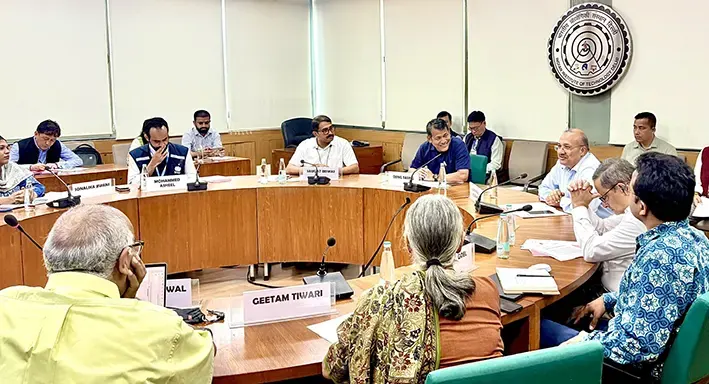
The 'integrated landscape mapping and know your basti inception meeting', held at DK Convention Centre here, brought together elected representatives, the district administration, scientists, technical institutions, universities, government departments and civil-society organisations, under the leadership of Yachuli MLA Toko Tatung.
The initiative will combine modern geospatial and scientific mapping with village-level knowledge on land, water, forests, biodiversity, agriculture, livelihoods, settlements, climate risks and public services. A central feature will be the involvement of local youths as 'ecosystem stewards', trained to work within their own villages and bring household experience, elders' knowledge, customary practices and official data into the same process.
Presenting the larger vision, Tatung said Keyi Panyor should use the opportunity of being a new district to make informed development choices before many decisions become irreversible.
"We do not want technology or institutions to become bigger than the people they are meant to serve. We need the best science available, but we also need science that is willing to listen," he said.
The technical session included a detailed presentation by Samita Manohar on the CoRE Stack ecosystem, commons connect and the Know Your Landscape platform, including the application and tools proposed for the Know Your Basti and landscape-mapping exercise.
Deputy Commissioner Ankita Mishra and KPMP 2040 CEO MJ Vijayan raised and clarified key operational issues relating to the use of the platform, field-level data collection, institutional coordination, and its adaptation to the specific conditions of Keyi Panyor.
The discussion stressed that local youths should not function merely as enumerators. The proposed ecosystem stewardship model seeks to train them as local researchers who can document, verify and retain knowledge within the district while working with scientific and technical partners.
Vijayan said the mapping programme forms part of the wider 20-point KPMP 2040 framework, covering democratic governance, education and health, livelihoods and employment, agroecology and food systems, forests and water, climate resilience, women and youth, indigenous culture, infrastructure, renewable energy, disaster preparedness and stronger district institutions.
The meeting also confirmed that work will move forward on the proposed mini secretariat for Keyi Panyor as a collaboration between the district administration and the KPMP team under the leadership of the MLA, with the deputy commissioner and KPMP CEO working closely on its development.
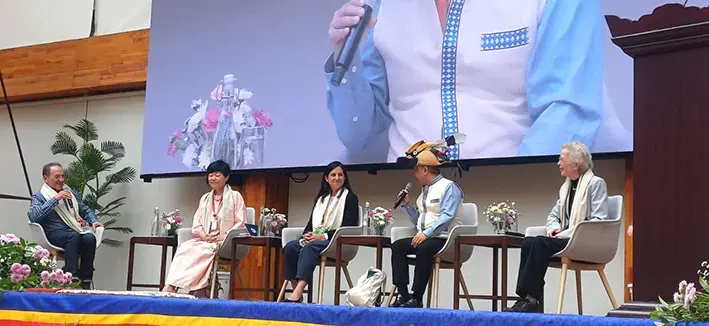
The project seeks to combine functional public administration with indigenous design, local identity and appropriate modern technology, led by Padma awardee Rajeev Sethi.
The roundtable brought together expertise from institutions including the Arunachal Pradesh Biodiversity Board, APSAC, Agriculture and Horticulture Departments, Geological Survey of India, State Forest Research Institute, Botanical and Zoological Survey institutions, GBPNIHE, KVK, Rajiv Gandhi University and ArSRLM, along with national and non-state partners.
Institutions such as the MS Swaminathan Research Foundation (MSSRF) and Foundation for Ecological Security (FES India) are expected to play important knowledge and technical roles, while the broader collaboration is being facilitated by the Participatory Action Research Coalition of India (PARCI). IIT Delhi's technical engagement through the CoRE Stack ecosystem is expected to be central to the mapping and data architecture.
The consultation also discussed institutional roles, pilot locations and the next steps required to move from mapping to an integrated district evidence system.
The larger objective is to make Keyi Panyor a pilot district for a different approach to development - one where scientific evidence, indigenous knowledge, public institutions and democratic participation work together.
Closing his speech, Tatung appealed to the institutions present not merely to advise the district but to become part of the mission.
"Do not remain guests of KPMP 2040. Become part of it," he said.
The next phase will focus on finalising the mapping methodology, identifying pilot villages, training local ecosystem stewards, and defining responsibilities among participating institutions.