
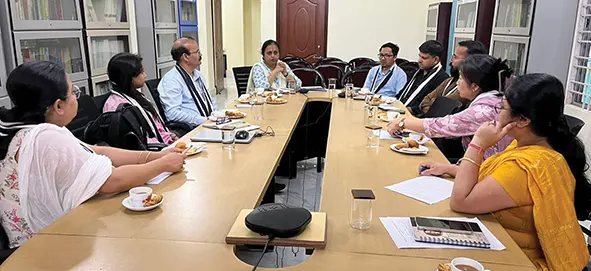
ITANAGAR, 19 May: A recently held stakeholders’ consultation meeting on springshed management in Arunachal Pradesh called for urgent scientific and institutional collaboration to address the growing crisis of declining spring discharge and rural water insecurity across the region.
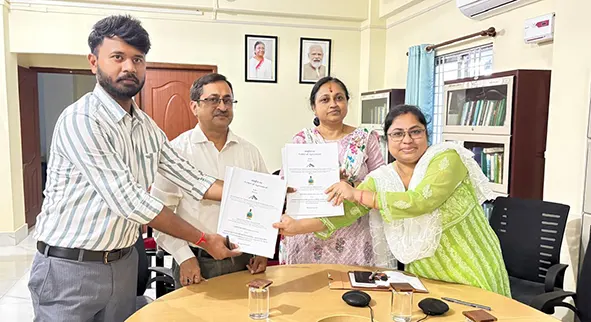
The consultation was organised by the GB Pant National Institute of Himalayan Environment (GBPNIHE), Northeast Regional Centre (NERC), in collaboration with the Central Himalayan Rural Action Group (CHIRAG), with support from HCL Foundation.
The meeting brought together representatives from the GBPNIHE-NERC, CHIRAG, HCL Foundation, Central Ground Water Board (CGWB), North East Initiative Development Agency (NEIDA), Water Resources Department (WRD), Rural Development Department (RDD), and Soil & Water Conservation (S&WC) Department to deliberate on the emerging threats to spring-based water systems in the state.
Addressing the participants, GBPNIHE-NERC Scientist-C Tridipa Biswas said that declining spring discharge in Arunachal is increasingly linked to climate variability, deforestation, changing land-use patterns, and unsustainable development practices. She emphasised the urgent need for hydrogeological investigations, springshed mapping, groundwater monitoring, and integration of traditional ecological knowledge to ensure sustainable water resource management in mountain ecosystems.
She stressed that protecting spring systems is essential not only for ecological sustainability but also for securing rural livelihoods and drinking water sources in remote Himalayan communities.
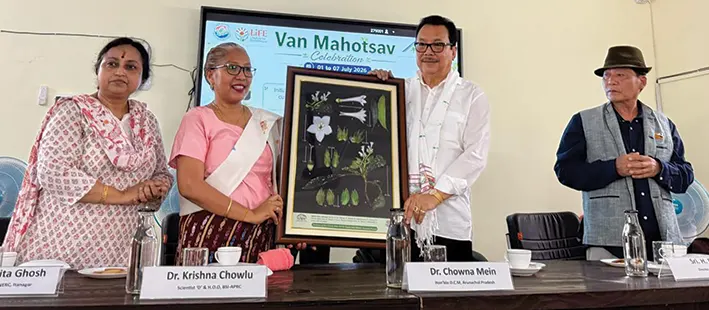
Dr Paromita Ghosh observed that springshed management must be treated as a long-term environmental governance priority closely connected with climate resilience, biodiversity conservation, and sustainable mountain development.
Representing CHIRAG, Abhishek Likam highlighted that successful spring rejuvenation requires convergence between hydrogeological assessment, community participation, and institutional coordination. He stressed that collaborative frameworks involving data sharing, aligned planning, and joint field implementation are critical for addressing the complexity of spring degradation in the region.
Speaking on behalf of HCL Foundation, Ankit Kumar expressed interest in supporting collaborative pilot projects, technical training programmes, community awareness initiatives, and scientific monitoring systems for springshed management in the Northeastern Himalayan region.
During the technical discussions, the Water Resources Department informed that 184 vulnerable springs have already been identified across 25 districts of Arunachal under an ongoing spring inventory and planning exercise. The Rural Development Department highlighted several operational challenges, including inconsistencies in spring discharge data collected by different agencies, absence of standardised monitoring protocols, seasonal variability in discharge, and inadequate hydrogeological assessments prior to implementation of water supply infrastructure.
An official from the Soil & Water Conservation Department informed that seven springshed management projects are currently being implemented across the state by the department.
Meanwhile, the Central Ground Water Board stated that hydrogeological investigations and discharge studies are underway in selected locations, though difficult terrain and shortage of trained manpower continue to constrain large-scale groundwater assessment efforts in Arunachal.
Representatives from the NEIDA emphasised that community participation, local governance systems, and livelihood linkages are essential for ensuring long-term sustainability of springshed interventions. The organisation also pointed out that increasing tourism pressure in districts such as Tawang and West Kameng is placing additional stress on local spring systems and water resources.
Key recommendations emerging from the consultation included the establishment of a multi-institutional coordination platform for springshed management in Arunachal, development of a unified state-level spring monitoring protocol, creation of a shared spring database/portal, strengthening hydrogeological assessments before infrastructure planning, and expansion of community-based monitoring and capacity-building programmes.
The meeting concluded with a collective commitment among the participating institutions to strengthen scientific collaboration, policy convergence, and community-centred approaches for protecting and rejuvenating springs across Arunachal. The participants emphasised that springshed management is not merely an environmental concern but a critical developmental priority directly linked to water security, food security, climate resilience, and sustainable livelihoods in the Himalayan region.