
How the state’s forests, rivers and mountains anchor the nation’s journey to net zero
[ A.N. Mohammed ]
Climate change is no longer a distant scientific warning. It is a lived reality — etched into erratic monsoons, shifting snowlines on the Himalayan peaks visible from Arunachal’s valleys and the swelling waters of the Brahmaputra. The decade from 2011 to 2020 was the warmest ever recorded. The year 2024 has now been confirmed as the hottest in human history, with global average temperatures touching approximately 1.1 degrees Celsius above pre-industrial levels and several months briefly crossing the 1.5-degree threshold.
The cause is well understood. Since the Industrial Revolution, the large-scale burning of fossil fuels, rampant deforestation and the relentless expansion of industry have driven atmospheric carbon dioxide from about 280 parts per million in 1750 to over 420 parts per million today — a rise of more than 50 per cent. Scientists warn that allowing warming to cross 2 degrees Celsius above pre-industrial levels would trigger severe, potentially irreversible damage to ecosystems and human societies worldwide.
In response, the international community adopted the Paris Agreement in 2015, committing to limit global warming to well below 2 degrees Celsius, with efforts to hold it to 1.5 degrees. At Glasgow’s COP26 in 2021, India announced an ambitious five-point climate strategy: rapidly scaling up non-fossil energy, meeting half its energy needs from renewables by 2030, cutting projected carbon emissions by one billion tonnes, reducing the carbon intensity of its economy by 45 per cent, and achieving net zero emissions by 2070. India also pledged to create an additional carbon sink of 2.5 to 3 billion tonnes of carbon dioxide equivalent through forests and tree cover.
This World Environment Day, observed every year on 5 June, carries the 2026 theme of Climate Action and the global call #NowForClimate. The message is unambiguous: the time for declarations has passed. Implementation is the only currency that matters now.
For this journey, India needs its climate-critical regions to do their part. Among all such regions, Arunachal Pradesh stands apart — as a forest guardian, a clean energy powerhouse and a guardian of river systems that sustain hundreds of millions of lives.
“In India’s climate story, Arunachal Pradesh is not on the margins. It is a cornerstone.”
The Green Shield: Arunachal’s Forests as a National Asset
Forests are among the most powerful tools humanity possesses against climate change. Through photosynthesis, trees absorb carbon dioxide and lock it away in wood, roots, undergrowth and soil.
Globally, forests and other terrestrial ecosystems absorb an estimated 25 to 30 percent of human-caused carbon dioxide emissions each year — equivalent to 11 to 20 billion tonnes annually with forests acting as a net sink of roughly 3–5/ billion tonnes annually. Protecting and restoring forests is widely recognised as one of the fastest, most cost-effective climate solutions available.
India’s forests collectively hold a carbon stock of approximately 7,285 million tonnes and remove around 150 million tonnes of carbon dioxide from the atmosphere every year. This is a remarkable contribution, particularly given that India holds only about 2 percent of the world’s forest area yet contributes nearly 7 percent to global carbon sinks.
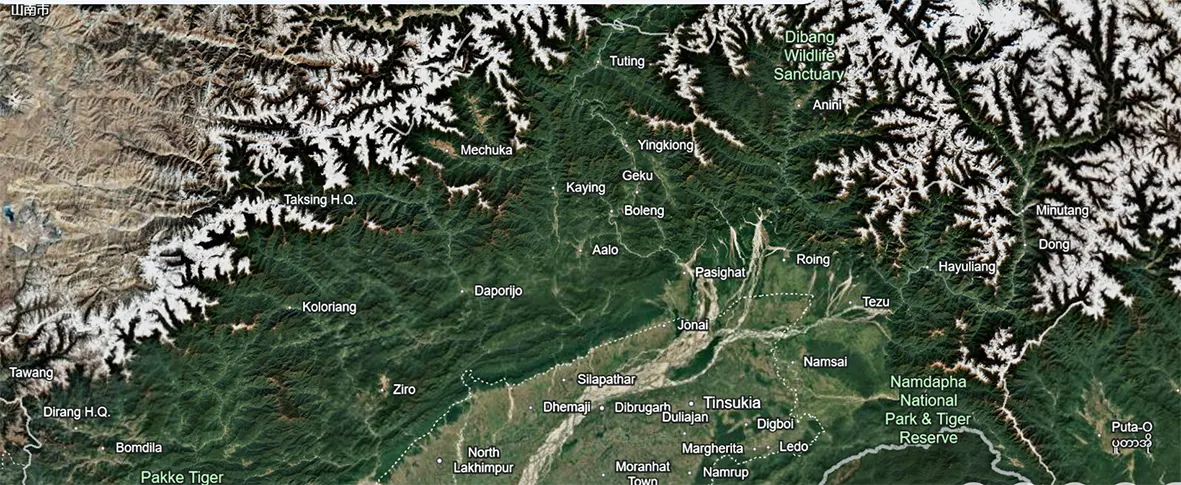
Within India, Arunachal Pradesh carries a disproportionately large share of this responsibility — and fulfils it admirably. According to the India State of Forest Report 2021, published by the Forest Survey of India, the state’s forest cover stands at 66,430 square kilometres — roughly 79.33 percent of its total geographical area. Only Madhya Pradesh has a larger forest area in absolute terms, but Arunachal’s forests are far denser and ecologically richer.
Of this total forest cover, 21,058 square kilometres falls under the category of very dense forest, 30,175 square kilometres under moderately dense forest, and 15,196 square kilometres under open forest. The state supports more than one-fifth of India’s entire dense forest cover. More significantly, Arunachal alone accounts for nearly 14.4 percent of India’s total forest-based carbon sequestration, and its forests hold an estimated carbon stock of 1021 million tonnes — the highest of any Indian state. Because its industrial profile is incredibly low and its dense green cover is so vast, Arunachal Pradesh operates at a massive net-negative carbon footprint, absorbing vastly more carbon than its population and economy emit.
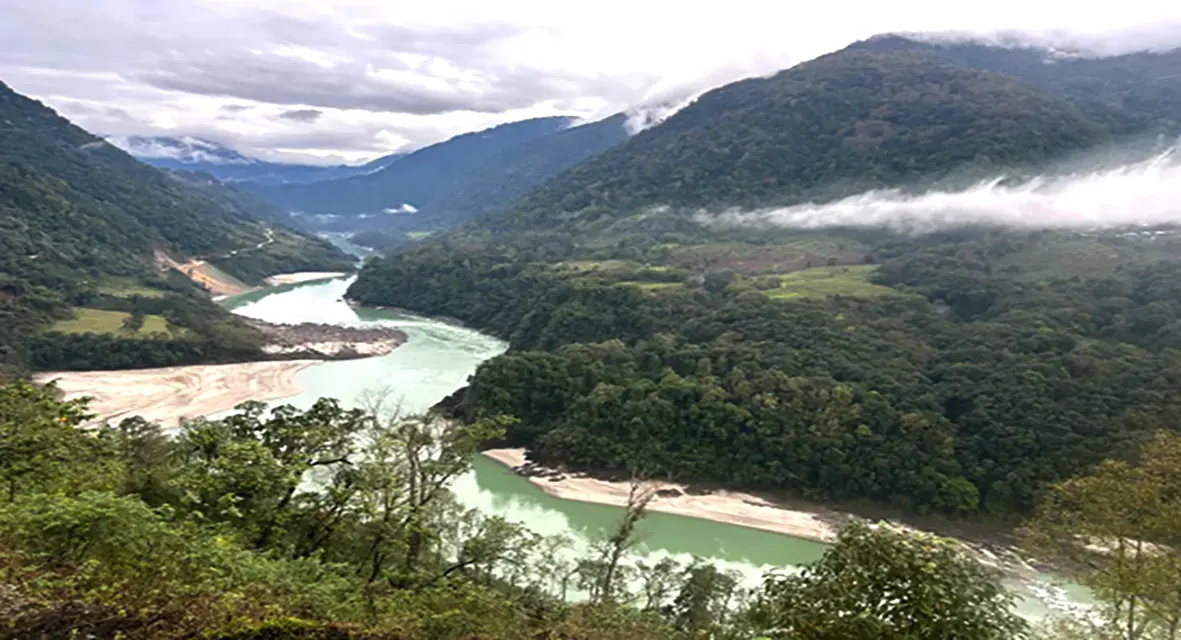
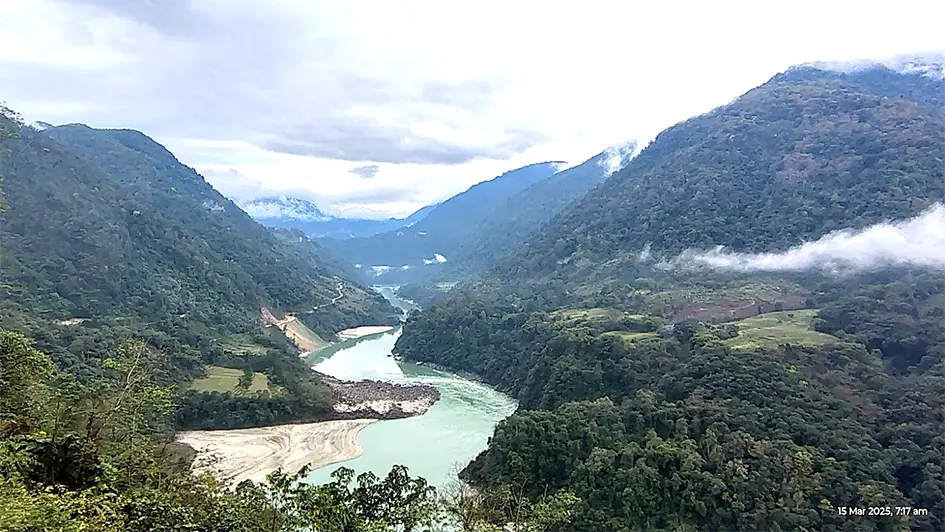
These forests do far more than sequester carbon. They regulate rainfall across the entire northeastern region, stabilise the fragile soils of the Himalayas, support extraordinary biodiversity and protect the hydrology of the Brahmaputra river system — a lifeline for Assam, Bangladesh and millions beyond.
Yet this ecological wealth is under growing pressure. Between 2001 and 2025, about 48 per cent of Arunachal Pradesh’s tree cover loss occurred in areas where deforestation was the primary driver. Permanent agriculture accounted for the largest share, with approximately 55,000 hectares lost, closely followed by shifting cultivation (jhum) at around 53,000 hectares. Other contributors included natural disturbances such as landslides (8,700 hectares), hard commodities such as mining (4,400 hectares), and logging (4,100 hectares). Settlement and infrastructure (1,200 hectares) and wildfire (27 hectares) made up only a marginal fraction of the total loss. The message is clear: Arunachal’s forests must be actively protected, not merely admired.
Encouragingly, efforts are underway. The Compensatory Afforestation Fund Management and Planning Authority (CAMPA) scheme, the National Afforestation Programme (NAP), the Green India Mission (GIM) and Joint Forest Management (JFM) initiatives are all operational in the state. CAMPA focuses on planting trees to compensate for forest land diverted to development projects including hydro projects and supports regeneration and conservation activities, while NAP aims at restoring degraded forests through community participation and improving rural livelihoods. The Green India Mission promotes large-scale afforestation and ecosystem restoration to enhance forest cover and carbon sinks in response to climate change. Additionally, JFM ensures active involvement of local communities in protecting and managing forests, creating a participatory approach to afforestation. Together, these policies form the backbone of afforestation efforts in Arunachal Pradesh. In 2022-23 alone, approximately 16,560 hectares were afforested under CAMPA. Community-based agroforestry programmes are gradually offering farmers viable alternatives to jhum — through settled agriculture, high-value crops such as tea, ginger and horticulture, and integrated land management approaches that preserve both livelihoods and forests.
The numbers from Global Forest Watch tell a story of both loss and resilience. Between 2001 and 2025, Arunachal Pradesh lost 130,000 hectares of tree cover—about 11 percent of what it had in 2000—releasing 70 million tonnes of carbon dioxide in the process. The deeper concern lies in its humid primary forests: from 2002 to 2025, the state lost 61000 hectares of these ecologically vital forests, nearly half of all tree cover lost in that period, pushing overall humid primary forest area down by 7.0 percent. The trend remained stark from 2021 to 2025, when all recorded tree cover loss occurred within natural forest, amounting to 33,000 hectares and 16 million tonnes of carbon emissions. Yet the picture is not one of decline alone. Between 2000 and 2020, Arunachal also added 22,000 hectares of tree cover—1.0 percent of India’s total gain. Over the same two decades, the state still posted a net gain of 9,800 hectares, a modest but significant reminder that recovery is possible when protection and regeneration move together.
Clean Power from Clean Rivers: The Hydropower Imperative
The global power sector remains the largest source of carbon emissions, releasing about 13.8 billion tonnes of carbon dioxide in 2024, with emissions in 2025 estimated to remain almost unchanged due to increasing adoption of clean energy.
India, the world’s third-largest emitter in absolute terms, accounting for about 8 percent of global energy-sector carbon dioxide emissions, and a large share of its own emissions comes from electricity generation (mainly coal). Overall, India’s total energy-related carbon dioxide emissions are around 2.7/ billion tonnes per year, with the thermal power sector forming the largest component. The transition to clean energy is therefore not just desirable — it is essential.
Hydropower is uniquely suited to this role. In consort with solar and wind energy, which are intermittent and dependent on weather conditions, hydroelectric plants can generate electricity reliably and continuously contributing to the grid stability. They convert up to 90 percent of available energy into electricity — a level of efficiency unmatched by almost any other energy source — and operate for 50 to 100 years with minimal emissions during operation.
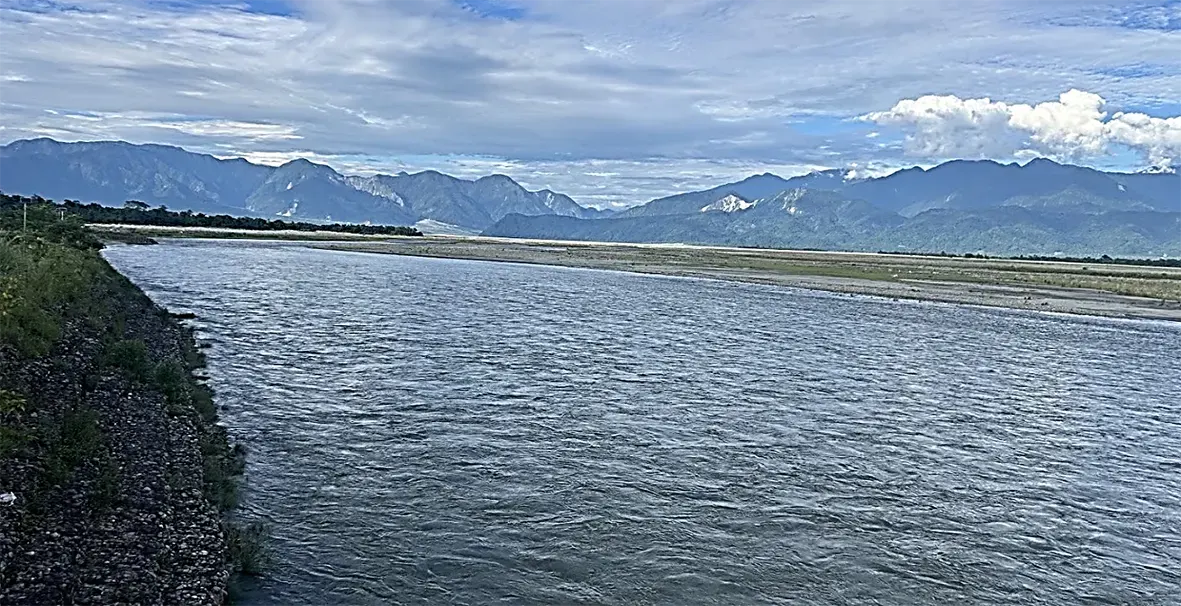
Arunachal Pradesh sits at the heart of India’s renewable energy future. The state possesses an assessed hydropower potential of around 58,000 megawatt (mw)— the largest untapped reserve in the country. India’s total assessed hydropower potential is approximately 1.45 lakh mw, and nearly half lies in the Brahmaputra basin, where Arunachal is the principal contributor.
At present, commissioned projects including 405 mw Panyor Lower (Ranganadi), 110 mw Pare, 600 mw Kameng and the partially commissioned 2000 mw Subansiri Lower together generate just over 2,100 megawatts. Even at this early stage, these projects already avoid nearly seven million tonnes of carbon dioxide emissions every year by displacing coal-based generation.
The pipeline ahead is transformative. Major projects such as 2880 mw Dibang Multipurpose, 1878 mw Oju, 1720 mw Kamala, 700 mw Tato-II, 1200 mw Kalai-II, 3097 mw Etalin, 1750 mw Damwe Lower and others are either under construction or in advanced planning. Once fully operational, Arunachal Pradesh’s hydropower portfolio is expected to generate around 42 billion units of clean electricity annually, potentially avoiding about 32 million tonnes of carbon dioxide emissions each year, based on current grid emission factors. This reduction is equivalent to removing several million fossil fuel-powered vehicles from India’s roads on a permanent basis, highlighting the significant climate benefits of hydropower development in the state.
42 billion units of clean electricity annually – and 32 million tonnes of CO? avoided every year. This is Arunachal’s gift to India’s climate future.
Modern hydropower projects are also being designed with climate resilience in mind. Scientific reservoir management provides flood moderation downstream, while peaking power capability supports the integration of solar and wind energy into the national grid — helping compensate for their inherent variability.
Beyond Hydro: The Promise of Geothermal Energy
Arunachal Pradesh’s climate contribution may extend beyond its forests and rivers. The state sits near the Himalayan geothermal belt, formed by the tectonic collision of the Indian and Eurasian plates. The Himalayan geothermal region extends from parts of Ladakh in India to Tibet, Myanmar and Thailand. This approximately 3,000 km-long and about 150 kilometre-wide belt is believed to contain many geothermal fields capable of generating electricity. As exploratory work in Ladakh demonstrates, this geological context holds considerable potential for geothermal energy — a source that is renewable, reliable and capable of round-the-clock supply without dependence on weather.
Geothermal development in Arunachal Pradesh is still in the early stages of exploration, yet it offers significant potential, especially for providing decentralised power to remote regions. These areas currently rely on micro hydel projects fed by small streams, which depend on snowmelt and are increasingly becoming unreliable due to climate change. Harnessing this potential in the years ahead would further deepen the state’s contribution to India’s clean energy transition.
A Message to the Nation on World Environment Day
World Environment Day 2026, under the theme of Climate Action, calls on governments, institutions and individuals to move beyond awareness and into action. Arunachal Pradesh embodies this call in its most tangible form.
Arunachal’s forests are among the most significant carbon sinks on the subcontinent. Its rivers hold the key to clean, reliable electricity for a nation still heavily dependent on coal. Its mountains guard the water security of millions across the region. And its communities — who have lived in harmony with these landscapes for generations — hold the indigenous knowledge that any truly sustainable approach must draw upon.
India’s commitment to net zero by 2070 is a national target, but it will be achieved region by region, project by project, forest by forest. No region carries more promise — or more responsibility — than Arunachal Pradesh.
As the world pauses on 5 June to reflect and recommit, Arunachal’s experience sends a message that is both local and universal: protecting nature and generating clean energy are not competing choices. They are complementary strategies for a liveable planet.
The forests are standing. The rivers are flowing. The potential is vast. What remains is the will to act — and the wisdom to act well. (The author writes on environment and hydro energy policy issues in Northeast India.)