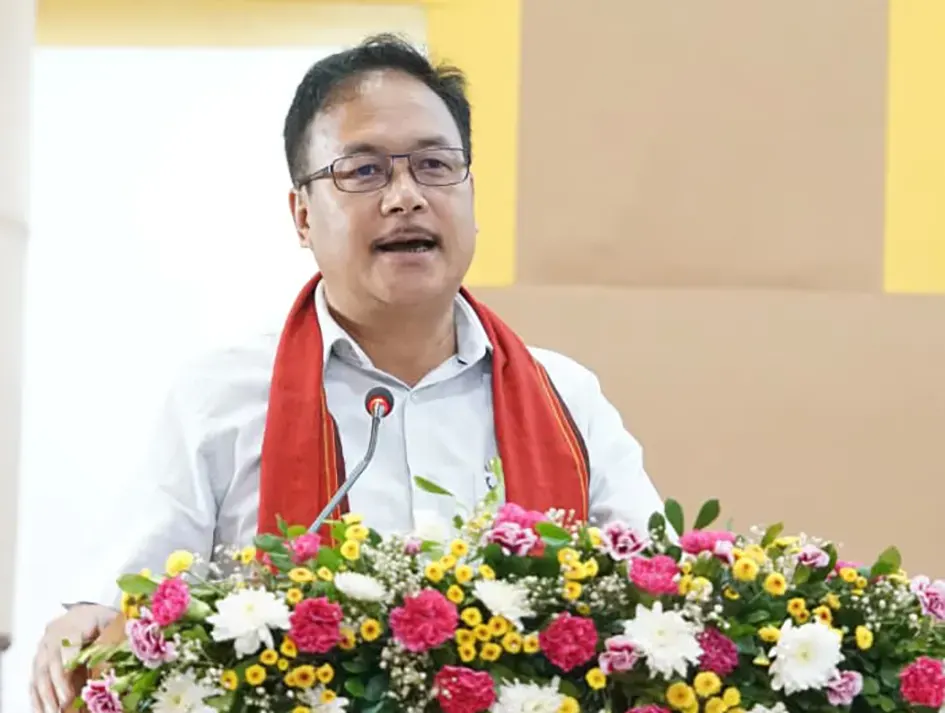
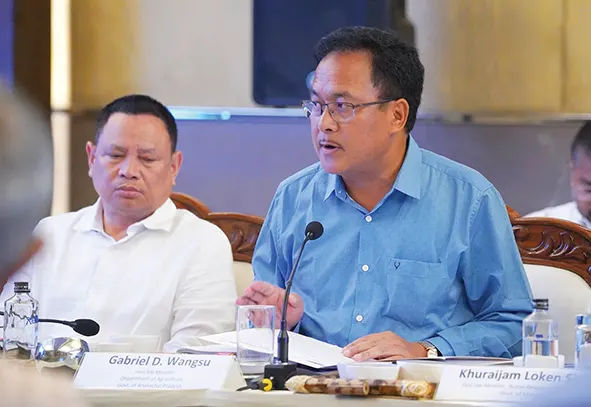
GUWAHATI, 19 May: Arunachal Pradesh Agriculture and Allied Minister Gabriel D Wangsu called for transformation of the North Eastern Regional Institute of Water and Land Management (NERIWALM) into an IIT-level centre of excellence.
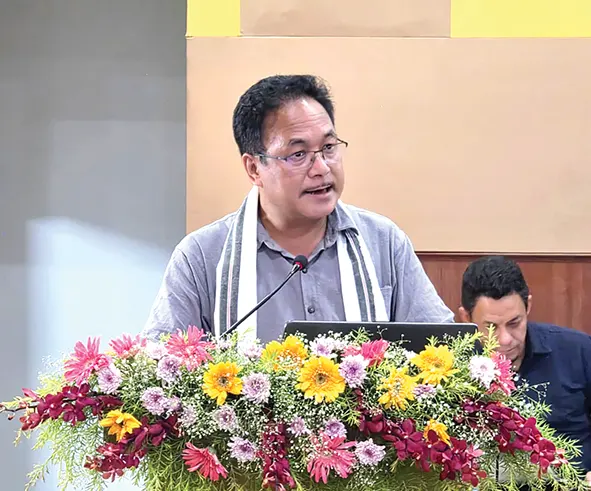
Addressing the 6th governing body meeting of the NERIWALM here in Assam on Tuesday, Wangsu said, “The institute should not remain only as a regional training and research organisation.” He urged stakeholders to envision a much larger and more consequential national role for the NERIWALM.
The minister pointed to India’s deepening water crisis, noting that nearly 70 per cent of water bodies in the country have been reported to be polluted, with more than 350 polluted stretches identified across 323 rivers. He highlighted that the Northeastern region records a Water Quality Index score of 88.12 per cent, significantly higher than the combined national score of 70.28 per cent, underscoring the ecological value of the region and the imperative to protect it.
Outlining the acute environmental and agricultural challenges confronting Arunachal, the minister noted that rivers originating from Arunachal’s basins transport enormous volumes of silt and sand into the Brahmaputra basin, altering river courses and causing severe damage to productive agricultural land in both Arunachal and Assam.
Citing a 2020 ICAR report on degraded wasteland in India, the minister informed that approximately 17.69 lakh hectares of land in Arunachal “are under acidic soil conditions,” which is a primary concern for the state’s agricultural sustainability.
He further cited an IIT Roorkee study which found that approximately 669.35 million tonnes of soil are eroded in Arunachal annually, at an average rate of 90.9 tonnes per hectare per year.
Pointing out limited agricultural land in Arunachal and climate change, the minister cautioned that “such erosion is putting additional stress on temperature and monsoon patterns in the region, ultimately leading to low agricultural productivity, excessive precipitation, floods in low-lying areas, and landslides.”
The minister emphasised that “watershed protection, catchment area treatment, springshed rejuvenation, and soil conservation in Arunachal Pradesh are not merely state-level concerns; they are matters of regional water security and ecological sustainability that directly affect the Assam plains downstream.”
He cited the study presented under Agenda 12/06 regarding displacement and erosion in the Brahmaputra valley as highly significant in this regard.
To address these challenges, the minister sought formal collaboration with the NERIWALM in several key areas – rapid reconnaissance of soil and land use surveys; watershed and springshed management; catchment prioritisation and development of interstate catchment treatment plans; land capability classification for crop production; and soil characterisation studies.
He also proposed the establishment of a technological resource centre or a state soil museum in Arunachal, which he said could evolve into a centre of excellence for land and water resource knowledge.
On institutional strengthening, the minister called for creation of dedicated schools or centres in specialised water resource domains, expansion of postgraduate and professional training programmes, and recruitment of high-quality faculty members and scientists. He also urged that pay scale restructuring in line with UGC/AICTE norms be expedited to attract and retain top talent, and that vacant senior faculty and scientific positions be filled without delay.
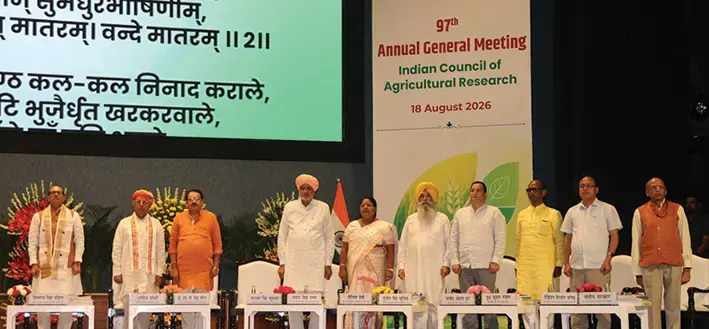
Arunachal’s Water Resource Department Minister Biyuram Wahge also represented the state in the session presided over by union Jal Shakti Minister CR Patil, who also serves as the president of the NERIWALM’s governing body.