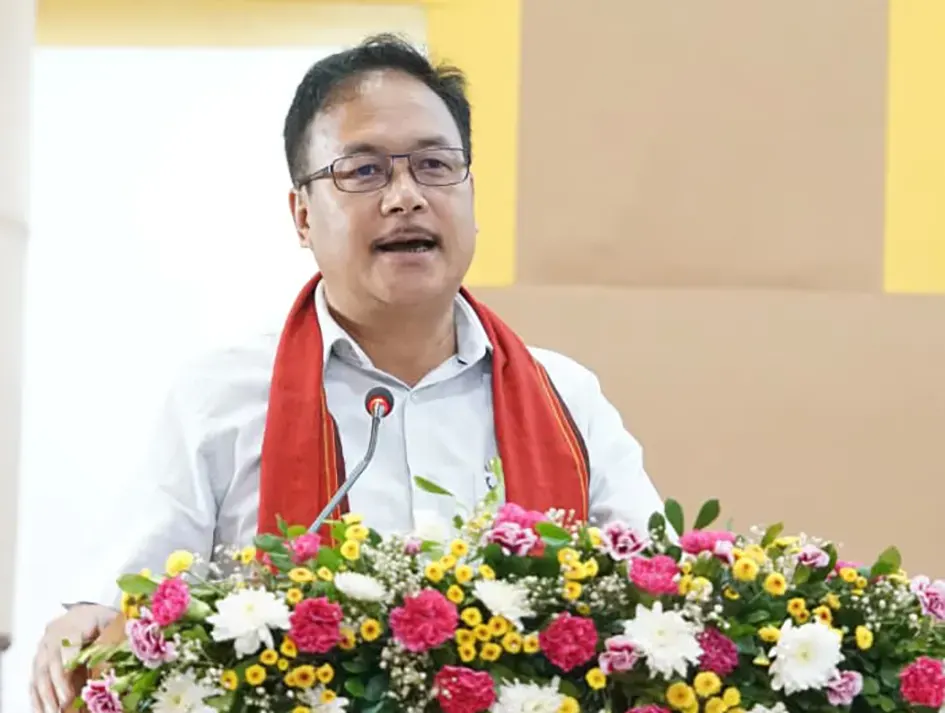

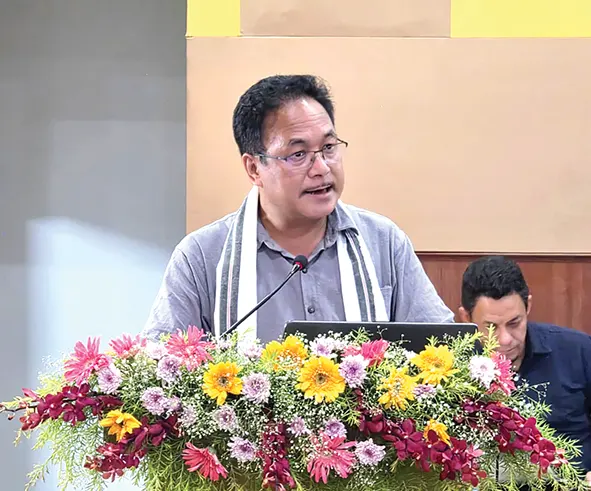
NAHARLAGUN, 23 Jun: Stating that agriculture is the backbone of the state’s rural economy, Agriculture Minister Gabriel D Wangsu urged officials, particularly those from underperforming districts, to rededicate themselves to the welfare of farmers and the overall development of the sector.
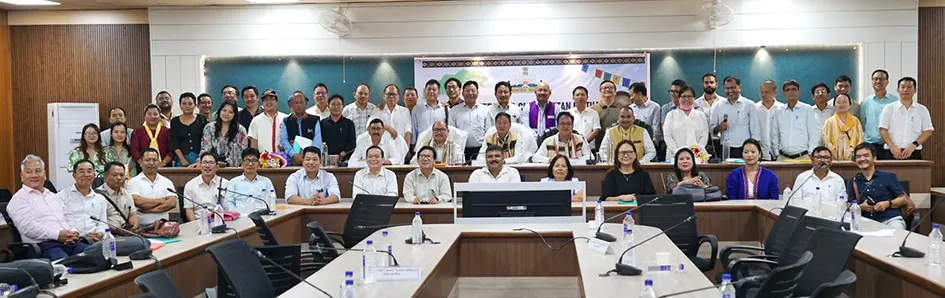
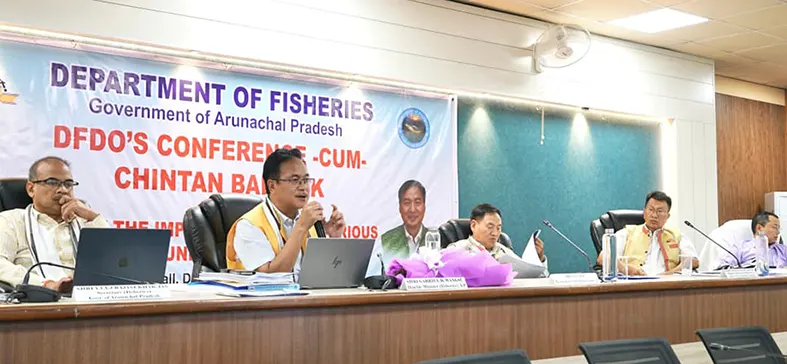
On Monday, the minister assessed the progress of flagship programmes, institutional challenges, administrative reforms and district-level performance during a ‘chintan baithak-cum-review meeting’ of the Agriculture Departmenat at the Krishi Bhavan here.
He stressed on greater accountability, administrative efficiency, and outcome-driven governance.
A major focus of the deliberations was the functioning of Krishi Vigyan Kendras (KVKs) across the state. Representatives of several KVKs raised long-pending administrative concerns and operational challenges before the minister.
Assuring them of the government’s support, Wangsu said efforts are underway to resolve the issues, and urged KVK personnel to continue serving farmers with dedication while maintaining confidence in the state leadership’s commitment to a lasting solution.
The future of the State Agricultural Management and Extension Training Institute (SAMETI) in Pasighat also came under detailed review. Discussions centred on strengthening the institution and enhancing its role in agricultural extension services. Concerns over alleged encroachment of institutional land were flagged during the meeting, prompting the government to initiate plans for safeguarding the property.
Wangsu called for strict legal action against encroachers, while the agriculture secretary directed officials to prepare a comprehensive master plan for protecting and optimally utilising the institute’s land assets.
The review meeting also examined the progress of the Krishi-Himveer Mission, a collaborative initiative involving the Indian Army and the Indo-Tibetan Border Police (ITBP). APAMB CEO Okit Palling urged district officials to facilitate greater participation of farmers, SHGs and farmer-producer organisations (FPOs) under the programme.
Agriculture Secretary Samuel Changkija stressed the need for enhanced departmental support to active grassroots institutions linked with the mission.
Expressing concern over the rapid rise in farmer-producer companies (FPCs), officials noted that more than 250 FPCs have been registered in the state, despite Arunachal having around 1.5 lakh registered farmers. Wangsu directed the APAMB to initiate annual audits and grading of FPCs to assess their performance, sustainability and effectiveness.
Organic farming and certification systems were also reviewed. While discussions continued on the future of NPOP organic certification, officials explored expanding the Participatory Guarantee System (PGS) certification framework for crops targeted at domestic markets.
The APAMB also proposed involving NABARD-supported agencies for preparing detailed project reports and monitoring value-addition projects.
Digital agriculture emerged as one of the central themes of the review. Highlighting the importance of AgriStack, Wangsu said technologies such as farm surveys, farmer IDs and crop surveys would form the backbone of future agricultural governance and service delivery.
“All future benefits and schemes will increasingly depend on authentic digital farm data,” the minister said, noting that pilot farm mapping has already been completed in six districts, and that the exercise would be expanded statewide over the current and next year.
He appealed to farmers, panchayati raj institutions, gaon buras and community leaders to actively support the farm mapping initiative to ensure smooth implementation and wider access to government schemes.
On the occasion, Wangsu also launched the Atmanirbhar Yojana service delivery portal as part of the Government of Arunachal Pradesh’ continued efforts to strengthen service delivery and improve access to government support schemes.
The portal has been developed as a unified digital platform for facilitating the application, processing, monitoring and approval of schemes under the Atmanirbhar Yojana. It aims to enhance transparency, efficiency, accountability and ease of access for farmers, SHGs and other eligible beneficiaries across the state.
Wangsu also launched the digital agriculture initiative, underscoring the government’s commitment to harnessing technology-driven solutions for improving agricultural governance, strengthening service delivery mechanisms and supporting farmers through digital interventions.
The Atmanirbhar Yojana service delivery portal, accessible at https://agri.arunachal.gov.in/atmanirbhar_yojana/, is expected to significantly streamline scheme implementation, reduce processing time and serve as a single digital interface for beneficiaries and stakeholders to access scheme-related services under the Atmanirbhar Yojana in a transparent, efficient and user-friendly manner.
The meeting also devoted considerable attention to administrative reforms, including rationalisation and strategic posting of officers to improve governance and service delivery at the district level.
District agriculture officers from all districts presented detailed reports on the implementation status, achievements, challenges and success stories under various central and state-sponsored agricultural programmes.
Commending departmental officials for improved financial performance, Wangsu noted that the Agriculture Department has achieved nearly 62 per cent fund utilisation, a substantial improvement compared to previous years when utilisation remained below 50 per cent due to changes in funding mechanisms.
He urged officials to aim for full utilisation of allocated resources while ensuring transparency, quality execution and measurable outcomes on the ground.
Director of Agriculture Toggul Perme Pertin, Director of Agriculture Marketing and APAMB CEO Tadak Dabi, joint directors, deputy directors, district agriculture officers from all 27 districts, and other senior officials attended the meeting.