[Marina Dai]
YINGKIONG, 30 Sep: A two-day visit by Arunachal Pradesh Chief Minister Pema Khandu to Siang and Upper Siang districts ended on Wednesday amid a strike, protests and road blockades across areas affected by the proposed Siang Upper Multipurpose Project (SUMP), as opposition to the project and the government's proposed Pre-Feasibility Report (PFR) process continued.
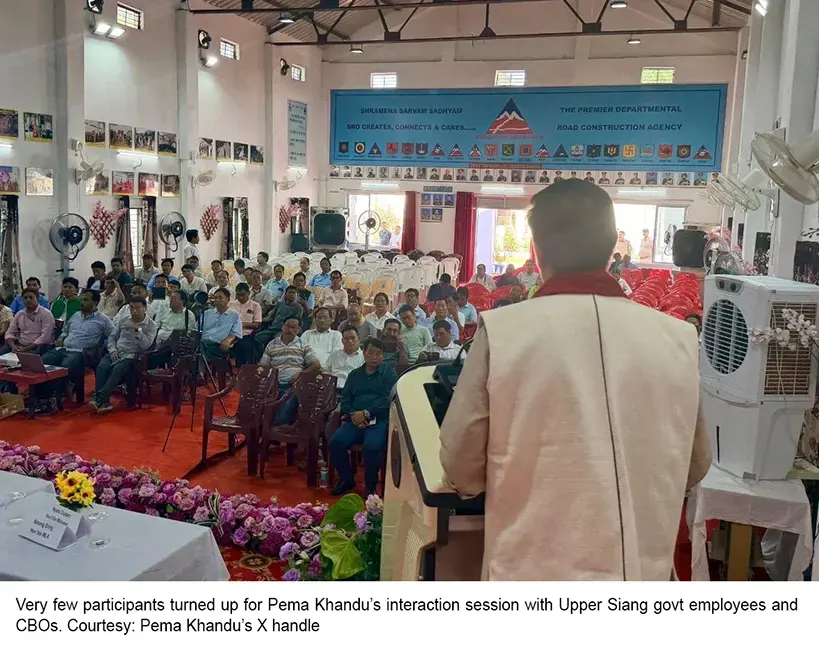
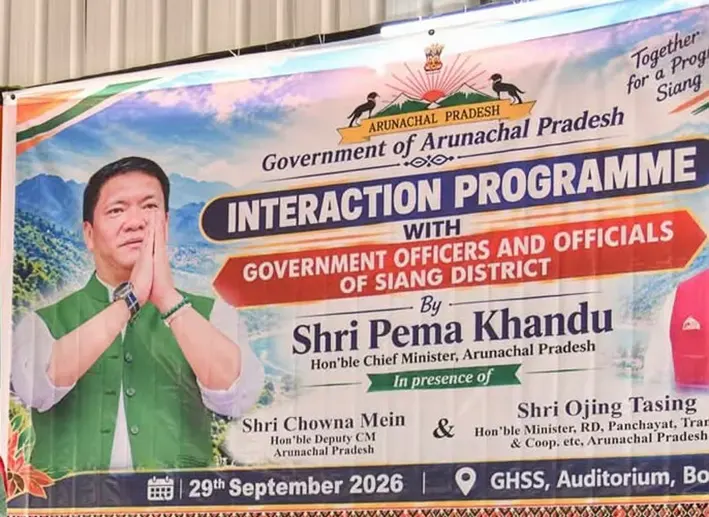
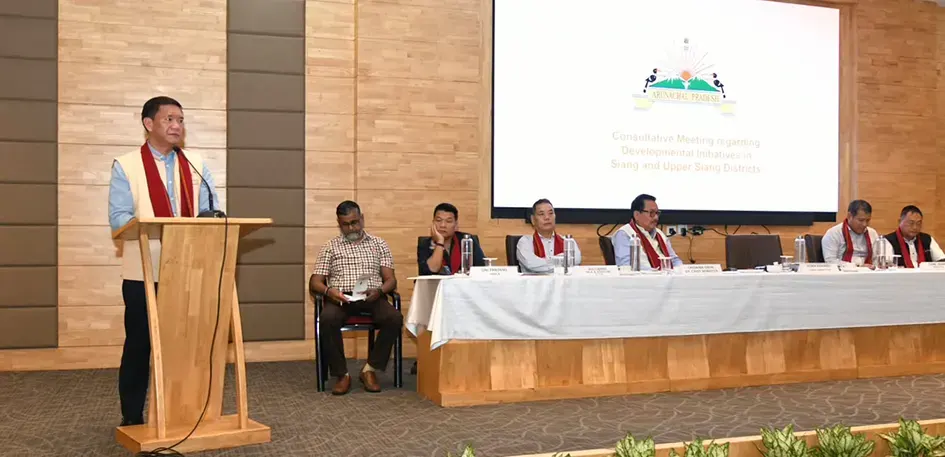
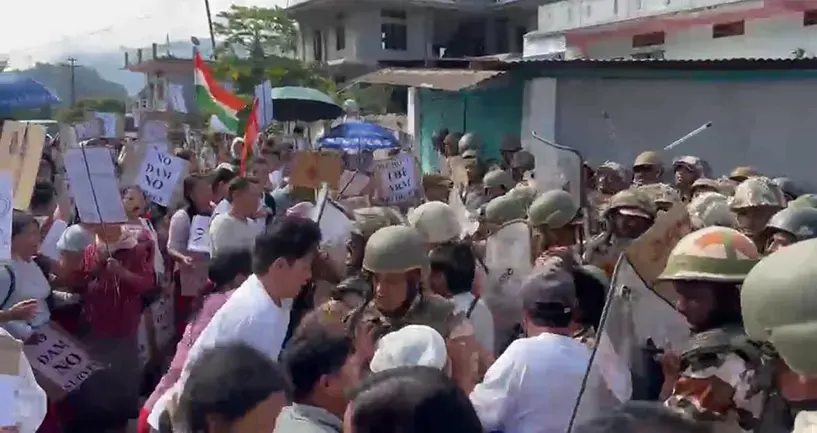
Khandu held a meeting with officers and officials of Upper Siang district at the 761 BRTF Camp, while residents of Yingkiong staged protests outside.
Roads were blocked at several points along the Yingkiong-Komkar-Geku stretch and towards Dite Dime as villages across the affected belt observed the strike.
PFR activities have not yet begun at the proposed dam sites, but villagers have been opposing the movement of machinery and the deployment of paramilitary forces into the affected areas.
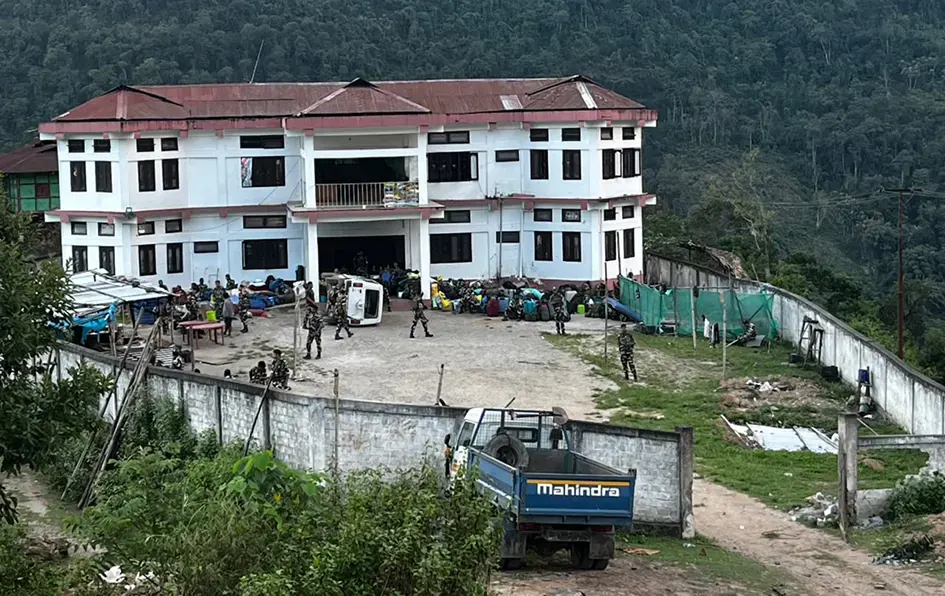
The deployment of additional forces has itself become a major point of contention. Additional forces were moved towards Geku, where villagers opposed their reported stationing at the Model College boys' hostel and demanded their withdrawal. The situation escalated further at Dite Dime, where protesters set fire to a vehicle being used for the deployment.
Khandu's visit came after a series of statements in which he said the government was open to dialogue over SUMP.
On September 17, Khandu said there would be no forceful implementation of the project and announced that he would visit Siang and Upper Siang to meet residents, village elders and groups opposing the project.
On September 21, he again said the government was open to dialogue and that concerns over the project could be discussed and clarified.
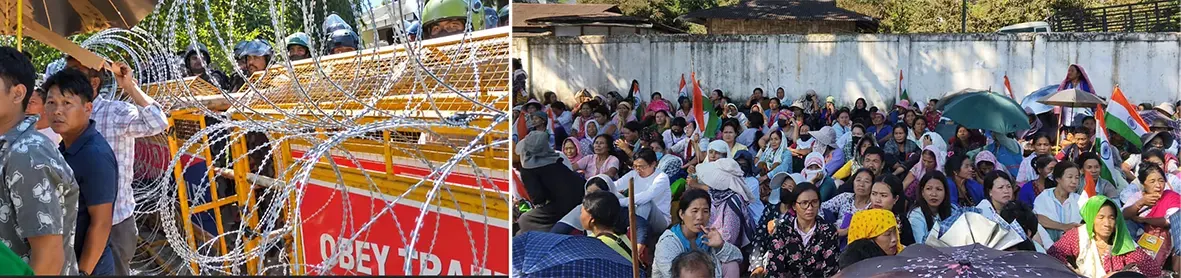
However, as Khandu was in Yingkiong on Wednesday, protesters outside were demanding that the proposed dialogue take place directly with them.
In an interview with Upper Siang News during his visit, Khandu said he had come this time to address government staff, arguing that one day was not enough for wider public interaction.
He said he would return to Siang and Upper Siang and spend a week meeting people and visiting villages.
"Next time I come, I will sit here for a week, both in Upper Siang and Siang district. I will stay for the whole week. I will also go from village to village and meet the public," Khandu said.
As protesters outside demanded a meeting, Khandu said he would ask the deputy commissioner to invite a five- or six-member delegation.
"We will definitely meet them. Why wouldn't we meet them? They are our own people," he said.
Khandu also sought to distinguish the PFR from the eventual construction of the dam.
"I have not come here saying, 'Build the dam, the dam has to be built.' I have come here only to request people to allow the PFR," he said.
He said the PFR would establish whether the project should move forward and maintained that if people did not agree to the project, the dam could not be built.
The government has maintained that the PFR is an initial feasibility assessment and does not amount to final approval for construction. The affected villagers, however, are opposing the PFR process itself and demanding that the government address their concerns before allowing the survey process to proceed.
Meanwhile, villagers have repeatedly demanded the withdrawal of paramilitary forces, while the government has maintained that the deployment is for security and that the PFR process should proceed peacefully.
PTI reports that during the protest on Wednesday, agitators entered the residence of Tuting-Yingkiong MLA Alo Libang in Yingkiong, where several ministers and MLAs were staying, and vandalised it, a senior district official said.
Protesters gathered outside the Grand Siang Hotel and prevented Deputy Chief Minister Chowna Mein, Cabinet ministers Ojing Tasing and Nyato Dukam and the chief minister's advisor Ninong Ering from attending Pema Khandu's programme.
Carrying placards with slogans such as 'No PFR, No Survey' and 'Go Back CM', the protesters questioned the decision to hold an official interaction instead of a direct dialogue with the communities likely to be affected by the project.