
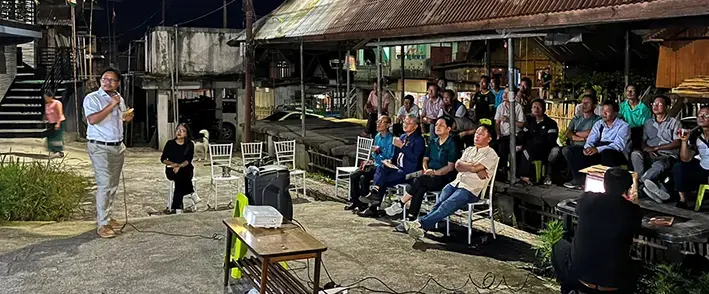
ZIRO, 13 Aug: The outreach programme on 'Promotion and revitalisation of Apatani language', organised by the RIWATCH Centre for Mother Languages (RCML), in collaboration with Tanii Supun Dukun (TSD), concluded at Tasso Lapang in Hari village here in Lower Subansiri district on Wednesday.
The concluding programme was presided over by RCML Junior Research Officer Ama Pinky Kago, and attended by RCML research associate Dr H Kapginlian, and TSD general secretary Hage Komo, among others.
Speaking on 'The Role of Native Speakers in Language Preservation', RCML Centre Head Dr Mechek Sampar Awan emphasised the need for the people of Arunachal Pradesh - a state rich in linguistic and cultural diversity - to acknowledge and safeguard their linguistic and cultural heritage.
Dr Awan stressed the importance of children maintaining close contact with their parents during their formative years, and suggested that children should, as far as possible, remain with their parents and grandparents at least until the age of 10 before being sent to residential schools. He further emphasised that mother languages should not be restricted to the home domain, but should also be used in other domains, including markets, educational institutions, and the media.
Following the talks, the RCML team screened documentary films for the gathering. The audience responded with enthusiasm, excitement and active engagement.
The reflections on the programme were followed by remarks from two prominent leaders of the Apatani community.
Popi Sarmiñ Society (PSS) chairman Tasso Kanotraced the history of literary work among the Apatani community. Appreciating the initiative of the RCML, Kano told the RCML team that they look forward to collaborating with the RIWATCH in the coming days.
In his address, TSD general secretary Komocommended the field study on Apatani language and the outreach awareness programme initiated by the research team from the RIWATCH.
TSD vice president Punyo Tangu appreciated the documentation work being undertaken for the promotion of the mother languages of Arunachal. Echoing the views expressed by Dr Awan, he emphasised that Apatani children should remain with their parents until the age of 10, as this is the crucial age for enable them to inherit and acquire their mother tongue in a natural setting.
Emphasising the importance of grassroots intervention, Tangu stated that outreach programmes such as this should also be conducted in schools to strengthen the revitalisation of the Apatani language among younger generations.
Around 60 participants, including representatives of Apatani CBOs and village elders, attended the programme and were encouraged to contribute, in their respective capacities, towards the preservation and revitalization of the Apatani language.
The outreach programme underscored the collective responsibility of native speakers, community organisations and institutions in ensuring that the Apatani language continues to be preserved, promoted and transmitted to future generations.