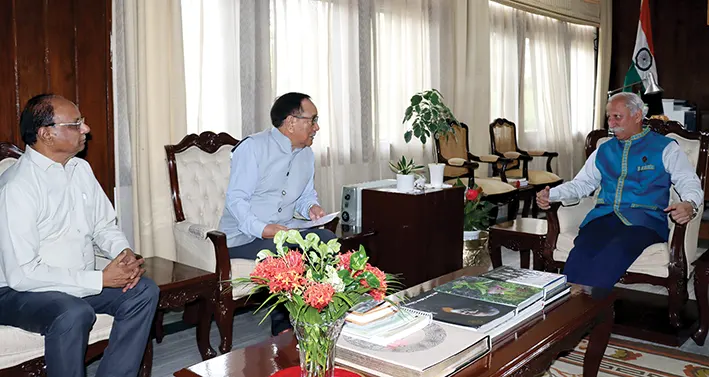
ITANAGAR, 24 Jul: Governor KT Parnaik said that the Research Institute of World’s Ancient Traditions, Cultures and Heritage (RIWATCH) has the potential to become a global hub for comparative civilisational studies, indigenous research, and intercultural dialogue, attracting scholars, researchers, and students from across the world.
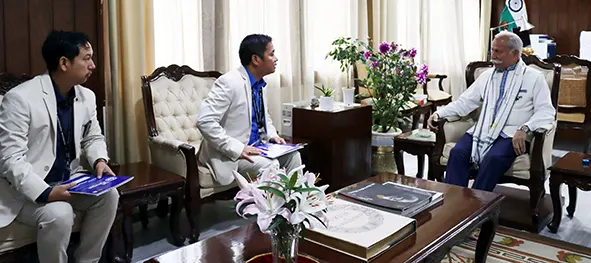
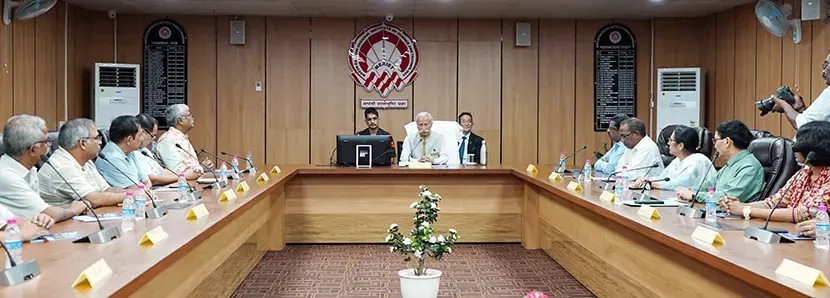
The governor made the observation during a meeting with the governing council of the RIWATCH at the Lok Bhavan here on Friday.
During the meeting, they discussed the vision of elevating RIWATCH to UWATCH (University of World’s Ancient Traditions, Cultures and Heritage), envisaged as a globally recognised centre of excellence for study, preservation, and promotion of indigenous knowledge systems, traditional cultures, heritage studies, and sustainable living practices.
“Such an institution would not only preserve humanity’s ancient wisdom but also inspire future generations to draw lessons from traditional knowledge in addressing contemporary challenges and building a more sustainable and harmonious world,” he said.
He lauded the RIWATCH for its 15 years of contribution to research, documentation, preservation, and promotion of the rich cultural heritage of Arunachal Pradesh.
Established in 2009 in Roing, RIWATCH has emerged as one of the leading cultural research institutions in Northeast India, serving as a bridge between traditional wisdom and contemporary knowledge systems.
The governor said that the RIWATCH, through its ethnographic museum, documentation centre, centre for mother languages, research publications, audiovisual archives, and community-based initiatives, has played a vital role in safeguarding the invaluable cultural legacy of the indigenous communities of the state.
“RIWATCH has documented oral traditions, folk narratives, rituals, languages, and traditional ecological knowledge, and also fostered academic collaborations with national and international universities and research institutions,” he said.
The governor also commended its efforts in promoting cultural empowerment, linguistic preservation, sustainable development, and community participation, thereby creating a model where heritage conservation contributes to social and economic progress.
RIWATCH Chairman Dr Joram Begi led the council members. The meeting was attended also by RIWATCH Executive Director Vijay Swami, its academic adviser Dr AK Tripathy, and member Tayum Tok. (Lok Bhavan)