Monday Musing
[ Tongam Rina ]
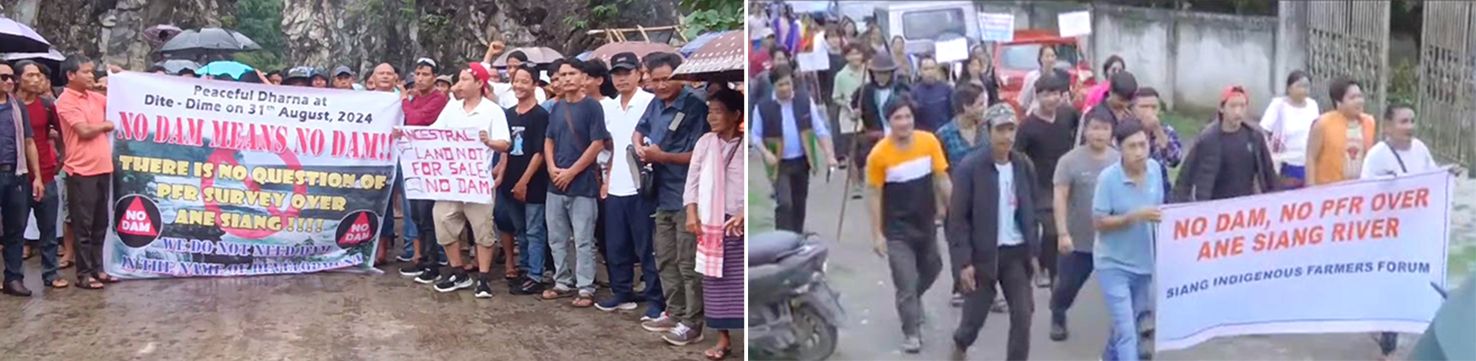
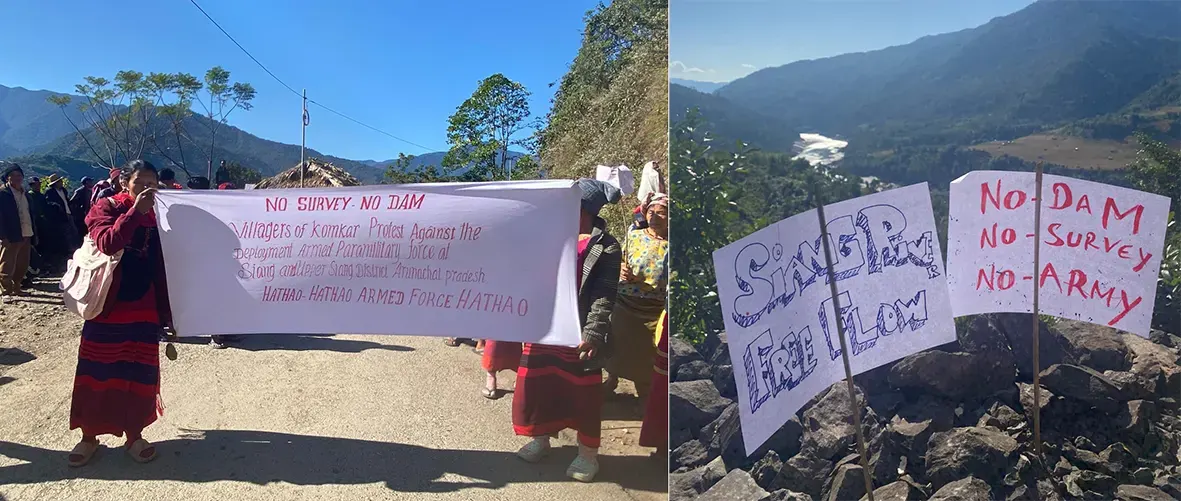
Once again, the Siang valley, particularly Upper Siang and Siang, has flared up as the administration and the indigenous Adi community have come face to face over sharply differing positions. The community is opposing the pre-feasibility report (PFR) activities for the proposed Siang Upper Multipurpose Project (SUMP), pegged between 11,000 mw and 12,500 mw.
There are armed police in large numbers, deployed by the state to enable the study, while communities continue to guard their ancestral land.
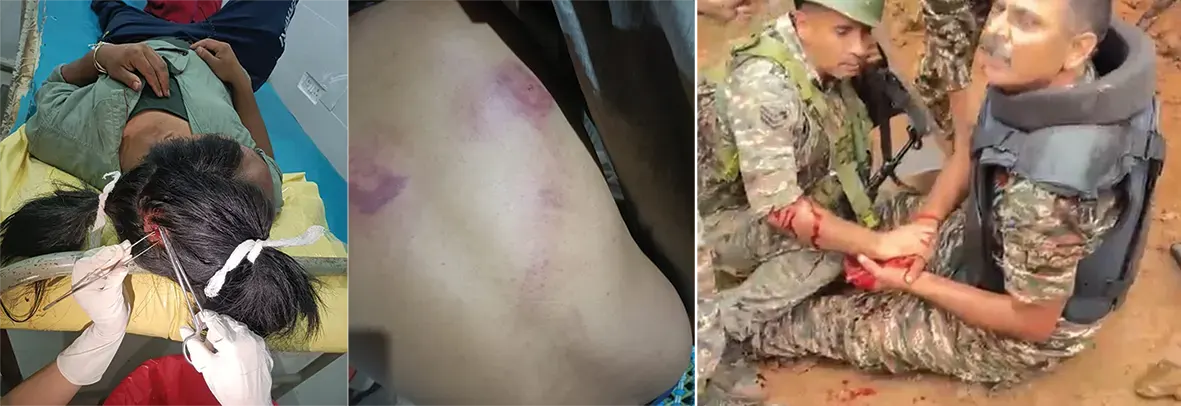
Several people opposed to the project were picked up in Riga village in Siang district. There is a particularly harrowing video of armed police officers asking about certain individuals to confirm their names. It makes it very obvious that the state will use violent methods, as it has repeatedly done against indigenous people across the state who have opposed the government's plan to build mega hydro projects.
Between 7 and 17 September, the administration issued restrictions on gatherings twice, citing apprehension of a possible law-and-order situation in connection with the pre-feasibility report study, as the stand-off continues. The restrictions signal the government's desperation to go ahead with the project, citing national security and strategic importance amid raging opposition by the community.
While the government's plans keep changing on the capacity of the SUMP, dictated by the Chinese plans upstream in occupied Tibet on the Tsangpo, one thing on the Indian side in Siang has remained firm: the opposition of indigenous communities to the damming of the river.
For more than four decades, people have resisted in the face of state brutality, oppression, and the use of weapons. No amount of government PR, intimidation, cajoling, attempts to bribe the community, attempts to instigate people against people, or labelling them antinational or foreign-funded has lessened the community's opposition to the project or its defence of its land and resources.
Unlike what the government and sections of its media would have people believe, the opposition in the Siang, Dibang, or Tawang basins was and is not led by a few individuals. It is a mass movement led by the people themselves.
It is led by the people - the old and the young. They are united by one motto: Save the rivers and the communities.
While the two Siang districts have seen sustained opposition, Konggong Lingkok, known locally as Uggeng, located on the left bank of the Siang river at Komkar village, has been one of the nerve-centres of the latest opposition. Villages located on both the left and right banks of the Siang have been protesting.
According to the government, the PFR will be conducted at three sites - Parong and Dite Dime in Siang, and Uggeng in Upper Siang.
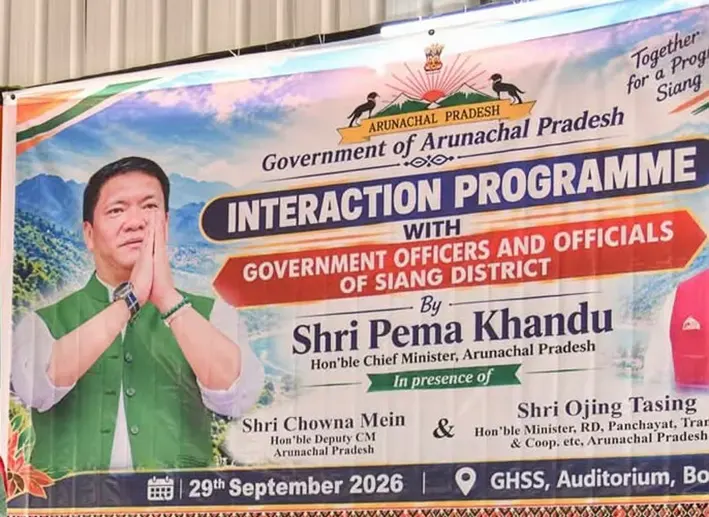
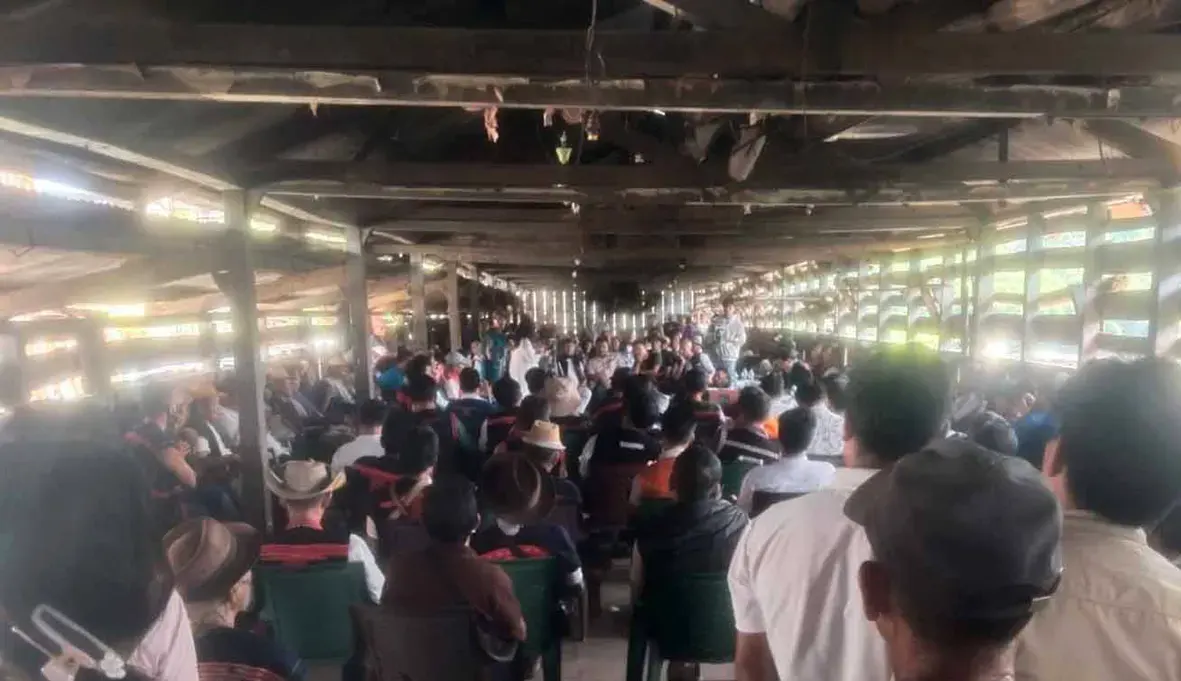
The latest attempt by the government, after signing an MoU with villages agreeing to PFR - which was shared on its social media handles and even handled by a public relations agency - has once again laid bare the fact that the government's understanding of the willingness of the people for the project is vastly different from what the majority of the indigenous communities want.
The Siang Indigenous Farmers Forum (SIFF) in a communication has already sought immediate withdrawal of the Central Armed Police Force stationed in Siang, Upper Siang, and East Siang districts for the study.
Dismissing the government's claims that approximately 2,000 households of the Siang valley have given their consent in favour of the PFR, it says that the majority from the 32 villages and towns set to be affected by the project across Siang and Upper Siang are opposed to the project.
Even though photos of villagers agreeing to the MoU allowing PFR studies have been widely shared on their social media handles, the government's claims of people's consent have been met with growing protests.
On one hand, the government has started negotiations and the signing of consent documents. In several villages, government-appointed gaon buras have been suspended and terminated for speaking up and acting against the government.
Members of SIFF have been arrested and called to Itanagar by the special investigation team (SIT), formed after the protests started, which in itself is an act of intimidation to silence the people.
It is ironical that the SIT investigation is taking place in the capital, far away from where the SIFF is headquartered.
The CBI, known in the state for its inability to handle high-profile cases and for inordinate delays, including the Arunachal Pradesh Public Service Commission paper leakage case, and for its delay in handling its inquiry against Chief Minister Pema Khandu for awarding contracts to his relatives, made news recently for booking Bhanu Tatak, one of the leaders of the SIFF, for alleged FCRA violations.
One wishes that the CBI shows the same urgency in other cases too, as it did in intimidating Tatak.
The state's refusal to acknowledge the people who are fighting to save their land, and to take their fear and apprehension into account, continues while the state weaves a narrative in the name of countering a powerful neighbour's attempt to control the river, flood control, strategic interests, and national security.
One fails to understand how the government talks about the security of the nation while uprooting the people living there.
Displacement of an entire community in the name of national security is logic-defying, but it's a tactic used by oppressive governments each time in the border state, where the rights of indigenous communities are too often sacrificed in the interest of the nation and its security.
Timeline on Siang
A. 1980: The Brahmaputra Board initiates an early survey to dam the Siang river for flood control. In response, the Siang Bachao Andolan against the proposal to dam the Siang is born. The state government opposes the central plan after the people's movement.
B. 2003: The union government, under Prime Minister Atal Bihari Vajpayee, launches a hydropower policy to harness 50,000 mw, with major focus on Arunachal Pradesh' water resources.
C. 2006-2007: The 2,700 mw Lower Siang Hydroelectric Project is awarded to Jaiprakash Power Ventures Limited with an upfront payment of Rs 41 crore, paid in instalments till 2010.
D. 2008: The Arunachal Pradesh Hydro Power Policy is enacted by the Dorjee Khandu government. Between 2007 and 2015, more than 200 MoUs are signed with private and public firms, amounting to Rs 1,495.6 crore in upfront money and processing fees into state coffers without competitive bidding, most during Dorjee Khandu's time.
E. 2011: A brutal crackdown takes place on protests in Siang against people's resistance to the forceful conduct of public hearings. Jaypee properties and offices are burnt.
F. December 2017: NITI Aayog proposes an 11,000 mw to 12,500 mw single mega-dam project, officially titled the Siang Upper Multipurpose Project (SUMP).
G. April 2024: Legislative Assembly hopeful candidates from Siang and Upper Siang say no to mega dams and get elected. In a few months, they change stand.
H. Aug-Dec 2024: Series of protests after government deploys armed police to enable PFR studies.
I. 2025: The state crackdown on organisations and individuals against the dam follows. The protests continue.
J. 2025: The state Cabinet declares 2025-35 as the 'Decade of Hydropower'
K. 2026: The government bows down to protests and tries to negotiate with people by signing MoUs with willing families across Upper Siang and Siang districts.
L. September 2026: An MLA writes to the DC, seeking protection during the PFR studies. The protests restart in Upper and Siang districts.
Modi and Khandu's pre- and post-election flip-flops
A. February 2014: Narendra Modi gives a speech in Pasighat against mega dams, amid thunderous applause, securing the favour of the Siang valley for the BJP.
B. February 2015: Statehood Day address: Modi, now prime minister, takes a U-turn as he describes Arunachal as a powerhouse.
C. 2017: Chief Minister Pema Khandu says that the state government will not accept the NITI Aayog's proposal for building of 10,000 mw dam on the Siang river in Upper Siang district.
D. 2024: Chief minister says, "If people do not want dams, we won't go ahead." At the same meeting, he also asks the people of the Siang region to give the go-ahead to conduct survey for preparing the pre-feasibility report.
E. 2025: Calls Chinese activities water bombs. Criticises opposition to SUMP.
F. April 2026: Says majority in favour of SUMP.