Editor,
When we discuss the Sino-Indian border dispute the discourse is almost entirely monopolized by military logistics, troop deployments and high-level diplomatic stalemates in capital cities. We look at satellite imagery and debate the geopolitical implications of newly paved roads. But this top-down view obscures a far more insidious reality unfolding on the ground i.e. the slow, quiet erasure of indigenous geography.
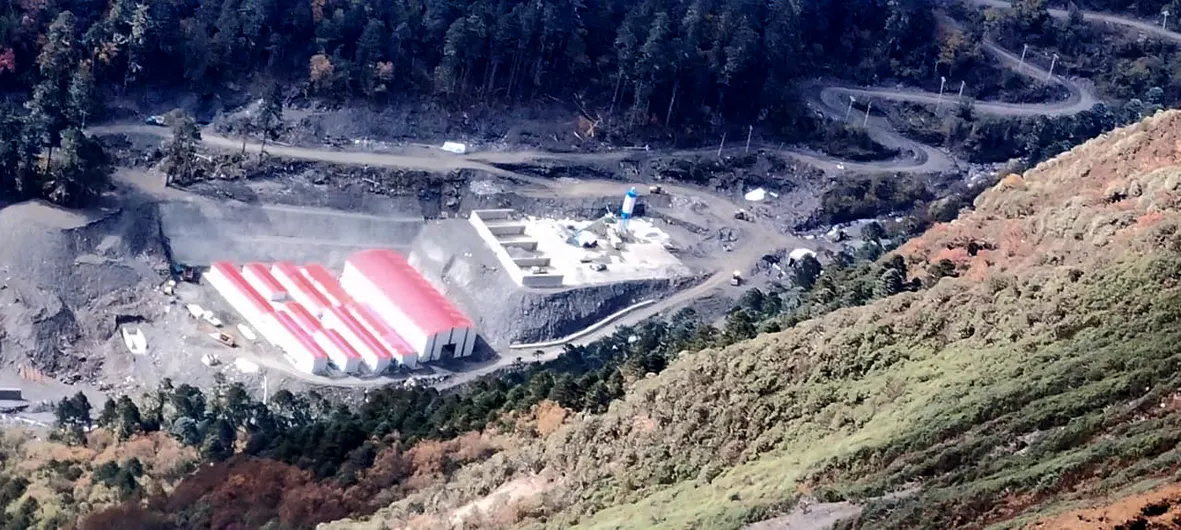
The recent alarm raised by the Nah Welfare Society (NWS) regarding the Taksing sector in Arunachal’s Upper Subansiri district demands a pivot in how we understand border security. The memorandum alleges a steady, calculated expansion by the Chinese People’s Liberation Army (PLA) into traditional Indian territory manifesting not as a dramatic invasion but as the methodical construction of camps, roads and bridges. The classic “salami-slicing” strategy in action.
While the Indian Army has officially dismissed reports of fresh encroachments as baseless and state authorities have promised fact-finding missions, the persistent anxieties of these frontier communities cannot be brushed aside. The geopolitical establishment may see a stable Line of Actual Control (LAC) but the locals see a shrinking backyard.
To understand this crisis one must abandon the binary of “invasion vs. peace.” What we are witnessing is a strategic war of attrition against space itself. By encroaching upon grazing pastures and foraging grounds, these tactical expansion seeks to render the land economically sterile for the indigenous inhabitants.
These alleged encroachments are swallowing ancestral lands that have served for generations as vital hunting grounds, cattle grazing pastures and sources for foraging forest produce. When the PLA erects a bridge or paves a track over these lands it does not merely cross a border it severs an economic lifeline and disrupts a fragile ecological and cultural heritage.
Herein lies the true often ignored danger- the destruction of the civilian vanguard. When the state treats its frontier solely as a military buffer it inadvertently facilitates the erosion of its own sovereignty. If the indigenous populations who have historically acted as the eyes and ears of the state find their livelihoods hollowed out by foreign occupation, they are eventually forced to migrate toward the urban interior. The resulting demographic void transforms these high-altitude settlements into sterile,strategic liabilities leaving behind empty frontiers, ghost village that are strategically vulnerable and significantly harder to secure later.
A border emptied of its people is not a secure border but merely an abandoned vacuum waiting to be filled. An unpopulated border is an undefended border regardless of how many battalions are stationed in the rear.
The challenge for our policymakers is therefore one of civilizational maintenance. Governments response therefore cannot be confined to reciprocal military posturing. The defense of the state requires a radical reimagining of frontier development. The government’s “Vibrant Villages” program is a conceptual step in the right direction but its execution must match the urgency of the threat. Building counter-infrastructure such as the ambitious Frontier Highway is necessary but insufficient if it only serves military convoys.
True security in Taksing requires a radical institutional commitment to the dignity of those who remain. It demands the legal recognition of indigenous land rights, the preservation of traditional pastoral economies and the integration of these communities into the digital and modern market consciousness, not as passive beneficiaries of a state handout but as active stakeholders in the nation’s territorial integrity.
It means ensuring uninterrupted digital connectivity, establishing robust healthcare and crucially, legally recognizing and protecting the grazing and foraging rights of the frontier tribes. We must make it economically viable and physically safe for the residents of Upper Subansiri to remain in their ancestral homes.
The crisis in Taksing is a microcosm of a much larger Himalayan fault line. If the state continues to view these frontier communities through the narrow lens of military utility it risks forgetting that sovereignty is above all a human expression. Sovereignty is lived, breathed and actively maintained by the people who call the periphery their home. The integrity of a nation is not defined by the height of its perimeter walls but by the resilience of the people who anchor it’s edges. If we fail to protect the grazing grounds of the Nah community today we risk losing the civilian vanguard that anchors our northernmost frontiers.
Karpop Riba
What Taksing’s grazing grounds tell us about border security?
This article was published by The Arunachal Times — arunachaltimes.in/article/what-taksings-grazing-grounds-tell-us-about-border-security
Advertisement
Categories: Readers Forum