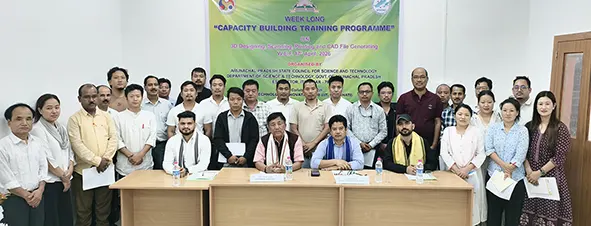
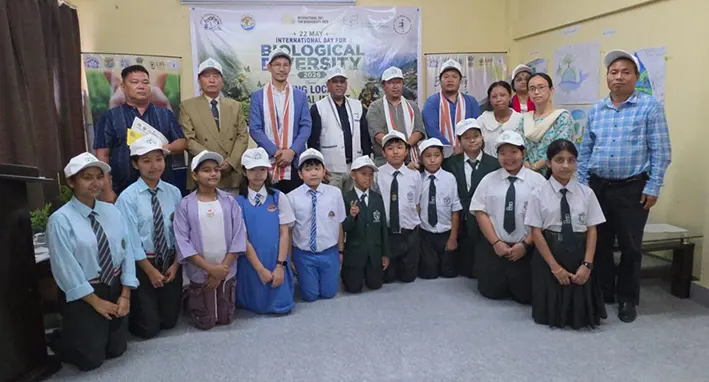
ITANAGAR, 17 Sep: The Arunachal Pradesh State Biodiversity Board (APSBB) organised anorientation-cum-capacity building programme for the reconstituted Biodiversity Management Committees (BMCs) under the Biological Diversity Act, 2002 (as amended in 2023) here on Thursday.
The programme was inaugurated by the APSBB Chairman Hawa Bagang, in the presence of APSBB Member Secretary HB Abo, and others.
The programme witnessed the participation of more than 35 representatives of BMCs, including chairpersons and members from West Siang, Siang, Kurung Kumey, Papum Pare and West Kamengdistricts, along with officials and stakeholders associated with biodiversity conservation.
In his address, Bagang underscored the crucial role of BMCs as the foundation of biodiversity governance at the grassroots level. He stated that BMCs are the backbone of biodiversity conservation in Arunachal Pradesh. "The success of the Biological Diversity Act depends on active participation of local communities, because they are the true custodians of our forests, rivers, medicinal plants and traditional knowledge," he said.
Abo in his address emphasised the board's commitment to strengthening BMCs across Arunachal through continuous capacity building, technical guidance, and institutional support. He informed the participants that the APSBB is working towards operationalising key provisions of the amended Act, including access and benefit sharing and certificate of origin, through the Arunachal Pradesh Biological Diversity Rules.
The technical sessions focused on creating awareness among BMC members about the important provisions of the Biological Diversity Act, 2002 (as amended in 2023). APSBB Research Officer Dr Bamin Yakang delivered a presentation on the objectives of the Act, major amendments introduced in 2023, access and benefit sharing, biodiversity heritage sites, traditional knowledge, exemptions under the Act, certificate of origin, and the enforcement mechanism through the adjudicating officer.
Dr Vikram Delu, scientist, Zoological Survey of India, Itanagar regional centre, shared insights on the roles and responsibilities of BMCs, stressing the importance of a structured approach, starting from cluster PBRs to block and village levels for effective biodiversity governance.
He also spoke on best practices of other states, including registration protocols for companies involved in biodiversity-related activities, and underscored the need for maintaining proper documentation and seeking necessary clearances.
Jaya Kumari from the Biodiversity Samrakshan Internship Programme (BSIP-VI), National Biodiversity Authority, introduced the participants to the concept and significance of the people's biodiversity register (PBR) as a community-based document for recording local biological resources and associated traditional knowledge.
APSBB Technical Assistant Guchi Soniademonstrated the ABS end-to-end portal, explaining the process of data integration, registration of BMCs, and digital management of biodiversity-related information.
The programme concluded with an interactive discussion, during which BMC members raised queries on access and benefit sharing, biodiversity heritage sites, local biodiversity funds, certificate of origin, and implementation of the amended Biological Diversity Act in Arunachal.
APSBB officials clarified the provisions of the Act and encouraged the BMCs to work in partnership with the board for effective implementation of biodiversity conservation initiatives across the state.