
ITANAGAR, 8 Jul: The All Arunachal Pradesh Women’s Welfare Society (APWWS) has recommended to the Arunachal Pradesh Administrative Reforms Commission (APARC) an overhaul of the government’s recruitment system by making it more transparent, merit-based, and professionally managed.
Stating that “recruitment is a specialised function requiring expertise in talent assessment, competency mapping, behavioural evaluation, and organisational planning,” the APWWS called for greater involvement of trained human resource professionals in the selection process.
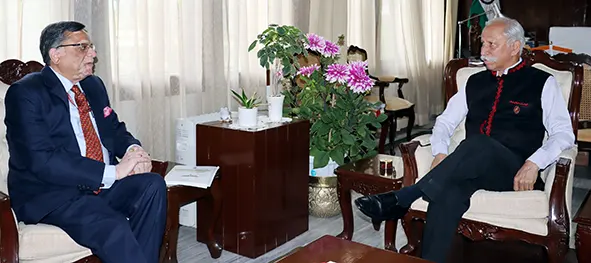
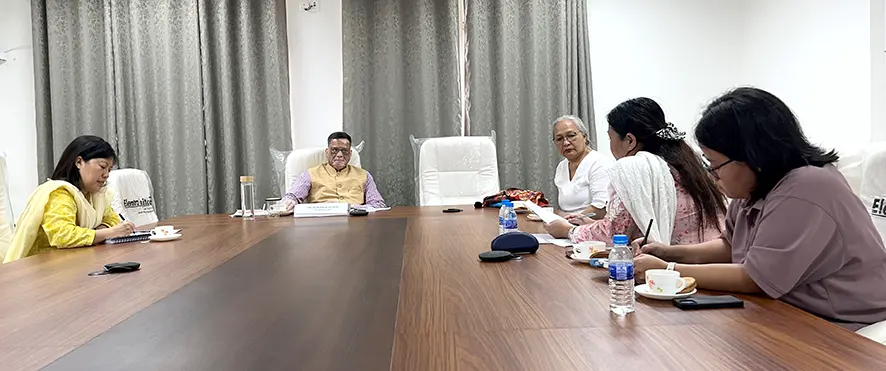
On Tuesday, a team of APWWS met APARC chairman Pramod Jain and submitted a set of recommendations, aimed at strengthening governance, improving public service delivery, and modernizing the state’s administrative system.
The organization proposed the introduction of a mandatory district immersion programme for all newly recruited Group ‘A’ and Group ‘B’ officers.
Under the proposal, officers would spend 30 to 60 days living and working in remote villages and border areas before assuming regular duties to better understand local socio-economic conditions, developmental challenges, and public expectations.
To improve workforce management, the APWWS recommended replacing traditional post-based staffing with workload-based manpower planning, where staffing requirements are assessed on the basis of population served, geographical coverage, service demand, project volume, and administrative complexity.
It also suggested constituting departmental committees, including women representatives, to periodically review staffing requirements.
The recommendations also called for development of a real-time digital human resource dashboard integrating information on sanctioned posts, vacancies, retirements, promotions, transfers, training, and deployment across departments to facilitate informed manpower planning.
To address manpower shortages, particularly in remote districts, the APWWS proposed cross-functional training for Group ‘A’ and Group ‘B’ officers to enable them to perform multiple administrative functions.
It also recommended introducing outcome-oriented key performance indicators focusing on service delivery, grievance redressal, innovation, efficiency, and citizen satisfaction instead of merely measuring administrative activities.
Another significant proposal was the creation of a structured leadership and mentorship programme under which retired and senior officers with distinguished service records would mentor young civil servants to strengthen institutional memory and leadership development.
The APWWS urged the government to adopt a ‘One Government, One Citizen Interface’ model, under which citizens would access multiple government services through a single integrated digital platform or facilitation centre, while departments coordinate internally through digital systems.
According to the organisation, such an approach would simplify service delivery, reduce administrative burden, and improve governance.
The recommendations further included institutionalising a comprehensive review of personnel administration every five years to evaluate recruitment, cadre management, training, performance assessment, technology adoption, and employee welfare.
The society also proposed introducing a digital ‘competency passport’ for every government employee to record qualifications, training, specialised skills, field experience, commendations, and performance achievements.
“Such a system would support evidence-based decisions regarding postings, promotions, leadership assignments, and future capacity-building initiatives,” it said.
In addition, APWWS recommended shifting the government’s focus from expenditure-based assessment to outcome-based governance by requiring every department to publish annual targets and measurable performance indicators in citizen-friendly formats online.
It also advocated proactive disclosure of information to promote transparency and reduce dependence on Right to Information applications.
Recommendation for creation of ‘NYAYA-SHIELD’ (Arunachal Pradesh Workplace Gender-Inclusive Grievance Support System), a state-managed digital platform aimed at providing an inclusive and accessible workplace grievance redressal mechanism in the state, was also put forward.
According to the proposal, although mechanisms like SHE-BOX are available for handling complaints of sexual harassment at the workplace under the POSH Act for women, the society emphasized the need for a state-specific, gender-inclusive system that caters to all employees.
The proposed portal would allow grievances from men, women, transgender and gender-diverse persons, besides addressing cases involving non-POSH gender-based discrimination and workplace harassment. It also aims to promote dignity, safety, fairness and equality in workplaces across the state.
The APWWS stated that the initiative would complement existing statutory mechanisms by creating a more comprehensive and supportive grievance redressal framework that is accessible to every employee, irrespective of gender.
As part of the proposal, APWWS has suggested launching the initiative as a one-year pilot project with an estimated budget of Rs. 1 to Rs. 1.2 crore. The budget includes Rs. 40-50 lakh for portal development, Rs. 20 lakh for district-level dashboards and training, and Rs. 30 lakh for community facilitator support.
The organisation said the proposed system would strengthen workplace accountability, improve institutional response to grievances, and foster safer and more inclusive work environments across the state.
The team also verbally put forward few recommendations for the government to look upon.
APWWS president Jarjum Ete drew attenuation towards the class disparity in school education system in the state, after many schools were closed down in the state. She said students in rural areas, where schools were closed down, now have to walk long distance to attend school.
Ete also pointed out that the CCS conduct rules are not being implemented in the state. She added that proper enforcement of the CCS conduct rules would act as an effective deterrent in curbing polygamy in the state.
The APWWS hoped the commission would consider the recommendations while framing reforms to build a more efficient, transparent, accountable, and citizen-centric administrative system in Arunachal Pradesh.
The APARC chairman assured to go through the matter with the government. He was accompanied by under secretary Omey Apang.
The APWWS president was accompanied by general secretary Samnem Ngemu Lego, assistant general secretary Dojum Mara and health coordinator Dagrik Gara.