
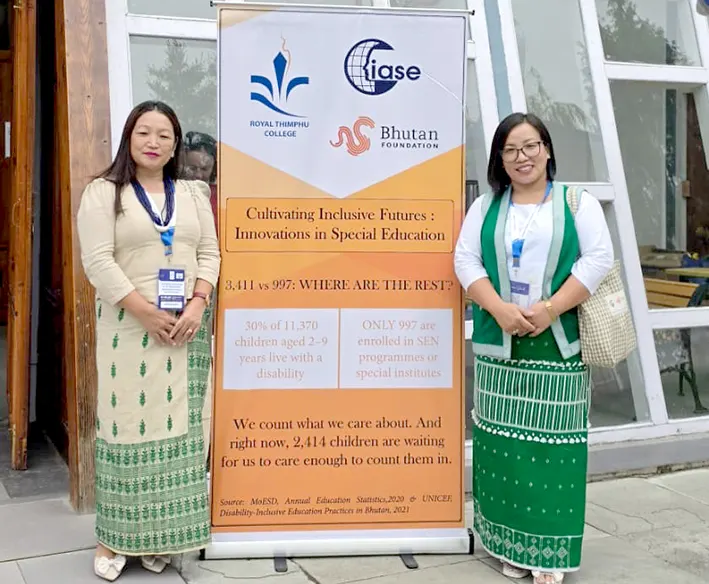
ITANAGAR, 27 Jun: Rajiv Gandhi University (RGU) Education Department Professor Anga Paduand Binny Yanga Government Women’s College Associate Professor Dr Minu Sono attended the 19th biennial conference of the International Association of Special Education (IASE) at the Royal Thimphu College in Thimphu, Bhutan, from 21-26 June.
The conference marked the 40th anniversary of the IASE and brought together academicians, practitioners, healthcare providers, social workers, clinicians, policymakers, psychologists, family members, and administrators from around the world to discuss innovations in special education for cultivating inclusive futures.
Delegates from 28 countries shared their experiences and models of inclusive education. The conference provided a platform for academic exchange, as well as cultural interaction. Participants also gained insights into Bhutan’s inclusive education system and its curriculum and practices, while experiencing the country’s traditional cuisine, culture, and attire.
During the event, Prof Padu delivered a presentation titled ‘Inclusive Practices at Elementary Stage in Arunachal Pradesh’. In her presentation, Prof Padu highlighted nine inclusive practices adopted by elementary school teachers in the state. She emphasised that small yet meaningful changes in teachers’ day-to-day classroom and school practices can significantly promote inclusion and support the holistic development of all learners.
The identified inclusive practices include: assigning students the responsibility of leading the national anthem, the daily pledge, news reading, and the ‘thought for the day’ during the morning assembly; adopting mixed-gender seating arrangements in classrooms; directing questions openly and providing equal opportunities for all students to respond, with particular encouragement to backbenchers during and at the end of lessons; appointing class captains based on students’ leadership qualities, academic sincerity, regular attendance, and obedience, rather than their socioeconomic background or intelligence; organising remedial classes and peer tutoring; engaging students in school kitchen gardening activities; encouraging students to wear traditional attire on the 15th of every month; and providing counselling on academic as well as personal issues.
Prof Padu concluded her paper by stating that these simple yet effective practices contribute to creating an inclusive learning environment that enables the full potential development of all elementary students, including those with disabilities and those from diverse socioeconomic, cultural, religious, and regional backgrounds.
Dr Sono presented a paper titled ‘Attitude of College Teachers towards Inclusive Education in Arunachal Pradesh’. She dwelt on the awareness and attitudes of college teachers towards inclusive education, and identified factors contributing to their “moderately positive attitude despite their awareness.” She concluded by emphasising the need for collective efforts to strengthen positive attitude towards inclusive education, noting that teachers play a crucial role in building an inclusive society.
Founded in 1985, the IASE is a non-profit organisation dedicated to improving the quality of life and service delivery for individuals with special needs worldwide. The association works with the vision of promoting inclusive and equitable education and support services for all individuals with special needs.