
Editor,
Arunachal Pradesh, whose population is predominantly tribal (comprising over 26 major tribes and numerous sub-tribes), has long sought to safeguard its population and cultural identity through mechanisms such as the ILP system, established under the 1873 Bengal Eastern Frontier Regulation. Illegal or unregulated migration remains a persistent concern for the state, an issue closely intertwined with historical settlement patterns, porous borders shared with Myanmar, as well as those via Assam, economic opportunities, and cross-border mobility.
In the 1960s, the Chakma and Hajong communities were forced to migrate and flee the Chittagong Hill Tracts due to the construction of the Kaptai dam and the ensuing ethnic-religious conflicts. Citing the need for temporary humanitarian assistance, the Indian government resettled thousands of these individuals in the NEFA. Over the decades, their numbers have steadily grown, now reaching tens of thousands. Furthermore, economic migrants from Bangladesh, labourers from other Indian states, and recent arrivals from Myanmar, including Rohingyas and Chins fleeing crises continue to impact the demographic landscape of Arunachal.
The growth of the non-tribal or migrant population, particularly the 15% to 20% surge in urban areas since 2011, has fuelled fears among indigenous communities that they are becoming minorities on their own ancestral lands. It has also raised concerns regarding the erosion of their indigenous languages, traditions, and political influence. In urban centres such as the ICR, migrant populations have become highly concentrated in the labour market, commercial trade, and residential settlements.
Moreover, the influx of outsiders has led to encroachment upon tribal lands, customary usage areas, forest resources, and government-administered territories. Simultaneously, the two groups compete for employment opportunities – a competition often skewed by the migrants’ willingness to accept lower wages in sectors such as construction, road works, and agriculture. In parts of the state already grappling with severe poverty, this competition further exacerbates the strain on limited resources.
Despite repeated efforts by the state police and government, including intensified inspections, the establishment of special task forces, crackdowns on illegal entry, and repatriation drives, the issue of illegal migration remains unresolved. Challenges persist in the form of forged inner line permits, porous borders with Assam, lax law enforcement in remote areas, and the difficulty of striking a balance between meeting labour demands and protecting indigenous interests.
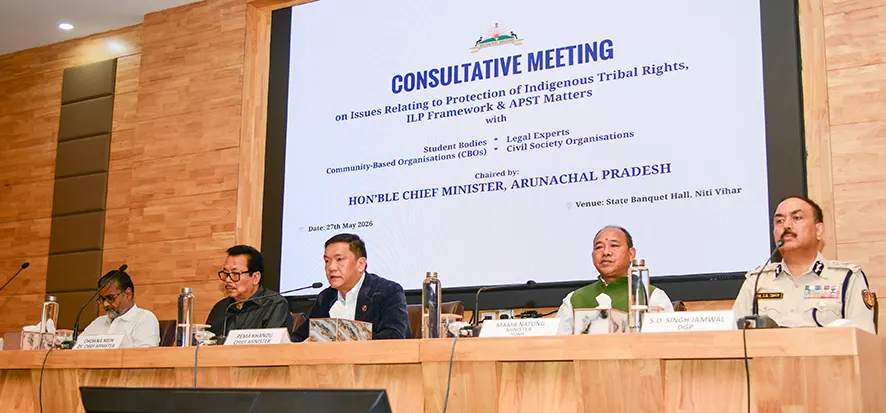
The 36-hour bandh organised by the Arunachal ST Bachao Andolan Committee is an ill-advised move; it is causing immense inconvenience to the public, disrupting daily life and travel, and even gives rise to law and order issues.
In my view, an effective and sustainable approach to this complex issue must be prioritising the rule of law, the rights of indigenous communities, and humanitarian principles.
1. Strengthening enforcement of border and inner line permit systems: Implement comprehensive digital tracking, introduce AI-driven document verification, establish additional checkpoints, and enhance coordination with the Assam Police and central forces (Border Security Force).
2. Identification and deportation: Expedite verification operations, judiciously utilise the Aadhaar (national identity) system and census data, and deport confirmed illegal entrants in accordance with the law.
3. Legal and policy reforms: Conduct reviews of settlements and, where appropriate, undertake verification exercises similar to the National Register of Citizens (NRC).
4. Development focus: Vigorously promote local employment and skills enhancement, strengthen infrastructure in border villages, and reduce reliance on migrant labour.
5. Border fencing: The government should provide financial and technical assistance for border fencing construction and security operations, thereby ensuring the safety and stability of the entire border region.
6. Tribal organisational coordination: Exercise oversight; gather evidence of illegal entry, engage in effective communication with the minister, organise marches and assemblies as appropriate, subject to obtaining necessary permits, and conduct bandh activities with prudence.
Tana Likha
Bandhs are inadvisable; more effective methods should be adopted
This article was published by The Arunachal Times — arunachaltimes.in/article/bandhs-are-inadvisable-more-effective-methods-should-be-adopted
Advertisement
Categories: Readers Forum