
Monday Musing
[ Prem Chetry ]
Social media platforms across the country have recently been flooded with opinions, debates and discussions reflecting public dissatisfaction with governance and highlighting issues that many believe contributed to the emergence of the Cockroach Janata Party (CJP) in May.
The sudden rise of the CJP has raised several questions. Is it the beginning of a democratic renaissance driven by Gen Z? Could it herald a new era of youth-led political engagement? Or will it eventually fade into obscurity as another short-lived social media trend? Some observers even wonder whether it could disrupt conventional democratic politics in the world’s largest democracy.
The emergence of the Cockroach Janata Party, a satirical online movement, has sparked widespread discussions, particularly among young Indians. The trend reportedly gained momentum after controversial remarks attributed to Chief Justice Surya Kant, in which unemployed youths were allegedly compared to ‘cockroaches’ and ‘parasites’. The remarks triggered strong reactions online and inspired a meme campaign initiated by political communications strategist Abhijeet Dipke.
What began as satire quickly evolved into a viral digital movement expressing concerns over unemployment, inflation, examination-related issues and the growing frustration of India’s younger generation.
History has often shown that major social and political movements emerge unexpectedly. Many supporters believe that the growing appeal of the CJP reflects a desire for a nation free from systemic shortcomings and governance failures. In a democratic society, citizens naturally seek platforms through which they can express their aspirations and grievances.
What has particularly caught public attention is the movement’s rapid growth on social media. Within days of its launch, the CJP’s Instagram following reportedly surpassed that of the BJP. According to various sources, the movement’s follower count has since crossed 22 million, reflecting its remarkable online reach.
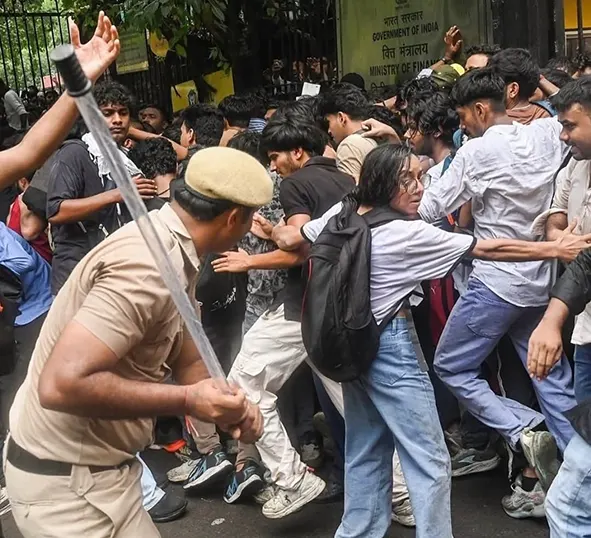
Earlier, speculation surrounded Dipke’s arrival in Delhi ahead of a protest at Jantar Mantar, demanding the resignation of Union Education Minister Dharmendra Pradhan. On Saturday, supporters welcomed him and participated in a peaceful demonstration.
Despite its massive online presence, questions remain about the CJP’s ability to translate digital support into real-world mobilisation. While its social media following has reportedly reached 23 million, only a few thousand supporters participated in the protest. Whether online enthusiasm can evolve into sustained grassroots support remains uncertain.
The gathering at Jantar Mantar drew hundreds of students, young professionals and supporters carrying books, national flags, flowers and symbolic cockroach masks. A number of senior citizens and parents also joined the demonstration. Speaking to the media, several parents said they want a system that guarantees fairness and transparency in competitive examinations, including NEET and CUET.
Meanwhile, some social media influencers suggest that the CJP either align with the opposition Indian National Congress or transform itself into a formal political party. However, spokespersons associated with the movement have reportedly ruled out any plans to enter electoral politics.
Support from prominent climate activist Sonam Wangchuk has further amplified the movement’s visibility and strengthened public discourse surrounding its objectives. Several political leaders, including Arvind Kejriwal, Uddhav Thackeray and CPI (ML) Liberation general secretary Dipankar Bhattacharya, have also expressed support through social media platforms.
Ultimately, what many young Indians appear to be demanding is a system that ensures fairness, transparency and equal opportunity – principles that form the foundation of a healthy democracy.