
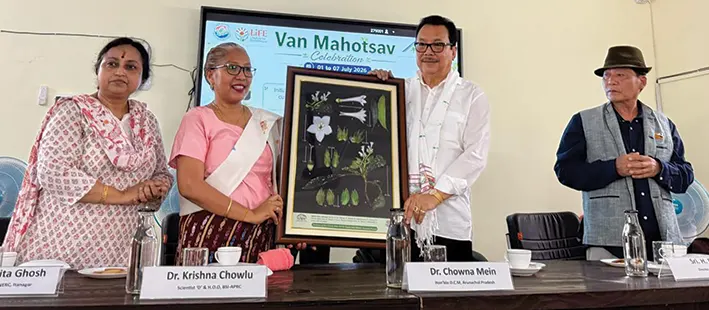
ITANAGAR, 6 Jul: Deputy Chief Minister Chowna Mein said that development must always be planned with environmental sustainability at its core.
The DCM said this while participating in the Van Mahotsav celebration organised here on Monday by the Botanical Survey of India’s (BSI) Arunachal Pradesh regional centre, in collaboration with the GB Pant National Institute of Himalayan Environment, North East Regional Centre (GBPNIHE-NERC), with the theme, ‘Initiative for a Green Earth through Plantation Drive-cum-Training Programme on Capacity Building in Taxonomy and Ethnobotany’.
The programme was marked with a plantation drive at the BSI campus, where Mein, along with scientists, academicians, researchers, NCC cadets, students and others, planted saplings as a symbolic commitment towards environmental conservation and sustainable development.
Addressing the gathering, Mein emphasised that true progress lies in embracing modernity while remaining firmly rooted in one’s culture and traditions. He urged the younger generation to preserve and promote the rich cultural heritage and indigenous knowledge systems of Arunachal Pradesh, noting that these traditions have enabled communities to live in harmony with nature for centuries.
Highlighting the significance of the programme, he said that biodiversity, cultural diversity, and sustainable development are deeply interconnected. He appreciated the efforts of the BSI and the GBPNIHE-NERC in promoting scientific research, environmental awareness, and capacity building in taxonomy and ethnobotany, particularly among students and young researchers.
Speaking on afforestation, Mein stressed that tree plantation should not remain a ceremonial activity but must be followed by sustained care and monitoring to ensure the survival of saplings. Expressing concern over the high mortality rate of plantations, especially along roadsides and in public institutions, he called upon schools, government departments, community organisations, and citizens to collectively nurture every tree planted.
“Planting a sapling is only the beginning. Our responsibility continues until that sapling grows into a healthy tree. Every plantation drive should be measured not by the number of saplings planted but by the number of trees that survive,” he said.
The DCM highlighted Arunachal’s exceptional ecological wealth, stating that the state forms part of one of the world’s 12 biodiversity hotspots and possesses an extraordinary range of ecosystems from tropical evergreen and subtropical forests to temperate, sub-alpine, and alpine regions. He noted that researchers continue to discover new species of plants, insects, amphibians, fishes, and wildlife from the state, underscoring its immense ecological significance.
He called for greater efforts to conserve rare and endangered plant species, many of which are facing increasing threats due to habitat degradation and climate change. He also encouraged students and young researchers to cultivate curiosity and scientific temperament, emphasising that taxonomy and ethnobotanical research play a crucial role in documenting and conserving the region’s unique biodiversity.
Mein further underlined that environmental conservation and sustainable development must go hand in hand. Referring to successful ecological restoration initiatives, he observed that protecting forests, rivers, and watersheds not only safeguards biodiversity but also strengthens livelihoods, enhances water security, and supports rural development.
Expressing concern over indiscriminate hunting and the declining population of birds and wildlife, he appealed to communities to protect nature and promote responsible ecotourism, birdwatching, trekking, and other nature-based activities that can generate sustainable livelihoods while conserving the environment.
Mein also highlighted the deep spiritual and cultural relationship that the indigenous communities of Arunachal share with nature. He said that the traditional practice of respecting forests, rivers, mountains, and natural resources offers valuable lessons for sustainable living and should continue to guide future development.
He further noted that environmental challenges such as climate change, global warming, floods, landslides, and soil erosion serve as reminders of the urgent need to protect ecological balance.
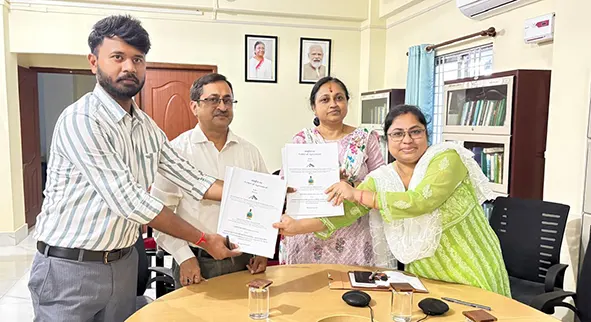
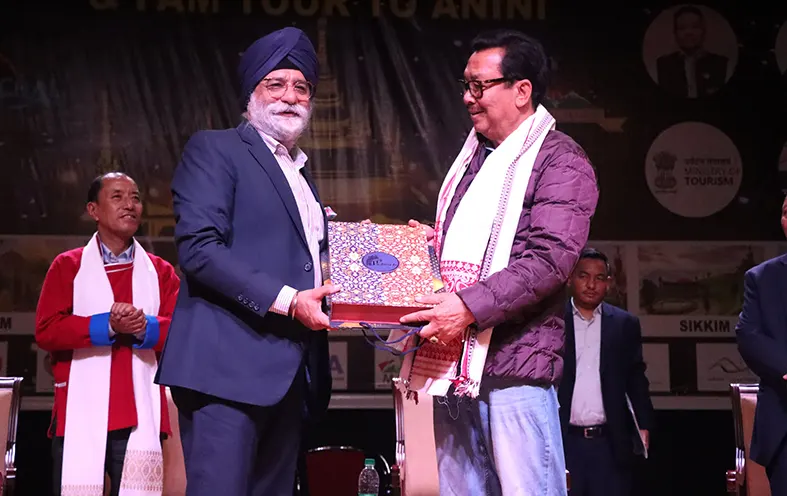
During the programme, Mein was presented with Ophiorrhiza chownaii, a newly described plant species named in his honour in recognition of his contributions towards environmental conservation, biodiversity protection, and sustainable development.
Expressing gratitude, Mein dedicated the honour to the people of Arunachal, and reaffirmed his commitment to protecting the state’s rich natural heritage.
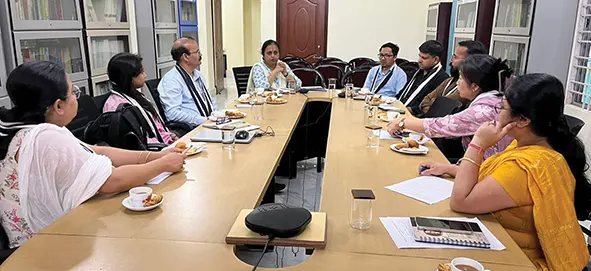
The inaugural programme was attended by BSI Regional Centre Head of Office Dr Krishna Chowlu, GBPNIHE-NERC Head of Office Dr Paromita Ghose, RGU HoD Dr Arindam Barman, NCC Commandant Samudra Singh, scientists, academicians, researchers, students, and others.(DCM’s PR Cell)