
National Librarians' Day
[ Dr Sudhir Kumar Jena ]
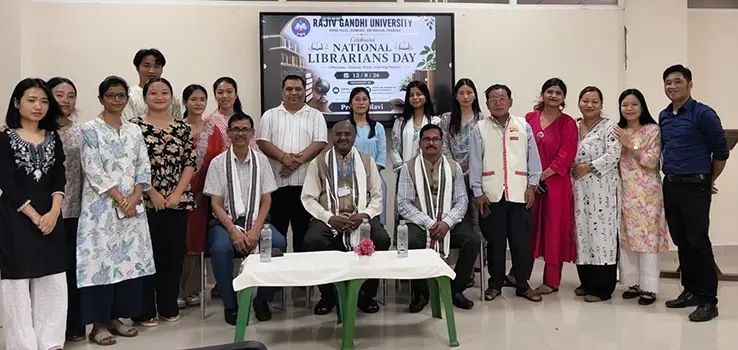
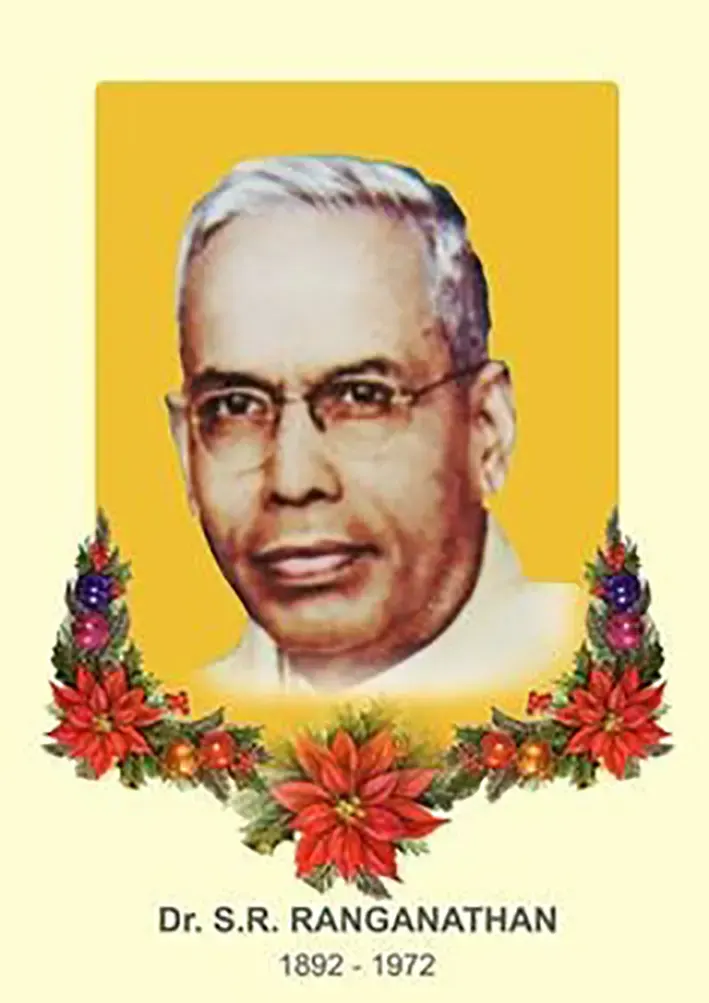
Every year, 12 August is celebrated across India as the National Librarians' Day to commemorate the birth anniversary of Dr Shiyali Ramamrita Ranganathan (1892-1972), widely revered as the Father of Library Science in India.
The day provides an opportunity to acknowledge the invaluable contributions of librarians in promoting education, research, lifelong learning, and democratisation of knowledge. It also reminds us of the extraordinary legacy of Dr Ranganathan, whose pioneering ideas continue to shape library and information services in the digital age.
Dr Ranganathan's journey from a distinguished mathematician to an internationally acclaimed librarian is a remarkable story of vision, dedication, and innovation. After serving as a mathematics teacher, he became the first librarian of the University of Madras in 1924. A study visit to England profoundly influenced his understanding of modern librarianship, inspiring him to transform libraries from mere repositories of books into dynamic centres of learning and intellectual growth.
Among his greatest contributions is the formulation of the Five Laws of Library Science in 1931:
# Books are for use.
# Every reader his or her book.
# Every book its reader.
# Save the time of the reader.
# A library is a growing organism.
These timeless principles remain the philosophical foundation of modern librarianship and continue to guide libraries worldwide in designing user-centric and inclusive services.
Dr Ranganathan also revolutionised the organisation of knowledge by introducing the Colon Classification system and the Classified Catalogue Code, which established scientific approaches to classification and cataloguing. These innovations laid the groundwork for efficient information retrieval and significantly influenced the evolution of library and information science across the world.
Beyond his scholarly contributions, Dr Ranganathan devoted his life to strengthening the library movement in India. He introduced library science education, promoted public library development, reorganised major university libraries, served the Indian Library Association, founded the Documentation Research and Training Centre (DRTC), and championed research and professional education in library and information science. His work earned him national and international recognition, including the prestigious Padma Shri in 1957.
Today, as society embraces artificial intelligence, digital transformation, open access, research data management, and digital scholarship, Dr Ranganathan's vision has become even more relevant. Modern libraries are no longer confined to physical collections; they have evolved into vibrant knowledge hubs that support digital literacy, research, innovation, and lifelong learning. His concept of the library as a "growing organism" perfectly reflects the continuous evolution of libraries in response to changing technologies and user needs.
Librarians today are not merely custodians of books; they are educators, information managers, research facilitators, digital curators, and partners in academic excellence. They empower students, researchers, and communities by providing equitable access to reliable information, fostering critical thinking, and promoting information literacy. In an era marked by information overload and misinformation, librarians play a crucial role in guiding users towards authentic, credible, and ethical use of knowledge.
On this National Librarians' Day, let us pay our heartfelt tribute to Dr SR Ranganathan, whose intellectual legacy continues to inspire generations of library professionals. His lifelong message reminds us that libraries are living institutions dedicated to serving humanity through knowledge, innovation, and service. As we celebrate this occasion, let us reaffirm our commitment to strengthening libraries as inclusive centres of learning and ensuring that knowledge remains accessible to all.
"Libraries are not merely storehouses of books; they are gateways to knowledge, innovation, and lifelong learning." Inspired by Dr Ranganathan's ideals, let us continue working towards building a knowledgeable, informed, and empowered society. (The contributor is head in-charge of the library and information science department at RGU, Rono Hills)