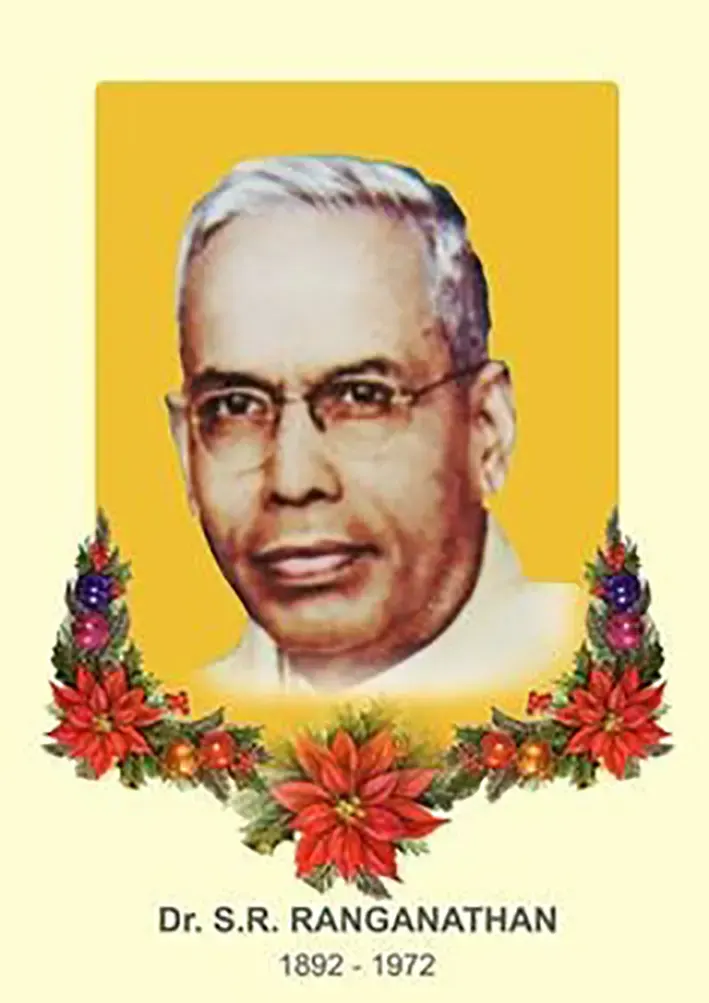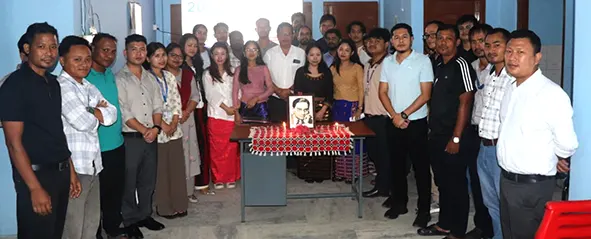

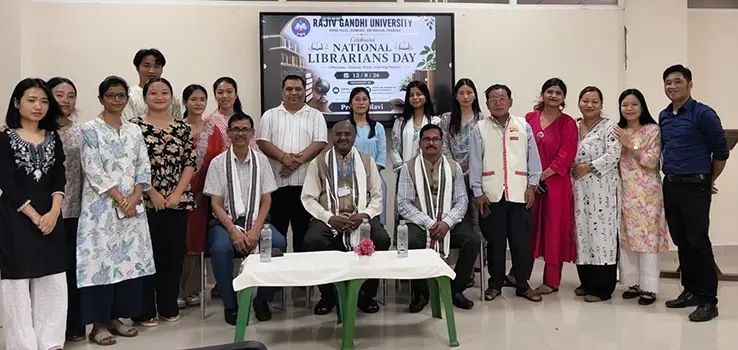
ITANAGAR, 12 Aug: The Rajiv Gandhi University's (RGU) Department of Library and Information Science (DLISc) celebrated National Librarians' Day, commemorating the birth anniversary of the Father of Library Science in India Dr. S.R Ranganathan.
The university's Librarian Dr. Sudhir Kumar Jena highlighted the unparalleled contributions of Dr.Ranganathan to the field of Library and Information Science. He said that Dr. Ranganathan's pioneering ideas, particularly the 'Five Laws of Library Science,' continue to guide libraries and information professionals across the world and remain highly relevant even in the era of artificial intelligence and digital knowledge systems.
Visiting professor Ravi spoke on the significance of National Librarians' Day and presented a comprehensive account of Ranganathan's journey from his childhood, education and early career as a mathematics teacher to his distinguished service as a librarian, educator, researcher and visionary.
Prof. Ravi elaborated on Ranganathan's pioneering contributions, including the formulation of the Five Laws of Library Science, Colon Classification, Classified Catalogue Code and his invaluable role in shaping modern library and information science education and services in India.
He encouraged students to imbibe Ranganathan's philosophy of lifelong learning, innovation and service to society.
The celebration witnessed the active participation of faculty members, library professionals, staff and students of the DLISc and the Central Library.
The National Librarian's Day was observed at the District Library, Bomdila in West Kameng district by organising a storytelling competition for students of GHSS, Bomdila.
Paying floral tribute to Dr. Ranganathan, district library & information officer, Lobom Tamin highlighted the life and achievements of Dr. Ranganathan and his notable contributions towards transforming libraries in India into more systematic and user-friendly institutions.
Tamin also stressed the significance of reading habits in students' lives and urged the participants to cultivate a habit of reading.
Trade development officer Dr. Mekori Dodum encouraged the students to make use of such platforms to learn, express themselves, and build confidence.
District youth officer Ateet Solanki also spoke about the importance of libraries and librarianship in society.
The participating students narrated stories on various themes, including self-composed stories carrying valuable social messages.
The District Library in Ziro in Lower Subansiri district celebrated the National Librarians' Day with a month-long free membership drive announced by district library and information officer Joram Taga, to help students build a consistent reading habit.
Guest speakers delivered motivational speeches with trade development officer Tai Arun sharing his journey from battling speech difficulties to clearing the state's toughest public service examination. He also offered to pay library membership fees for 25 local students.
Eingko Foundation founder Tage Onia also encouraged the students to read one book a month. Onia also highlighted the growing career paths in library and information science that often go unnoticed.
The District Library, Khonsa in Tirap district celebrated the National Librarians' Day with a two-day programme.
The celebration began on 11 August with an essay competition on the themes "From Bookshelves to Bytes: The Evolution of Librarianship" and "The Legacy of Dr. S.R Ranganathan and Modern Librarianship" for school students.
Students from RKSM, Girls' School, Government Town Secondary School, and Government Pinewood Secondary School in Khonsa participated in the competition.
ADC Namneet Singh emphasised the importance of cultivating a strong reading culture among children and youth. He encouraged students to make reading a lifelong habit.
Paying tribute to Dr. Ranganathan, he said that libraries continue to serve as vital spaces for knowledge, learning, reflection, and intellectual growth.
DL&IO Chaphun Sumnyan highlighted the role of public libraries as inclusive and accessible centres of learning for all sections of society. (DIPROs)