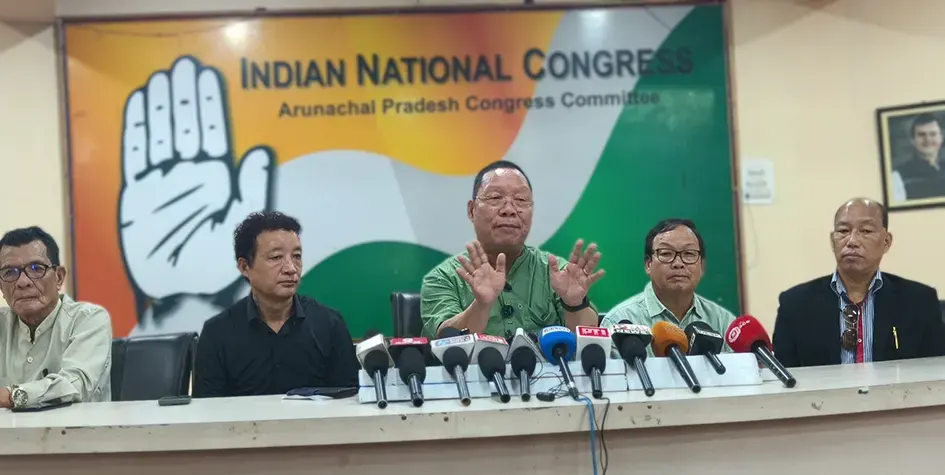
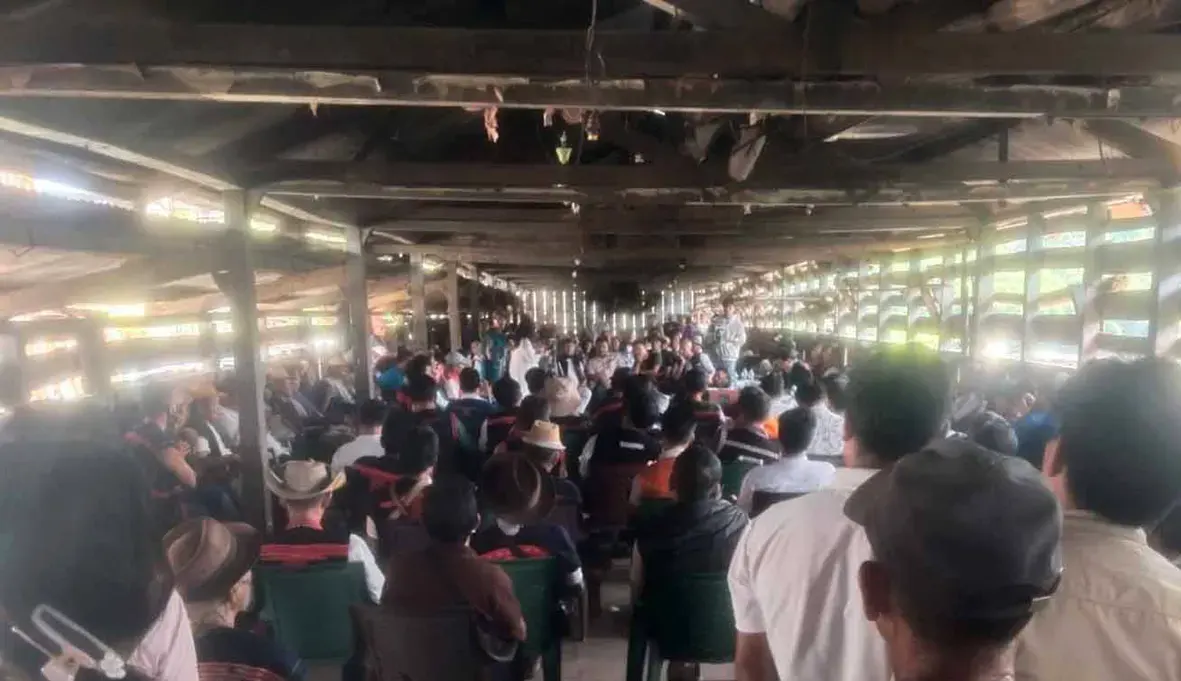
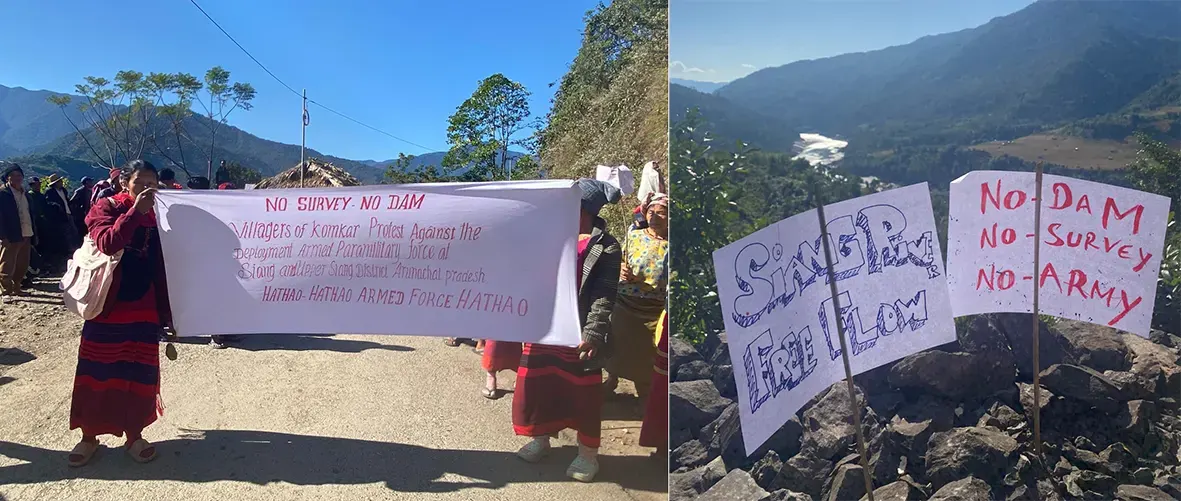
NAHARLAGUN, 13 Oct: Expressing serious concern over the escalating tensions in Siang and Upper Siang districts in connection of the proposed Siang Upper Multipurpose Project (SUMP), the Human Rights of Arunachal (HRA) has appealed to the state government to immediately withdraw the additional paramilitary forces and police personnel deployed in the project-affected areas, initiate confidence-building measures, and engage in meaningful dialogue with the affected communities.
In order to de-escalate tensions and restore public confidence,
HRA demanded withdrawal of additional paramilitary forces and police personnel deployed in the SUMP-affected areas, "subject to necessary and proportionate lawful security arrangements," review of FIRs registered against villagers, youths and students in connection with SUMP-related protests, and immediate review of suspension and termination orders concerning "Gaon Burahs and other government employees in connection with the controversy, ensuring fairness, due process and an opportunity to be heard."
"Respect peaceful democratic dissent, with all law-enforcement measures in accordance with the Constitution and applicable law," the organisation said and demanded immediate review of the cases involving four detained Adi social activists -Adum Tayom, Omak Paron, Okut Paloh and Oson Paron.
The HRA cautions that indiscriminate or disproportionate use of criminal proceedings and security measures against peaceful dissent could deepen public resentment instead of resolving the underlying dispute.
The HRA chairman Kipa Kaha also appealed to the state government and the Siang and Upper Siang district administrations to convene an inclusive, high-level round-table discussion involving Adi community elders and customary institutions, villagers, farmers, landowners and other potentially affected families, representatives of the Siang Indigenous Farmers' Forum (SIFF), Gaon Burahs and elected panchayat representatives, youth groups, students and civil society organizations, relevant district and state government officials, and NHPC and other concerned project authorities. The dialogue should provide a genuine opportunity for communities to raise questions, receive verified information, present their objections and seek answers without fear or intimidation, the HRA said.
Demanding resignation of Panchayati Raj minister Ojing Tasing, who also chairs the High-Power Committee associated with SUMP, the HRA chief Kaha criticized the minister's support for advancing the project as a "National Project without adequately addressing the apprehensions expressed by affected communities."
HRA has also criticized the positions taken by elected representatives, including MP Tapir Gao, MLAs Alo Libang, Onit Panyang, and Okeng Tayeng, along with concerned elected panchayat representatives, over the SUMP issue. He called upon them to explain their positions publicly and demonstrate how the concerns of affected communities are being addressed.
HRA reiterates that support for a development project must not be treated as a substitute for genuine consultation with the people whose lives and territories may be affected.
The organisation also raised questions concerning the strategic and technical arguments advanced in support of SUMP, particularly comparisons with the proposed mega hydropower project on the Yarlung Tsangpo/Brahmaputra in Tibet.
"The figures cited in the public debate refer to an approximately 60,000 MW project in Tibet and the proposed 11,000 MW SUMP in Arunachal Pradesh, with reported storage figures of approximately 5.5 billion cubic meters (BCM) and 9.2 BCM, respectively," the HRA said and added that "these figures and their implications must be explained through transparent, independently scrutinized technical assessments."
Kaha stated that national security is an important consideration and must be examined through comprehensive technical, environmental and strategic assessments. However, national security arguments should not be used to disregard the rights, concerns and legitimate questions of people living in project-affected areas. HRA called upon both state and central governments and the National Hydroelectric Power Corporation (NHPC) to provide clear, accessible and evidence-based explanations of the project's necessity, risks, benefits and alternatives.
HRA has also called for full transparency and public accountability regarding the reported Rs. 350-crore Siang Special Development Package associated with the wider Siang development process.
Kaha emphasized that development and livelihood assistance must not be used as a substitute for informed public consultation or as a means of pressuring communities to accept a project about which they continue to have serious concerns. "Disclose all information relating to the Rs. 350-crore development package," the HRA demanded.
The HRA further appealed to the state government and NHPC to temporarily suspend further pre-feasibility report (PFR)-related field activities in the affected areas until an atmosphere of trust is restored and the concerns of local inhabitants are addressed through a credible and transparent consultation process.
The state government must demonstrate that development policy is guided by democratic principles, transparency, accountability and respect for indigenous communities, the HRA said.