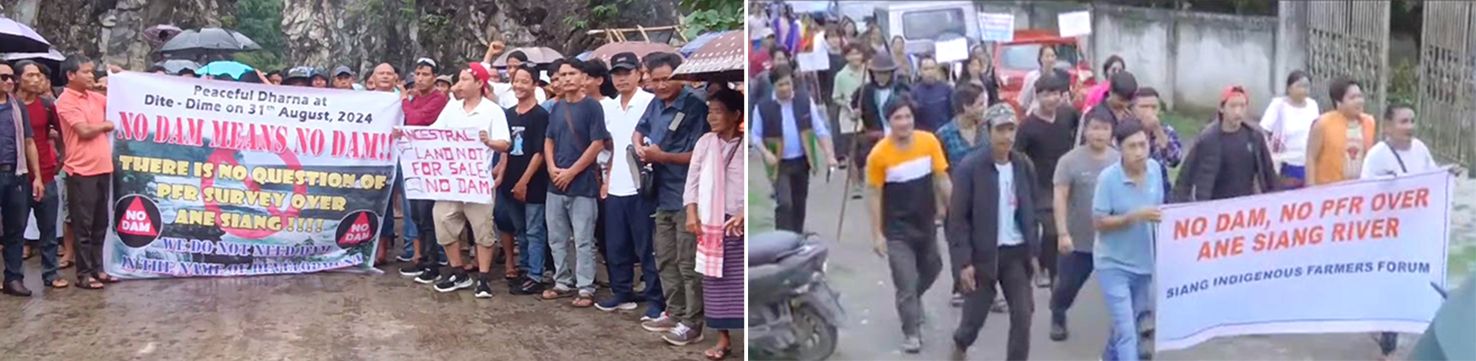
ITANAGAR, 10 Oct: Chief Minister Pema Khandu has convened a meeting with two prominent Adi organisations on 13 October to address concerns over the proposed Siang Upper Multipurpose Project (SUMP), even as the Siang Indigenous Farmers' Forum Youth Wing (SIFFYW) has declared a complete boycott of peace talks and consultations with the government until its four key demands are fulfilled.
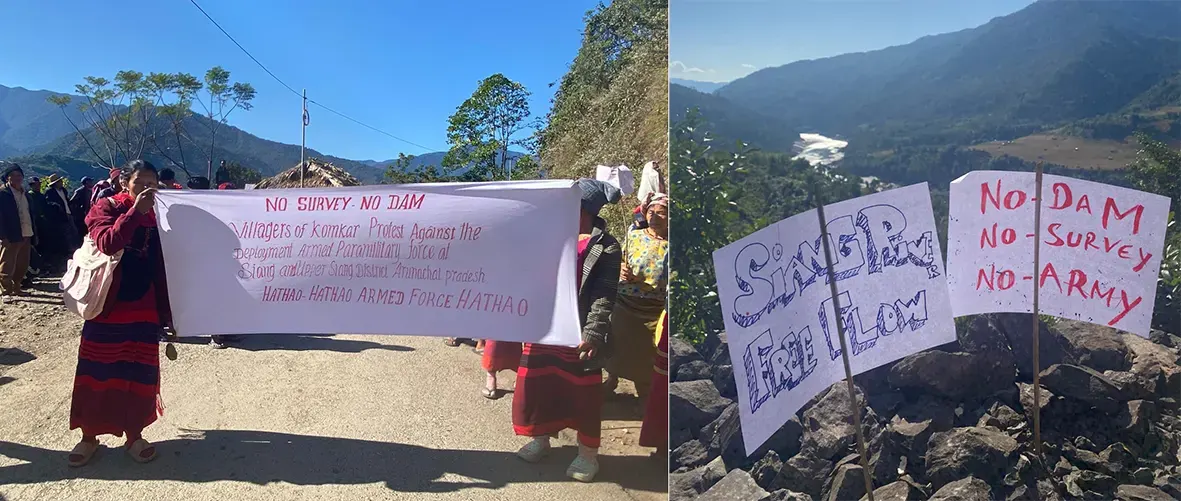
The contrasting developments come amid escalating tensions over the proposed mega hydropower project, with anti-dam activists accusing the government of suppressing dissent through arrests and deployment of security forces.
According to an official notice issued by the chief minister's office on 9 October, the meeting will be held on 13 October at the conference hall of CMO-2, Niti Vihar, in Itanagar.
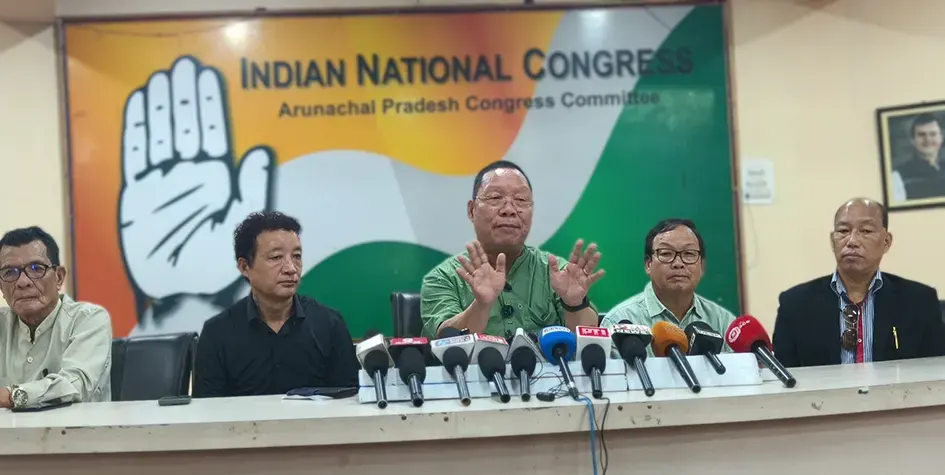
The meeting follows concerns raised by the Adi Baane Kebang Youth Wing (ABKYW) and Adi Students' Union (AdiSU-Apex) during a joint press conference at the Pasighat Press Club on 3 October.
ABKYW president Oki Dai and AdiSU president Tani Tapo have been invited to attend the meeting, along with their respective delegations.
However, in a strongly worded public notice issued on 10 October, the SIFFYW declared an absolute boycott of all peace talks, negotiations and consultations concerning SUMP, accusing the state government of adopting a high-handed approach towards indigenous communities opposing the project.
The forum alleged that innocent villagers and frontline activists are being arbitrarily arrested and jailed despite repeated representations to the government.
Laying down four non-negotiable preconditions for any dialogue, the SIFFYW demanded immediate withdrawal of all Central Armed Police Forces (CAPF) from traditional villages and lands in the Siang region.
It also sought unconditional withdrawal of all FIRs, charges and legal proceedings against villagers and activists implicated in cases related to the anti-dam protests.
The third demand called for immediate and safe release of all community members currently in custody, while the fourth sought full compensation for villagers who allegedly suffered injuries during security operations, besides restitution for damage to private vehicles and village properties.
The forum maintained that no consultation or negotiation should take place until all four demands are fulfilled.
Going a step further, the SIFFYW called upon community organisations, student unions, clan representatives and political leaders to refrain from engaging with the government over the SUMP under the guise of consultations.
It warned that any organisation or individual disregarding the resolution and participating in government-sponsored meetings would be held responsible under its resolution for consequences arising from such negotiations.
The SIFFYW asserted that dialogue cannot proceed while protesters remain behind bars and their grievances remain unresolved.
Speaking to this daily, anti-dam activist and SIFFYW legal adviser Ebo Mili questioned the purpose of the proposed meeting, asserting that no organisation could decide the future of the entire Adi community while security forces remain deployed in the region.
"What's the point of them meeting with the CM? No one can decide the future of the entire Adi community unless the CAPF is withdrawn," Mili said.
He said that the chief minister is free to meet any Adi organisation, community-based organisation (CBO) or student union on other issues, but discussions concerning the SUMP should not take place until the protesters' demands are addressed.
"The CM can meet any Adi group, CBO or union on any topic, but not SUMP," he asserted.
The developments follow a series of confrontations between anti-dam protesters and authorities in the Siang region over the pre-feasibility report (PFR) activities for the project.
The state government has maintained that the PFR exercise is intended to assess the project's technical and economic feasibility and does not constitute a final decision on its construction.
However, sections of the indigenous population have continued to oppose the exercise, raising concerns over displacement, environmental consequences and the potential impact on their ancestral lands and livelihoods.
There was no immediate confirmation from the ABKYW or the AdiSU on whether the two organisations would attend the meeting in light of the boycott call.