BOMDILA, 16 Jul: West Kameng Deputy Commissioner Dr Dilip Kumar urged panchayat leaders to actively sensitise their respective villages and communities to proper waste management practices.
Chairing a meeting-cum-sensitisation programme on the Solid Waste Management (SWM) Rules, 2026 here on Thursday, the DC observed that waste management was once considered primarily an urban concern. However, with improved road connectivity, changing lifestyles, and the increasing influx of tourists and visitors, rural areas are also facing serious waste management challenges, he said, and emphasised the importance of the newly introduced SWM Rules, 2026, which have been formulated with strict provisions and judicial oversight to address the growing issue of waste pollution.
Kumar stated that effective waste management can only be achieved through collective community participation, and appealed for “mass involvement” in maintaining cleanliness and environmental sustainability.
The deputy commissioner also informed the participants that defaulters violating the provisions of the new rules could face strict action. He further informed that material recovery facilities (MRFs) have been proposed for 33 villages in the district under the Vibrant Villages Programme 2.0, and urged panchayat leaders to establish at least one MRF in each village.
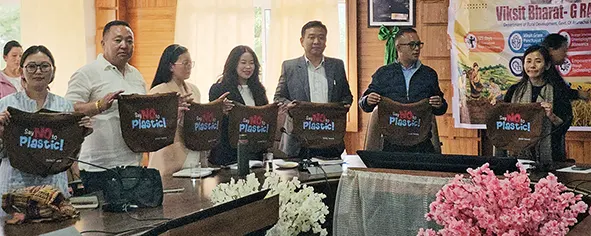
Referring to the district-wide ban on single-use plastics and plastic water bottles below two litres, Kumar appealed to the business community, the public, and all stakeholders to cooperate with the administration, adopt environmentally responsible practices, and contribute towards keeping West Kameng clean and healthy.
District Panchayat Development Officer Ashok Tajo elaborated the implications of the SWM Rules, 2026, for panchayati raj institutions. He explained the background and objectives of the rules, and stressed the need for awareness generation at the grassroots level.
Appealing to panchayat leaders to create awareness within their respective jurisdictions, Tajo urged them to discontinue the practice of open dumping and promote the use of dedicated four-colour segregation bins for effective waste segregation.
He further directed that both the Zilla Panchayat Development Plan (ZPDP) and Gram Panchayat Development Plan (GPDP) should incorporate waste management components by the coming Monday.
Ittisha, founder of the Northeast Waste Collective, which has been working on waste management initiatives in West Kameng since 2020, shared the organisation’s journey and experiences in managing waste across the region. She highlighted several best practices and underscored the importance of community participation in ensuring sustainable waste management.
She also spoke on the challenges faced in transporting recyclable waste to nearby collection centres and buyers, and sought the district administration’s support to strengthen waste management efforts.
Ittisha cautioned against “certain alternatives to plastic carry bags currently available in the market,” stating that “some of them may be even more harmful to the environment than conventional plastics,” and urged the public to make informed choices.
Superintendent of Police Dorjee Wangdi Thongon lauded the efforts of Ittisha and the Northeast Waste Collective and advocated expansion of similar initiatives to other parts of the district. Referring to the rapid increase in tourist footfall in the region, he highlighted its adverse impact on waste generation and environmental pollution.
Thongon also encouraged the public to make use of various citizen-centric digital platforms, including YodhaBandhu, an application designed to support youths facing substance abuse and emotional distress; Choo-Man-Tar, an interactive application that educates children about good touch and bad touch through games; and Tele-MANAS, a Government of India initiative providing free 24×7 tele-mental health services.
He further appealed to the public to act as the eyes and ears of the police in combating the growing menace of drug abuse in society.
Representatives from the District Urban Development Agency (DUDA), the Deputy Director of Rural Development, and ZPMs also spoke during the programme.
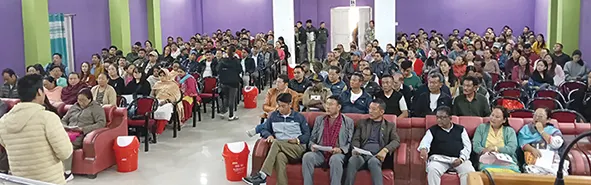
The meeting was attended by administrative officers, HoDs, PRI leaders, representatives from gonpas, members of the business community, and other stakeholders (DIPRO)