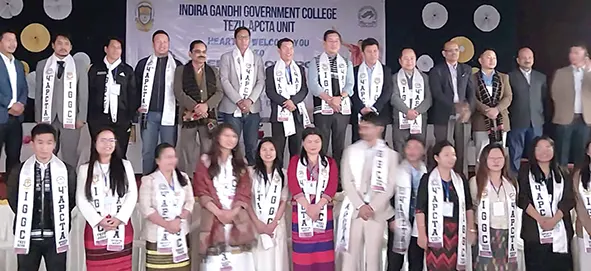
TEZU, 26 Sep: The chemistry department of Indira Gandhi Government College (IGGC) here in Lohit district organised a national seminar on 'Nanotechnology: Meeting Point of Physics, Chemistry and Biology', under the sponsorship of the Directorate of Higher and Technical Education, on Saturday.
The seminar brought together academicians, researchers, faculty members and students from various institutions across the country to deliberate on recent developments and applications of nanotechnology, particularly in the fields of environmental science and sustainable materials.
During the inaugural session, IGGC Chemistry Associate Professor Dr PM Singh highlighted the objectives behind organising the national seminar, and emphasised the growing significance of nanotechnology as an interdisciplinary field of scientific research.
Delivering the keynote address, Rajiv Gandhi University Chemistry Professor Harunar Rashid spoke on 'Designing Sustainable Nanomaterials for Environmental Applications'. He elaborated the synthesis, characterisation and applications of nanoparticles and their potential role in environmental remediation and addressing contemporary environmental challenges.
IGGC Principal Dr Kangki Megu highlighted the importance of multidisciplinary education and research in the light of the National Education Policy (NEP) 2020. He observed that nanotechnology represents a significant meeting point of physics, chemistry and biology and therefore provides an excellent platform for interdisciplinary scientific engagement.
The technical sessions featured six paper presentations by professors and research scholars from reputed institutions, including AUS, Namsai; NERIST, Nirjuli; the National Institute of Oceanography, Goa; and BMS College of Engineering, Bengaluru.
The presentations covered diverse aspects of nanotechnology and its emerging applications.
Thirteen poster presentations on the seminar's theme were presented by the college's science students.
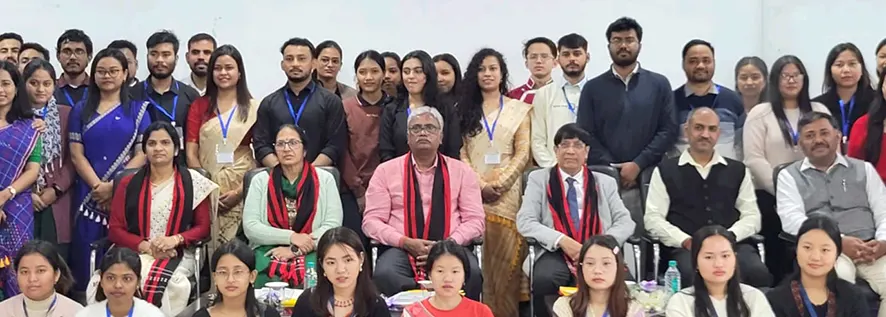
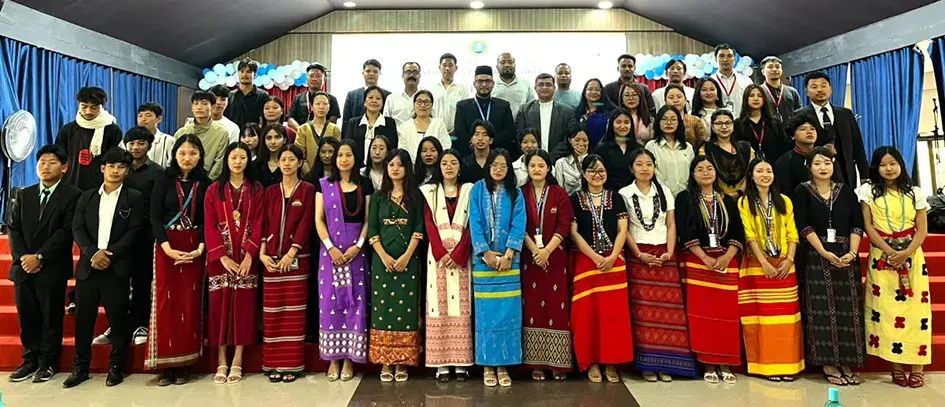
The event witnessed active participation of more than 55 students and faculty members, besides the invited resource persons and paper presenters.