
TribalBookworms
[ Dr Doyir Ete Taipodia ]
There is an African tribal saying, "When a river forgets its source, it will soon run dry." The message carries itself: we must not forget our roots, our stories and histories. In his book Oral Tradition as History, Jan Vansina writes of oral traditions as messages and of how their preservation is entrusted to successive generations.
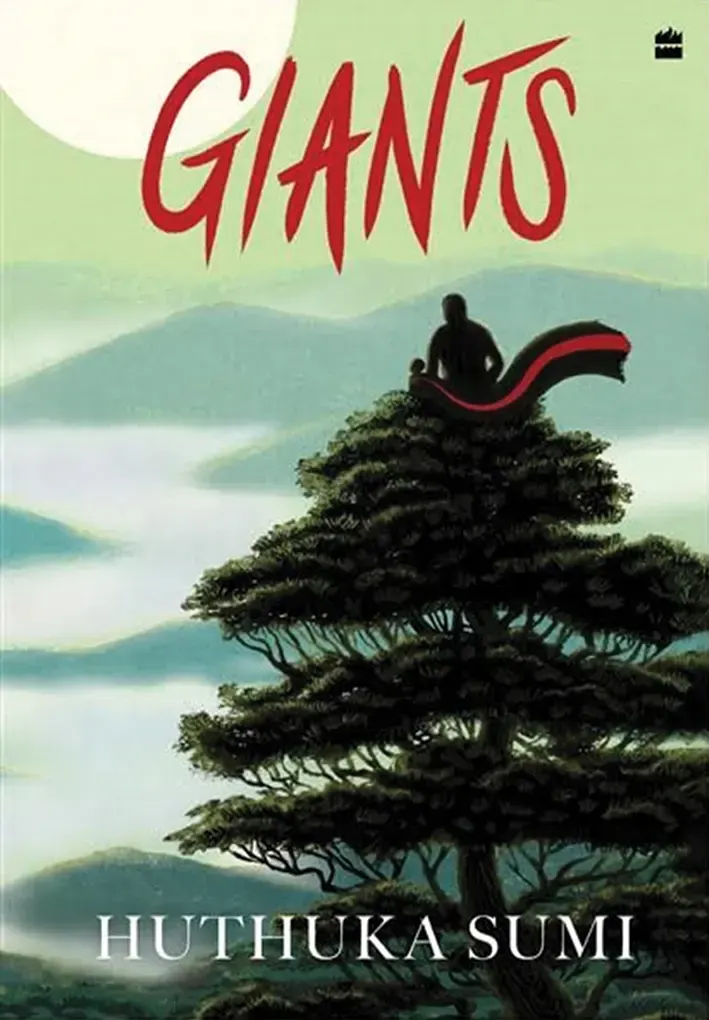
Huthuka Sumi, a writer from Nagaland, encapsulates such a tradition in the mytho-real, dreamlike world of his novel Giants (2025). Giants speaks of stories like very few books do. Sumi just doesn't say that stories are needed; he demands that the storyteller be true first, speak from the heart, and believe in himself as much as he believes in the story being told.
Giants, published by HarperCollins, is a sensitive portrayal of Kato, a young boy who lives with his parents in the village of Ayito-Phu. He encounters a timi-ala, a giant named Kene, in his dreams. Kene is a mythical being from Sumi lore. It is within this surreal world of myth and reality that the story unfolds, as Kato and Kene navigate two worlds that criss-cross and become increasingly entangled with each other. Kato, only thirteen years old, is mute, but in the world of the timi-ala, he can speak, or should we say, he is allowed to speak in the voice of his childhood friend Apu. But in the real world, he will remain as he was.
It is in this flux that Kato and Kene journey across the realm of ancient lore as they individually struggle to get their messages across to each other. Kene is one of the last of his kind. He is not just a creature of Sumi lore, but he is also a creature of the past. He represents a bygone world which is rich, interconnected, and deeply spiritual. This world offers a glimpse into ancestral tribal beliefs and ways of life before the advent of modern forms of religion. This is particularly interesting for a reader like me because it brings to life a world of lore that has somehow been left behind in the maze of modern discourses on language, religion, and identity. In this sense, it offers a refreshing glimpse into a worldview that was once a natural part of the beliefs and practices of the Sumi tribe. But now, the inevitability of change and transformation threatens the very existence of the world of the timi-ala, a world deeply interlocked with plants, animals, humans, and the life force that evolves from them. Kene, the giant, is on the lookout for a storyteller, a true storyteller, a believer in him, in his kind, and in his stories. "We do not wish to be forgotten," he says, and that is why he needs a storyteller.
Kato is the most unlikely choice. How can a mute person narrate stories? How can a little boy struggling with his own confidence put his trust in stories? How can the village folk who see him as a simple boy believe in him? But the giant chooses him. He nudges him to know his roots, to feel them throb, to accept them, and to trust in them. Perhaps Kene can see through the young child and see his love for stories, and perhaps he can also see through him to his mother and grandmother, who are themselves great storytellers. As Kene says, "A story is not simply in the telling of it." Kato, too, realises that "a people without stories disappear."
Giants is sensitively narrated: restrained and honest. Every character is given their own time as they love, learn, and face consequences. Nothing is forced: no jumping to conclusions and no cutting ends. It is a natural and honest story of transformation. Giants is also a children's story. Told through the eyes of young Kato, it sensitively touches the inner world of children: their joys, sorrows, and anxieties. It particularly details the friendship between Kato and Apu as it goes through its own trials and tribulations. This friendship and love constantly evoke nostalgia for a carefree childhood world. Apu is not just a playmate and close companion to Kato; he demonstrates a world of innocence and loyalty in a child's world. At the same time, the young characters are also navigating the world of adults, witnessing war and devastation. However, their friendship survives through all this.
A defining plot element in the novel is the Battle of Kohima, when the Imperial Japanese Army reaches Kato's village. As with any war, it leaves many in the village scarred for life, particularly Kato and his family. Kato's family and the many other families depicted in the novel are ordinary tribal folk surviving the ebb and flow of life. However, during the Japanese invasion, they display extraordinary courage and stoicism. Though the novel does not dwell in depth on the war, it forms an important background at a critical juncture in the lives of the two protagonists, Kato and the giant. The war is a premonition of sorts, and it leads to inevitable and irreversible consequences both for the mythical realm and the real world.
Another crucial feature of the novel is its depiction of women. They are agents in themselves, gentle but pesky and assertive. Has it not been a general characteristic of a tribal society, where women may not be the most prominent members but are as important as men in familial setups? Kato's mother Nisheli, his grandmother Khuzeli, and even Ghonili, the old, solitary woman, are sensitively portrayed. Each is a forbearer of stories, tradition, and Sumi culture. The novel depicts how men and women of the village continue to be decisive influences in the village. Their depiction, along with the worldview, traditions, agricultural practices, old wives' tales, communal systems, and practices, takes the reader into Sumi culture in its entirety. The story is replete with words and terms from the Sumi language, names that give glimpses of a distinct Sumi worldview. The beautiful oral world of stories is filled with a conglomeration of mythical beings like Alhou, the creator; the Shi-kheu, the guardian of animals; Aki-ghaou, the guardian of homes; Aghokio-ghau, the guardian of rivers and fishes; and Timi-la, the giant, the guardian of men when they walked the forests.
Roots form the crux of the story: ancestral roots, roots with nature, roots of the spirit, roots of humanity, and roots of love. It's all interconnected, sustaining and thriving with one another. The story explores the deep connection of Sumi culture and its stories with its people; however, what is of particular significance is the author's realisation that these stories are on the verge of extinction. How can Kato salvage them? How can the ancestors and their stories survive through him? Even the muzamuza, the forest spirit and Kene's sister, awaits deliverance through Kato. Only "a story that truly means something" can lead muzamuza to her long-lost home. Despite all the initial resistance, Kato is the chosen one, the storyteller! Giants is thus also a novel of hope. There is hope in the most unlikely of ways. Aghoto, the teacher, talks of how the blind can also read. This amazes Kato, opening doors to possibilities he had never dreamed of. He finds a way to the heart of stories and writes about them. Giants tells a story that is both heartbreaking and heartwarming at once. At its core, it remains, above all else, a Sumi story. (The writer is an associate professor in the English department of RGU, Rono Hills.)