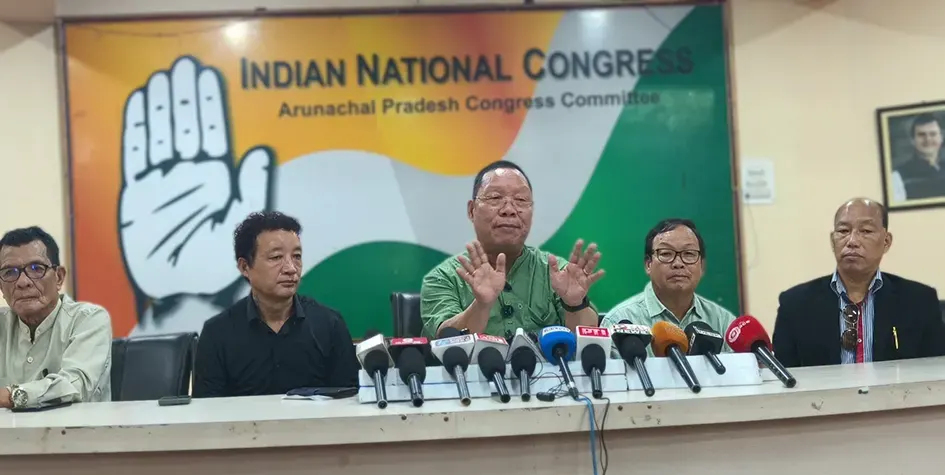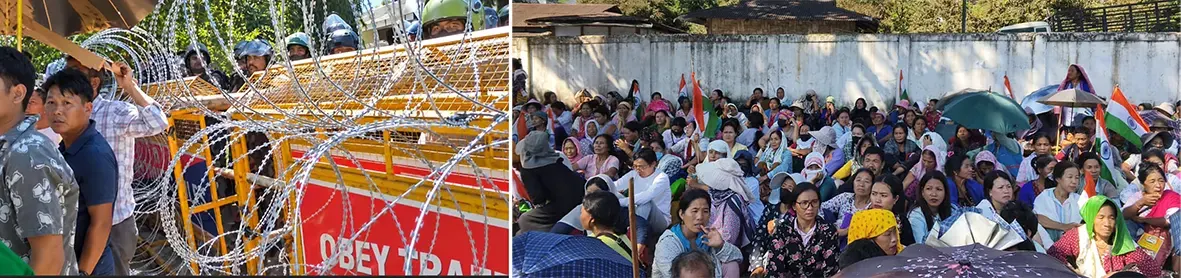

The People’s Party of Arunachal (PPA) and the Congress party in Arunachal Pradesh have urged the state government to address public concerns over the proposed Siang Upper Multipurpose Project (SUMP) and the heavy deployment of security forces in the protest-affected region.
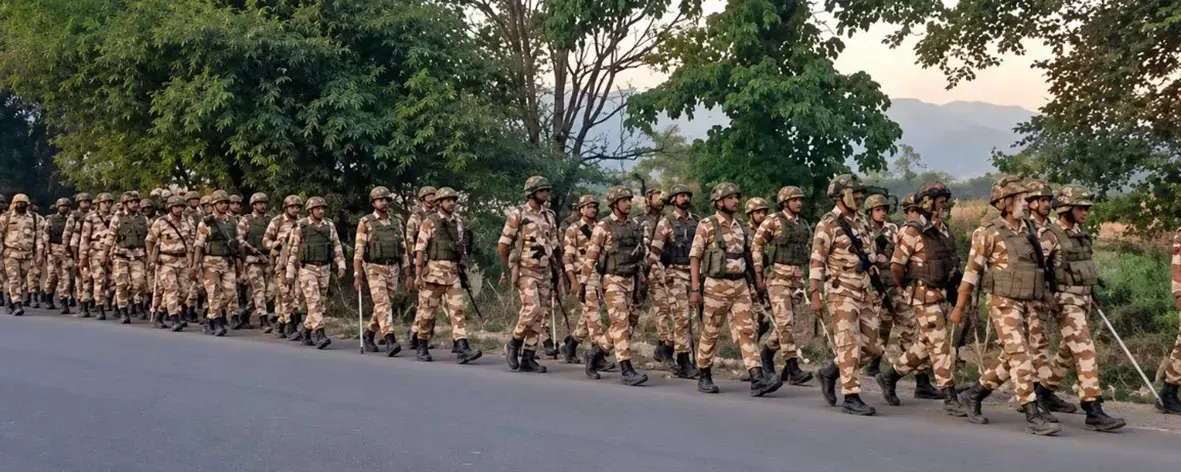
The PPA has demanded the immediate withdrawal of Central Armed Police Forces (CAPF) from the Siang region and the release of all anti-dam protesters arrested in connection with the project. Warning that the situation in the region is slipping out of the government’s control, the party stated that preparing the pre-feasibility report (PFR) by force would widen the gap between the government and the public, deepening mistrust. The PPA also questioned whether the state would resort to deploying the Army in the future if resistance continues, maintaining that a mega-project as large as the SUMP cannot be implemented by suppressing public voices and running misinformation campaigns.
Similarly, the Congress party has demanded a substantial reduction in the deployment of additional Rapid Action Force (RAF) personnel in areas witnessing protests against the proposed mega-dam. Alleging that the government is relying on brute force instead of addressing genuine public grievances, the Congress urged the administration to initiate an immediate dialogue with the affected communities.
Furthermore, the Congress has called for a suspension of all pre-feasibility survey activities until meaningful consultations are held. Seeking transparency, the party requested specific details regarding the necessity, mandate, and duration of the additional RAF deployment, warning that an expanded security presence could aggravate local tensions.
Finally, the Congress demanded the release of detained youths whose continued custody lacks legal justification, alongside a comprehensive review of protest-related FIRs, allegations of arbitrary arrests, and retaliatory state actions. Opposition leaders emphasized that the state government must urgently take into account these emerging realities and the shared concerns raised by both parties.