Editor,
The Siang has always been our life, beating in time with the quiet rhythm of our mountains and the steady pulse of our community. For as long as our grandfathers can remember, our songs, our stories, and our daily prayers have flowed right along with its waters, carrying the spirit of our ancestors from the high peaks down into the valleys. To the men in suits sitting far away in the air-conditioned offices of New Delhi, it is just a number on a map-an 11,000-megawatt machine waiting to be built on paper, a sleek asset to balance spreadsheets and fuel distant cities. But to us, it is our mother, the keeper of our history and the foundation of our very breath, and right now, our mother is being stolen from us piece by piece.
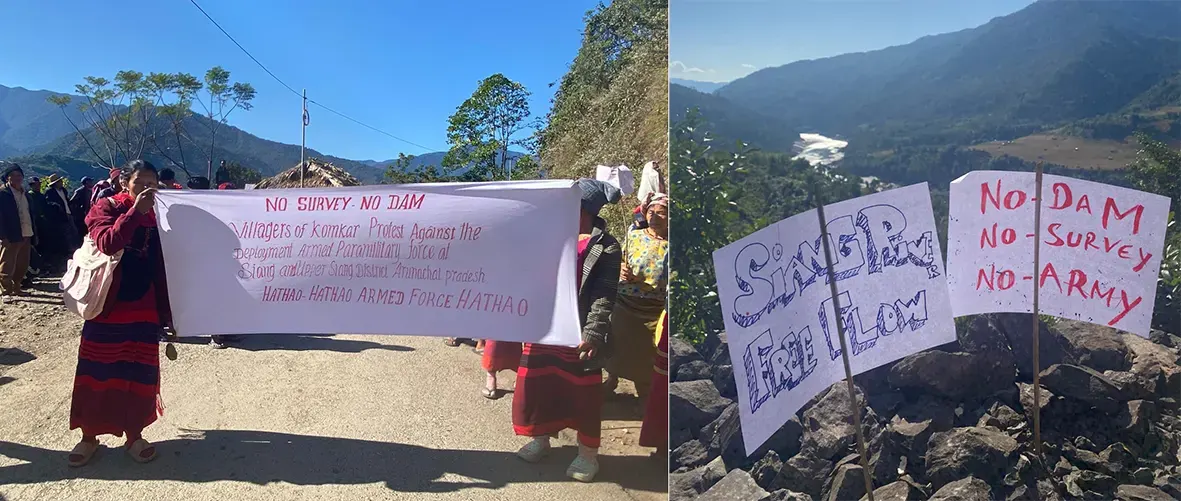
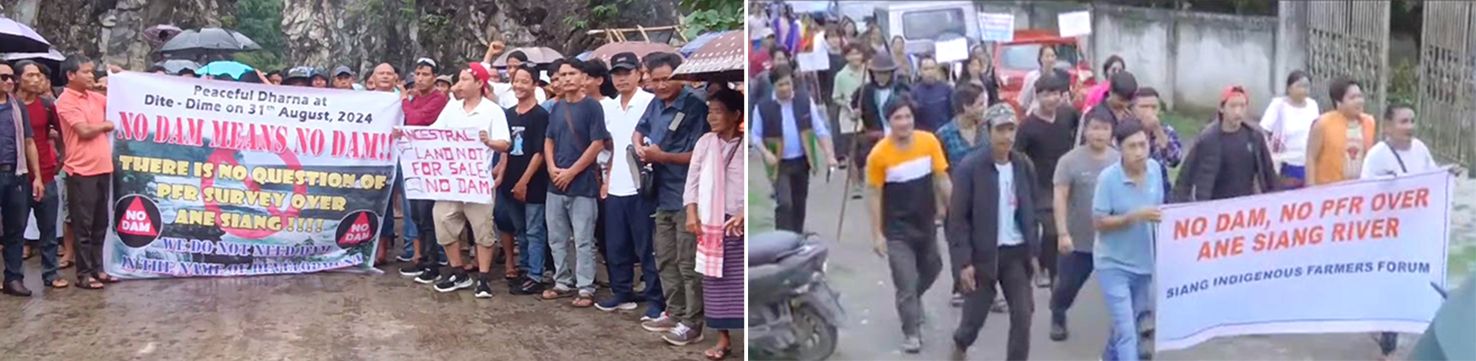
Our hearts are heavy and broken in Geku village today because four of our own-Adum Tayom, Omak Palong, Okut Palo, and Oson Palong-are sitting behind cold prison bars instead of walking under the open skies of their homeland. What did they actually do to deserve such a fate? They dared to stand up and say no to a survey for this massive Upper Siang dam. They dared to ask the simple, human questions that every government should be forced to answer: What will happen to the sacred graves of our ancestors? Where will the wildlife go, and how will our children forage in the forests we have protected for centuries? What happens to the river that feeds our bodies and nourishes our souls when the corporate floodgates close? For speaking those gentle, honest truths, the authorities labeled them dangerous criminals, twisting a harsh local law called the APUAPA to lock them away as if they had committed unspeakable atrocities against their fellow human beings.
Now, the atmosphere in our once-peaceful villages has turned suffocating and cold. Armed soldiers and police forces now walk through our streets, their heavy boots echoing against the earth, casting a long, intimidating shadow over our homes and families. People are afraid to speak up at village meetings, looking over their shoulders before they share a whisper, terrified that the next knock on the door in the dead of night will be for them or their children. When did simply wanting to protect your home, your trees, and your water become an act of terror? When did a community asking for its voice to be heard transform into a national security threat? It breaks our hearts to see our neighbors silenced by a manufactured, suffocating fear that seeks to turn us into strangers in our own ancestral domain.
We look across the rolling hills and valleys of our region and realize with a deep, crushing sorrow that we aren't the only ones crying. Look at Assam, just down the road, where ordinary people tried to protect their sacred lands near Kaziranga National Park from a sprawling luxury hotel project, only to watch anti-displacement activist Pranab Doley thrown under the heavy chains of the National Security Act for standing with his community. Look far beyond our borders to Odisha, where our Adivasi brothers and sisters are beaten, harassed, and jailed just for trying to save their ancient mountains and forests from greedy bauxite mining. Under this current government-whether in Arunachal Pradesh, Assam, or the mineral-rich heartlands of central India-there is a cruel, unchanging script being played out over and over again against the marginalized. Whenever poor and indigenous people stand up to protect their environment from corporate greed, the state refuses to talk to us or listen to our desperate pleas. Instead, they bring out the police, slap draconian laws like the UAPA and APUAPA onto our youth, and treat us as enemies of the state for the simple crime of wanting to survive.
They call this relentless march of destruction progress, but what kind of progress destroys a people's soul and erases their entire existence? Our bond with this land isn't just about real estate, market value, or commercial exploitation-it is who we are. It is the language we speak, the rituals we perform, and the legacy we hope to hand down to our grandchildren. If the Siang dies, the Adi people die with it, our culture dissolving into the silent depths of a reservoir. We refuse to let them silence us through fear, because we are human beings with a history and a future, not disposable obstacles tucked away in a bureaucrat's file cabinet.
We are asking anyone with a conscience across this entire country to hear our cry and help us before it is too late. We beg you to look past the political rhetoric and see the human cost of these mega-projects. Free Adum, Omak, Okut, and Oson right now, and drop these cruel, unjust charges that mock our democratic values. Take the soldiers out of our villages and let our families breathe without the constant, heavy weight of intimidation and surveillance. Cancel this destructive dam once and for all, and put an end to the misuse of ruthless laws designed to crush the voices of indigenous people who only want to live in peace and dignity. Our tears are falling heavy into the river today, but our resolve remains unbreakable. Will you stand with us before our home, our culture, and our beloved river are washed away forever?
Oten Boli