[ Prem Chetry ]
SHERGAON, 5 Oct: Unexplored and tucked away in the picturesque village of Shergaon in West Kameng district is a remarkable piece of history and architectural heritage that remains largely unknown to the outside world.
Thungeey gonpa, an important archaeological masterpiece in the state, deserves greater attention and consideration for protected monument status.
Categorised as an 'unprotected monument', the monastery is believed to have been built during the 15th-16th century AD, according to the Directorate of Research, Department of Cultural Affairs. The ruins of this ancient Buddhist monastery silently preserve the story of a bygone era.
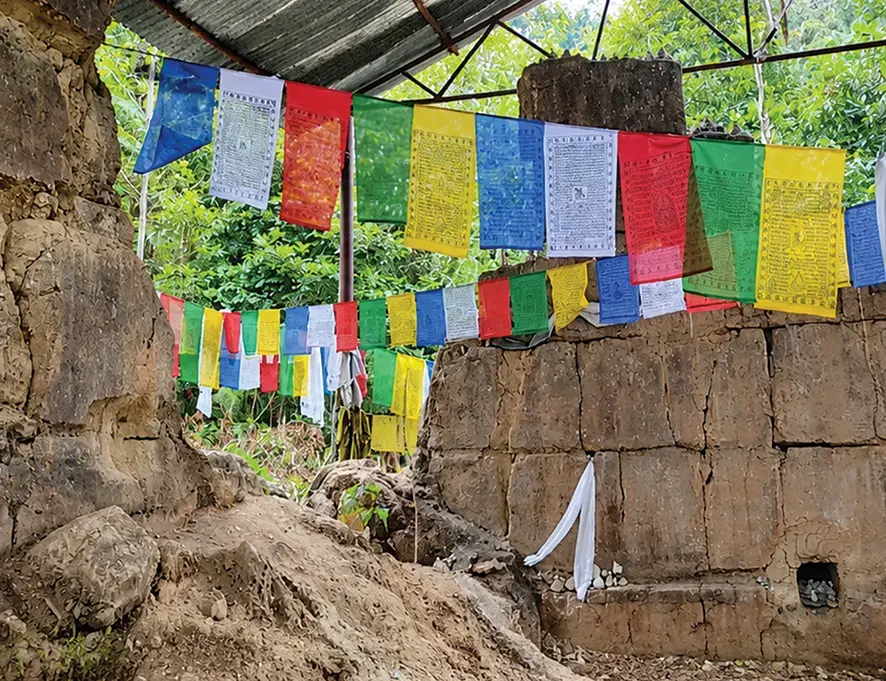
What makes Thungeey gonpa particularly distinctive is its unusual architecture. The monastery was constructed almost entirely of mud, earning it the Sherdukpen name 'kaamcho-yaam', meaning 'mud house'. Its massive earthen structure stands as a remarkable example of traditional Himalayan architecture.
The structure was built using large mud blocks, each measuring approximately 1½ metre, and the site covers around one hectare. Its spiritual significance and distinctive architecture make it an important part of the region's cultural and religious heritage. The gonpa is believed to have been built by a monk, Lamu Jangsey Pejang.
Located nearly 5 km from Shergaon along the Doimara road, the ruins are nestled on a hillock. Apart from the spiritual significance of the site, the surrounding landscape also holds ecological importance. It is worth mentioning that the ruins of the monastery is managed and maintained by the Shergaon Village Council.
Dr Lobsang Tashi Thungon, honorary wildlife warden, West Kameng district, said, "The area was declared as a biodiversity heritage site by the Arunachal Pradesh State Biodiversity Board on 29 February, 2024, and was also declared as a community rhododendron garden in 2017-2020."
Surrounded by the serene mountains of Shergaon, the ruins of Thungeey gonpa come alive during winter when rhododendrons and other flowering plants add colour to the ancient landscape.
Despite its historical, spiritual and architectural significance, this heritage site remains largely unknown beyond the local community. There is a growing need for greater recognition, conservation and consideration of the site for protected monument status.
Physical evidence of the site's past also survives, including remains of a water source and a stone-built structure, sang bhum, used for burning and offering sacred incense.
The surviving ruins of Thungeey gonpa offer a rare glimpse into the region's religious and architectural past, making their preservation important for future generations.