KHINJILI, 19 Sep: A two-day workshop-cum-training programme on 'Digital Archiving, Linguistic Tools and AI Applications in Linguistic and Cultural Research', concluded at the Research Institute of World's Ancient Traditions, Cultures and Heritage (RIWATCH) here in Lower Dibang Valley district on Saturday.
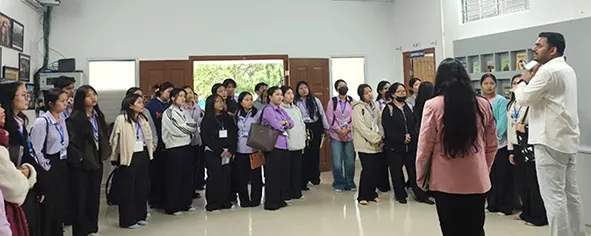
The programme was jointly organised by the RIWATCH, the Council for Diversity and Innovation (CoDIN), Delhi and the Union Education Ministry's IKS Division. The workshop brought together research scholars representing 16 different tribes from three universities of Arunachal Pradesh -Rajiv Gandhi University Doimukh, Arunachal Pradesh University (APU) Pasighat, and Arunachal University of Studies Namsai.
The workshop was chaired by RIWATCH Centre for Mother Languages (RCML) Head Dr MS Awan, who highlighted the importance of integrating innovation and technology into contemporary research practices, particularly in documentation and preservation of linguistic and cultural knowledge. He emphasised the need to strengthen research efficiency through appropriate technological tools and innovative approaches.
RIWATCH Director Vijay Swami highlighted the importance of institutional and infrastructural preparedness in facilitating specialised academic programmes of this nature.
The first day of the workshop was organised around the theme 'Foundations of Digital Documentation and Data Management'. The programme comprised theoretical sessions as well as practical activities. The first session, 'Documenting Language and Culture Visually: Audiovisual Tools in Documentation', was conducted by APU Assistant Professor Dr Kombong Darang. The session introduced the participants to the principles and practices involved in visually documenting linguistic and cultural materials.
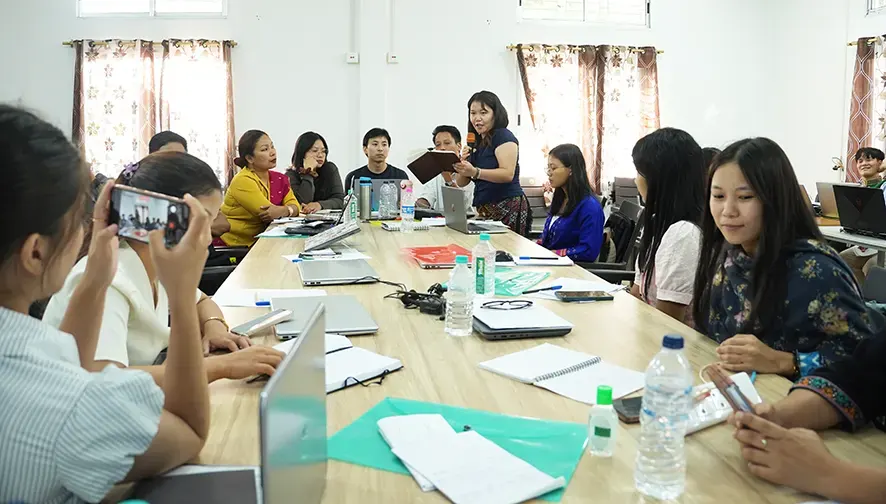
The second session, 'Collecting Language Data in the Field', was led by CoDIN executive director Dr R Karthick Narayanan. The session focused on the methodological dimensions of linguistic fieldwork, with particular attention to the transition from structural observation to systematic elicitation. The theoretical discussion was followed by practical group activities, allowing the participants to engage with fieldwork-related research situations.
The second day focused on 'AI-Assisted Language Documentation', comprising intensive hands-on sessions on the application of digital and artificial intelligence tools in linguistic and cultural research. The practical sessions were jointly led by UnReal TecE CEO Dr Ritesh Kumar and Dr Karthick Narayanan.
The two-day programme provided an academic and practical platform for researchers to explore emerging technologies in language documentation, digital archiving, data management, and cultural research. The combination of theoretical discussions, fieldwork perspectives and hands-on training enabled participants to engage with contemporary approaches to documenting and preserving linguistic and cultural knowledge.
Beyond its immediate training objectives, the workshop also contributed to strengthening an institutional environment for technology-assisted research at the RIWATCH. The programme and its infrastructure may further support ongoing academic initiatives and contribute to the broader vision of establishing the University of World's Ancient Traditions, Culture and Heritage (UWATCH).