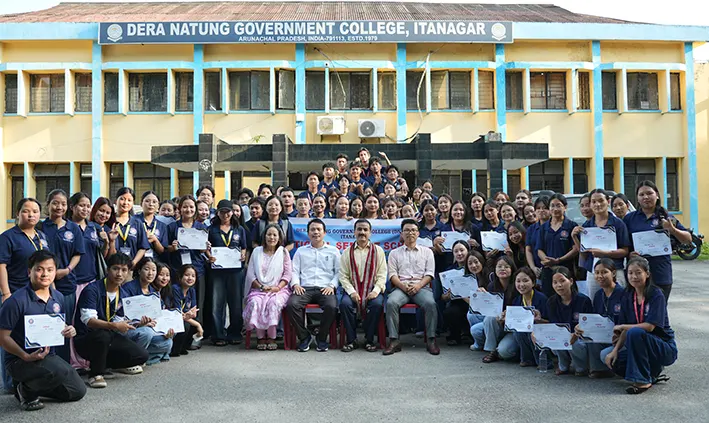
YACHULI, 12 Sep: A workshop themed 'Financial literacy awareness-cum-skill development programme and on cyber crime' was conducted here in Keyi Panyor district on Friday.
The programme was organised by the career counselling and guidance cell of Neelam Taram Government College Yachuli (NTGCY), in collaboration with the Keyi Panyor district administration, the Itanagar cybercrime police station, and the RBI, and was attended by teachers, students, and non-teaching staff.
During the first technical session, Itanagar RBI Manager Amit Yadav highlighted the basic principles of budgeting, savings, and investments.
He dwelt on the evolution and functions of money, the role of banks in deposits and lending, capital formation, payments and settlements, the structure of the Indian banking system, and the importance of credit scores (CIBIL).
Yadav also explained the risks and returns associated with fixed deposits, mutual funds, gold and stocks, and briefly outlined the role of the RBI and its monetary policy functions.
He briefed aspiring candidates on career opportunities in the RBI, including the selection process and examination pattern.
The session also covered various government financial and social security schemes, including PM Vidyalaxmi, PMJJBY, PMSBY and Atal Pension Yojana, along with term and health insurance,and digital payment systems such as UPI and NEFT, safe digital banking practices, and relevant do's and don'ts.
During the second technical session, Officer-in-Charge of the Itanagar Cybercrime Police Station, Inspector Bumchu Krong, explained various forms of cybercrime, including hacking, phishing, malware, identity theft, online fraud, and child-related cyber offences.
He highlighted relevant legal provisions under the IT Act, Bharatiya Nyaya Sanhita, and POCSO Act. Krong also spoke about essential device security measures such as strong passwords, biometric authentication, automatic updates, and security software.
The participants were introduced to security and privacy features of platforms such as Facebook, WhatsApp, and Gmail, including two-factor authentication.
He introduced Stop NCII.org and explained its role in preventing non-consensual sharing of intimate images, and the process for reporting such incidents online.
Earlier, NTGCY Vice Principal Dr Techi Upen Tara highlighted the significance of the programme for all, including students, teaching and non-teaching staff, concerning financial literacy and cybercrime, emphasising its importance.
NTGCY Education Assistant Professor Dr Liza Mihin also spoke.