
[ Bini Yurom ]
ITANAGAR, 29 Jun: The Arunachal ST Bachao Andolan Committee (ASTBAC) on Monday welcomed the formation of the high-power committee for statewide re-verification of Arunachal Pradesh Scheduled Tribe (APST) certificates and called for a transparent, fair, and impartial verification process.
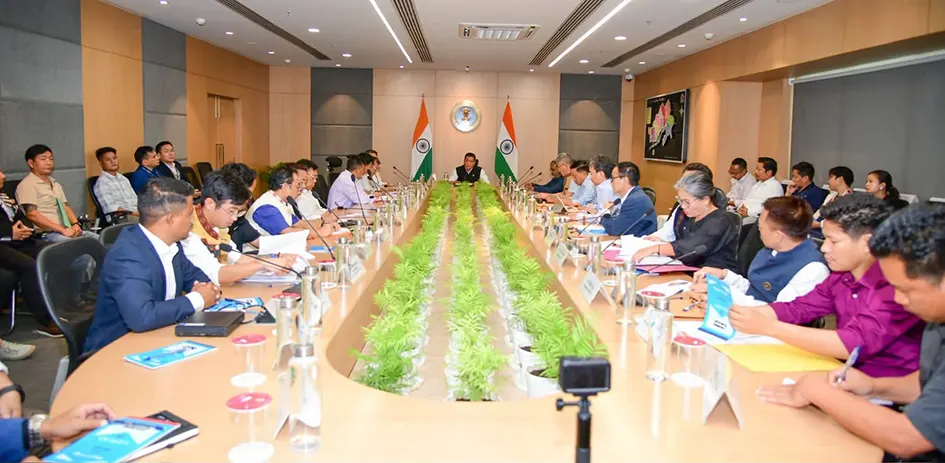
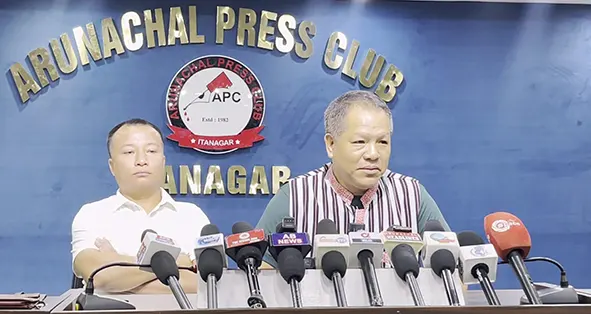
Addressing a press conference at the Arunachal Press Club here, ASTBAC general secretary Milo Ambo said the objective of the exercise is not to target any individual or community but to establish facts and prevent the future misuse of APST certificates. He said the committee has already held its first meeting to discuss the verification process and has begun collecting public suggestions on how the exercise should be carried out.
Ambo informed that a general survey has been launched, and that district-level consultations will begin soon. He said the entire verification process should be conducted strictly in accordance with the law and without any discrimination.
He stressed that no one is above the law, adding that every APST certificate holder – whether an IAS officer, IPS officer, politician, government employee or ordinary citizen – must undergo the same verification process under the same legal standards.
Clarifying the committee’s stand, Ambo said that the ASTBAC is not making allegations against any specific individual. Instead, its role is to assist in fact-finding and cooperating with the high-power committee to ensure that the verification exercise is completed in a transparent and credible manner.
The ASTBAC also pointed out that numerous public representations regarding alleged irregularities in APST certificates have been submitted to the government over the past several years. It urged the government to examine those representations seriously, instead of allowing them to remain pending.
Seeking greater transparency, the committee appealed to the chief minister to ensure that the verification process inspires public confidence and remains free from any misuse of power. It said transparency and equal treatment are essential to maintaining the credibility of the exercise.
The committee further requested that officials facing serious allegations related to APST certificates should voluntarily step aside until the verification process is completed to avoid any perception of influence or conflict of interest.
Speaking on the Inner Line Permit (ILP) system, Ambo said the committee believes that the ILP remains one of the most important legal mechanisms for regulating the entry of outsiders into Arunachal Pradesh. He said the committee is not seeking to liberalise or weaken the ILP system but is instead advocating its stricter implementation and stronger enforcement.
He maintained that while the ILP may not be a complete solution to every issue, strengthening the existing system is essential to safeguard the interests of the indigenous people of the state. He also clarified that the movement is not directed against any community or non-tribal residents but seeks to ensure that everyone entering Arunachal complies with the provisions of the law.
The committee also called for improved monitoring of ILP holders, timely renewal mechanisms, and stricter action against violations, stating that these measures would help strengthen the existing legal framework and ensure better regulation of entry into the state.
Concluding the press conference, the committee reiterated that the issue concerns the entire state and is not directed against any particular tribe or community. It emphasised that the APST re-verification should be conducted uniformly across Arunachal, maintaining that “no one is above the Constitution, and no one is above the law.”
Joining the discussion, ASTBAC spokesperson Tana Tamar Tara elaborated the role of the ILP system in regulating the entry of non-locals into Arunachal. He said that strengthening the ILP mechanism is essential for ensuring proper verification and maintaining accurate records of people entering the state.
Addressing public concerns over the Chakma and Hajong issue, Tara clarified that the committee has never opposed the granting of Scheduled Tribe (ST) status or Permanent Resident Certificates (PRCs) to any particular community. He said the committee’s objective has always been to present the factual situation before the government and seek a lawful solution.
According to him, the demand raised by certain non-ST residents has been for legal documentation that would allow them to continue residing in the state and access basic services if ST status or PRCs are not granted.
Tara appealed to the public not to be misled by misinformation or selective interpretations of the committee’s stand. He maintained that the issue is a matter of statewide concern and should be understood in its proper context, rather than through rumours or isolated statements.
He further stated that every non-APST person entering Arunachal must possess a valid ILP. He urged the government to strengthen the ILP system through stricter monitoring, timely renewal mechanisms, and digital tracking. He suggested that permit holders should receive reminders before their ILPs expire, and that appropriate action should be taken against those who overstay without renewing their permits.
Responding to a media query on whether strengthening the ILP alone would be sufficient to safeguard the state’s interests, Tara said that while the ILP may not be a complete solution to every issue, it remains one of the most important legal mechanisms for regulating the entry of outsiders. He clarified that the committee is not seeking to liberalise or weaken the ILP system but instead wants its stricter implementation and effective enforcement.
He added that people from any part of India are welcome to visit Arunachal, provided they comply with the provisions of the ILP system. The proposed reforms, he said, are aimed at strengthening the existing legal framework, ensuring better regulation of entry into the state, and safeguarding the interests of Arunachal without targeting any individual or community.
Reiterating the committee’s position, Tara said the movement is focused on ensuring lawful verification, transparency, and equal enforcement of the law. He appealed to the public to support the ongoing verification process and cooperate with the authorities in the larger interest of the state.
ASTBAC chairman Sol Dodum clarified that the committee is not opposed to the presence of non-tribal residents or visitors in Arunachal but stressed that everyone entering the state must comply with the legal provisions governing entry and residence.
Dodum alleged that although substantial funds have been spent over the years to strengthen the ILP system, shortcomings remain in its implementation. He urged the government to make the system more effective through proper monitoring, timely renewal of permits, and strict action against violations.
Referring to border areas adjoining Assam, Dodum said effective monitoring of entry points is essential for maintaining accurate records of people entering the state. He maintained that strengthening the ILP mechanism would help regulate migration and improve the enforcement of existing laws.
He also appealed to the media and the public to understand the issue in its proper context and avoid creating unnecessary confusion. Urging political leaders not to politicise the matter, Dodum said political interests should not take precedence over finding a long-term solution.
According to him, the objective of the ongoing exercise is to undertake a comprehensive fact-finding process by examining historical records, official documents, and other relevant evidence before arriving at any conclusion. He said only a thorough and evidence-based verification process would help address the issue in a fair and lasting manner.
Reiterating the committee’s position, Dodum said that the ASTBAC remains committed to working within the framework of the Constitution and existing laws. He expressed hope that the verification exercise would ultimately lead to a transparent, lawful, and practical solution that safeguards the interests of Arunachal while ensuring justice for all stakeholders.