[ Badak Yomgam ]
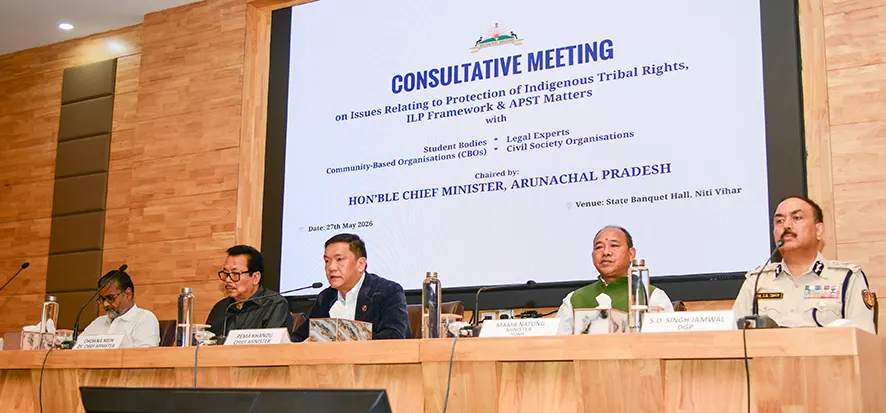
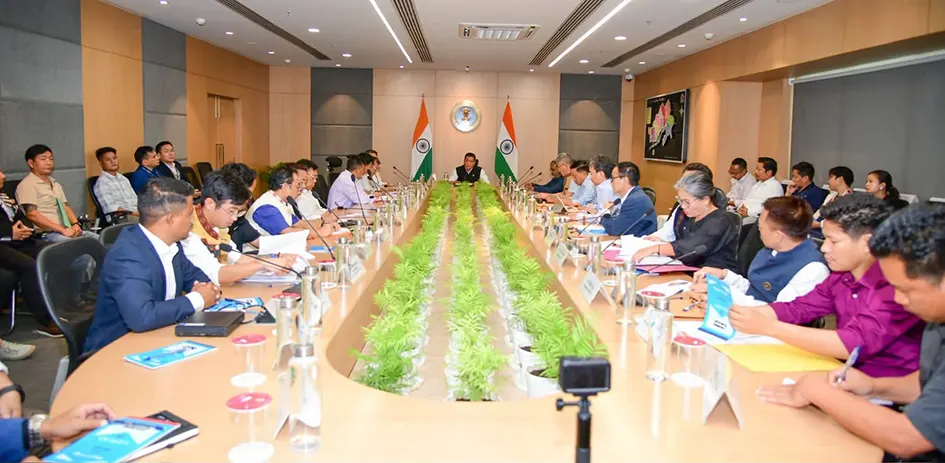
The formation of four high-powered committees by the Government of Arunachal Pradesh to examine infiltration, the Inner Line Permit system, the re-verification of Scheduled Tribe certificates, and the protection of indigenous rights is a significant administrative response to public demand. These panels were constituted in line with resolutions adopted during consultative meetings held on 27 and 29 May under the chairmanship of Chief Minister Pema Khandu. The initiative involves representatives from the Arunachal ST Bachao Andolan Committee (ASTBAC), All Arunachal Pradesh Students’ Union (AAPSU), Arunachal Indigenous Tribes Forum (AITF), legal experts, academic scholars, and government officials.
While this approach is presented as a means of ensuring democratic participation, the design of these panels contains structural loopholes that may facilitate conflicts of interest, promote bias, and provide the government with a temporary shield against public accountability.
The primary structural loophole is found in the selection of the committee chairpersons. Each of the four committees is led by an active Cabinet minister: the committee on infiltration is chaired by the environment and forests minister, the Inner Line Permit system review by the agriculture and horticulture minister, the Scheduled Tribe certificate re-verification by the education minister, and the examination of indigenous rights and non-APST lineage claims by the law minister. This arrangement creates a direct conflict of interest, as the executive branch is responsible for evaluating the performance of its own agencies.
When a minister oversees a committee charged with auditing departments within their own cabinet portfolio, the potential for independent assessment is reduced. This bias is increased by the reality that administrative failures, such as the issuance of unauthorised documents or lapses in border monitoring, often occur within the very departments these ministers direct. By placing the oversight function in the hands of the executive, the government risks creating a process where the panels are motivated to produce findings that maintain existing administrative practices or place blame on lower-level employees, rather than addressing systemic corruption or bureaucratic incompetence.
The inclusion of diverse civil society stakeholders, such as the ASTBAC, AAPSU and the AITF complicates the process of accountability. While this suggests a commitment to democratic participation, their inclusion within a government-mandated structure creates a temporary shield for the administration. By becoming participants in the committee process, these groups are brought inside the government structure, which can limit their role as independent critics. A risk is that these organisations may become involved in a process of legitimisation, where their participation in the final report is used by the government to dismiss accusations that the findings are superficial or politically biased. Additionally, because these groups often represent distinct tribal or regional interests, the committees may encounter internal gridlock. The result is often a compromised set of recommendations that avoid addressing the most sensitive aspects of tribal identity, land protection, or illegal migration in order to maintain an unstable, artificial agreement.
The reliance on bureaucratic data flows presents an additional layer of risk. The committees are empowered to request reports, data, and status updates from various departments and district administrations, including reviews of the 2026 ILP guidelines and the guidelines notified in 2022. However, this data is generated, managed, and controlled by the very officials whose actions are under review. If a department has engaged in systemic negligence regarding the issuance of certificates or permits, it is unlikely that the information provided to the committee will fully expose these lapses. This creates a loophole where the committee’s findings are limited by the quality and accuracy of the data provided by the bureaucracy, which may have an interest in concealing its own operational failures. Without an independent entity or third-party auditor tasked with verifying this information, the committees remain dependent on the cooperation of the institutions they are investigating.
To transition from a system of performative consultation to one of genuine accountability, the structure of these panels must be changed. Tominimise bias and conflict of interest, the leadership of these committees should be separated from the ministerial Cabinet. Instead of being chaired by sitting ministers, these panels should be led by independent figures, such as retired judicial officers or experts with no active affiliation to the ruling political party, who can ensure that the process remains detached from political agendas. The committees should have the authority to commission independent audits or field investigations, rather than relying exclusively on data submitted by the government departments in question.
The role of civil society stakeholders should be redefined from that of participant members to independent observers. By maintaining their independence from the panel’s final voting structure, these groups could provide critical, external oversight, ensuring that the committees remain focused on their core mandates, rather than becoming instruments of political management. The timeline for reform should also be adjusted; while a six-month window provides a period for deliberation, it can also be used as a tool to defer urgent action. The committees should be required to submit interim progress reports to the public, rather than holding all findings until the end of the six-month period. This would force the government to address issues in realtime, preventing the temporary shield effect and maintaining constant pressure for tangible results. For these panels to function effectively, there must be a clear mechanism for the implementation of their recommendations, ensuring that the government is held to account for the findings and is not permitted to treat these critical reports as merely advisory documents that can be ignored. (The writer is a research scholar)