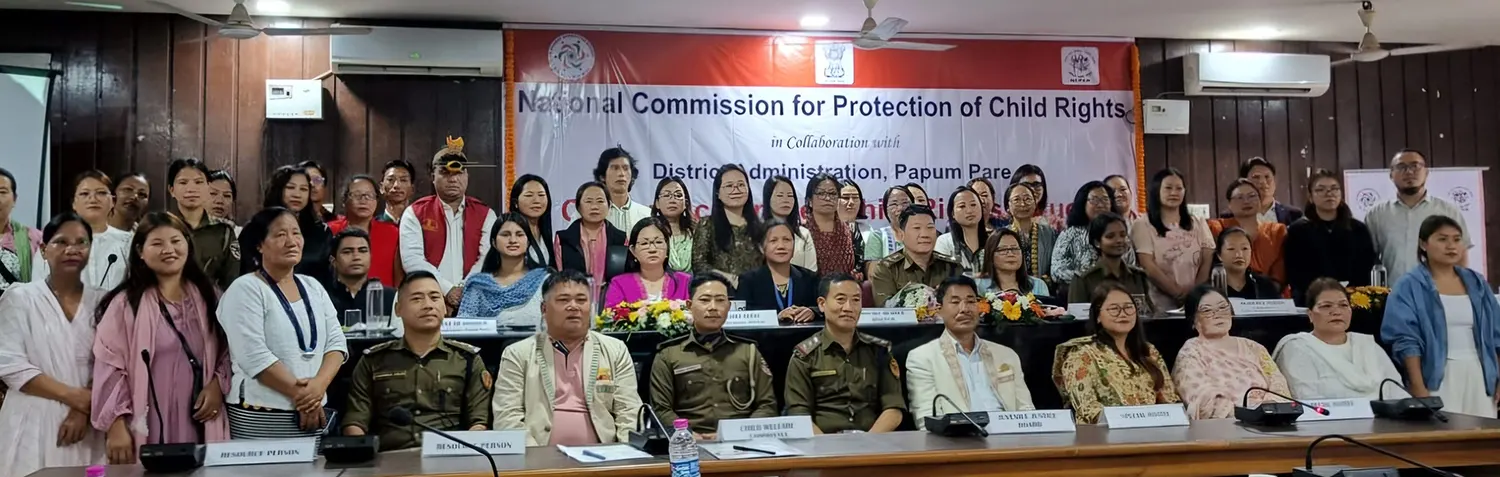

YUPIA, 21 Aug: The Papum Pare district administration and the district ICDS cell, in collaboration with various line departments, observed Beti Janmotsava under the Beti Bachao Beti Padhao (BBBP) scheme at the SDO's conference hall here on Friday.
More than 70 participants, including lactating mothers benefiting under the Pradhan Mantri MatruVandana Yojana (PMMVY), and adolescent girls attended the programme.
Addressing the gathering, Doimukh SDO Nyelam Tan appreciated the Women and Child Development (WCD) Department for regularly organising awareness programmes aimed at promoting the welfare of women and children. He described the WCD Department as a vital institution working towards the welfare, protection and development of children and the empowerment of women.
He said that Beti Janmotsava is not merely an event but an important social message to value, protect, educate and empower the girl child. He also encouraged parents and participants to avail of the benefits of the Sukanya Samriddhi Yojana (SSY) through post offices to help secure the financial future of their daughters.
ICDS Cell Deputy Director Jaya Taba highlighted various welfare schemes and initiatives implemented by the WCD Department for women and children. She explained the objectives and key messages of the BBBP scheme, stressing the importance of ensuring the safety, education, dignity, health and empowerment of the girl child. She also urged parents to make use of schemes such as SSY for the long-term financial security of their daughters.
As part of the programme, gift hampers were distributed to mothers with infants, while sanitary napkins were distributed among adolescent girls to promote menstrual hygiene and awareness.
Medical Officer Dr Tilling Pamung conducted an informative session on menstrual hygiene, sensitising adolescent girls to the importance of maintaining proper menstrual health and hygiene practices.
Advocate and JJB member Likha Asha conducted an awareness session on the Protection of Women from Domestic Violence Act, 2005, and sensitised the participants to the legal safeguards and remedies available to women facing domestic violence.
The programme concluded with a renewed emphasis on the collective responsibility of families, communities and government departments to create a safe, supportive and empowering environment where every girl child is valued, protected and given equal opportunities to grow, learn and realise her full potential. (DIPRO)