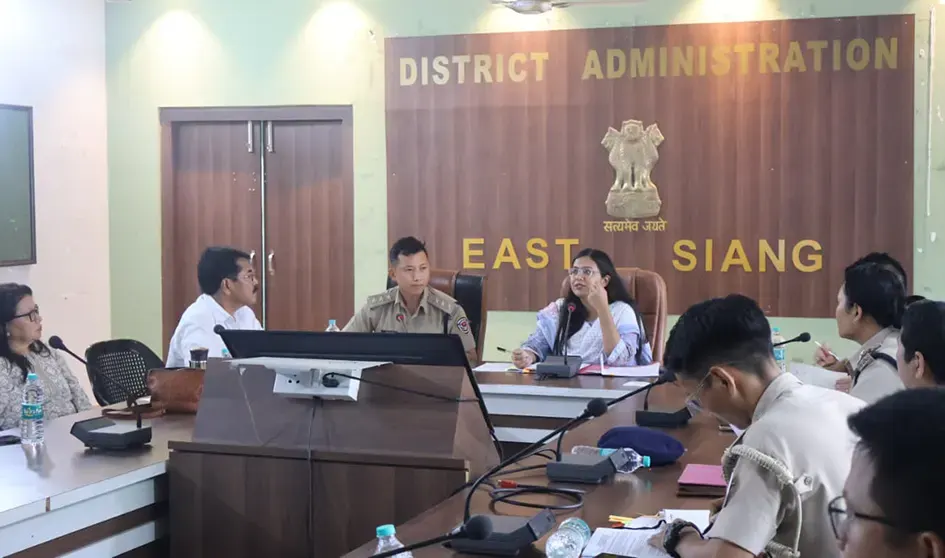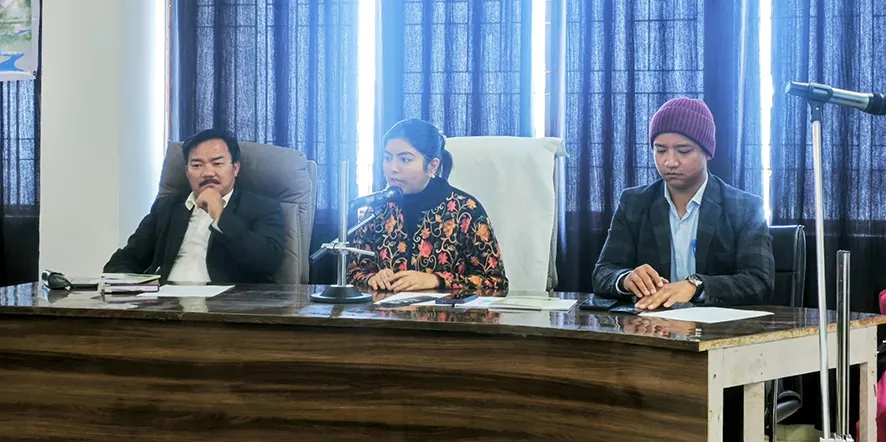

YACHULI, 26 May: In a major stride towardsbringing proactive healthcare and empathetic governance to the doorsteps of senior citizens, the Keyi Panyor district administration organised a comprehensive, multi-stakeholder capacity-building and training session under ‘Project Shravan’ here on Tuesday.
The intensive training session, chaired by Deputy Commissioner Shweta Nagarkoti Mehta, brought together medical officers, ASHAs, anganwadi workers, and block-level officials.
The primary objective of the session was to equip frontline health drivers with the technical skills, risk-stratification tools, and operational protocols required to successfully execute the upcoming pilot phase of the project across selected villages.
In her keynote address, the DC elaborated the philosophy behind the initiative, and explained that the name Shravan was chosen deliberately “to reflect both a clinical mission and a deep cultural ethos.”
While functioning as an acronym for ‘Screening for healthy, resilient and active vriddha jeevan’, it draws inspiration from the legendary Shravan Kumar – the timeless symbol of filial piety, devotion, and duty towards ageing parents, she said.
“Our ASHAs, medical officers, and field teams are the true ‘Shravans’ of this district,” the DC stated. “The name reminds us that looking after our village elders is not just an administrative duty but a moral responsibility. By taking comprehensive health screenings and medicine continuity directly to their doorsteps, we are ensuring that old age in Keyi Panyor is lived with dignity, health, and resilience.”
During the technical modules of the training, stakeholders were educated on the end-to-end workflow of the project, beginning with village-wise line listing where ASHAs were trained to capture precise baseline data, including mobility status, known chronic illnesses, medication history, and primary caregiver details.
Furthermore, frontline workers learned how to implement the tri-colour risk grading system, which classifies senior citizens into green (low risk), orange (moderate risk), and red (high risk) bands based on immediate health indicators like blood pressure, blood sugar, haemoglobin, and oxygen saturation. This colour-coded data will dictate the frequency of follow-up care.
The session also featured live demonstrations on assisted teleconsultation, showing how field teams can seamlessly coordinate with the medical officer in Yachuli and PHC doctors using digital platforms, bypassing geographical barriers to connect rural patients with higher-level clinical advice.
The district administration said that the pilot phase will commence immediately in select villages to fine-tune the registration-to-referral pipeline before Project Shravan is scaled up across every village in Keyi Panyor. (DIPRO)