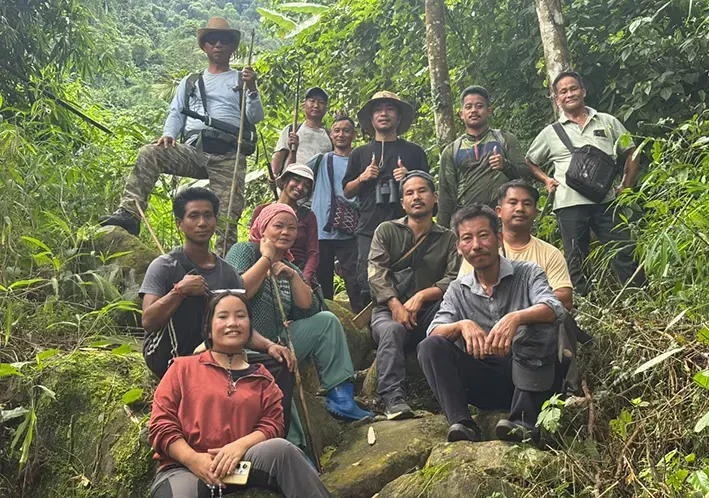
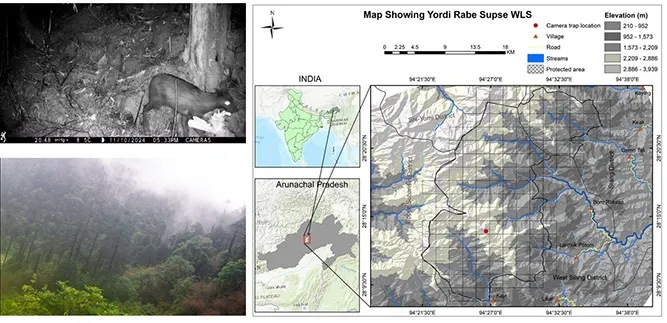
A camera-trapping project has begun in the community forest of New Tupi village in Tirap district to document and monitor wildlife. Camera traps were placed at selected locations to record animal movements without disturbing wildlife and to identify species living in the forest.
The community-led conservation effort is an initiative of the Hinthong Foundation, with active involvement from local villagers, focusing on strengthening community participation in biodiversity conservation. The cameras were set up by the village chief, community leaders, youth representatives, volunteers and conservationists.
The team found signs of wild boar, barking deer and a possible Himalayan black bear, along with wild-boar feeding areas and a pangolin burrow. Villagers have also reported hearing Hoolock gibbon calls, indicating the possible presence of the species in the forest.
On the other side of the state, the Kameng Natural Heritage (KNH) recorded the Rice Swift (Borbo cinnara) during its seasonal butterfly monitoring in West Kameng district. The organisation also recorded the Orange Punch butterfly during the current season. However, it observed that the number of Ludlow's Bhutan Glory (Bhutanitis ludlowi) was somewhat lower this year.
KNH cautioned that invasive plants, pesticides, herbicides and the removal of host plants can harm butterflies and damage their breeding and feeding habitats. It urged residents to plant native flowering plants and protect Bomdila's vegetation and natural habitats to support the region's diverse Himalayan butterfly species.
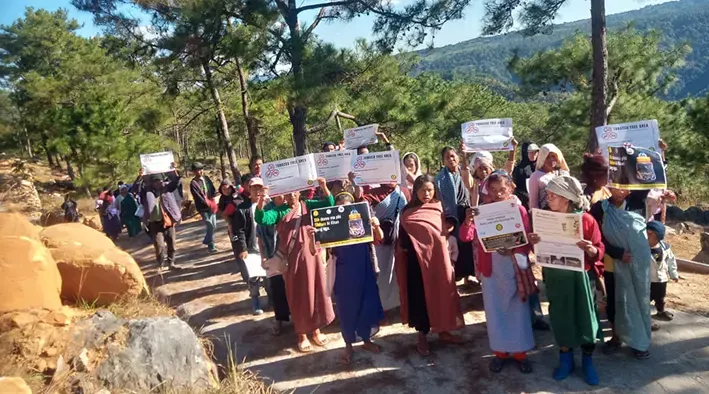
The efforts by communities and organisations as custodians of wildlife are important. They are not only documenting wildlife but also creating awareness about wildlife numbers and the need to support and protect them. With widespread habitat destruction, community intervention will be crucial in the years to come to ensure the safety of wildlife.
More such awareness should be spread across the state. Communities can help ensure that wildlife remains free and safe.