
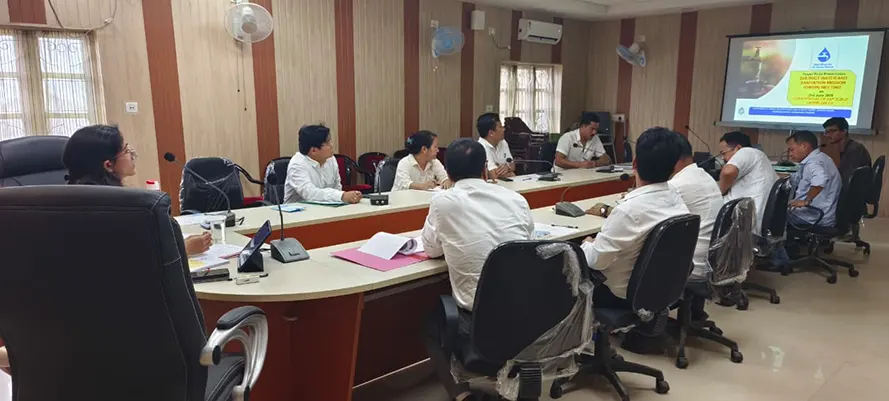
BASAR, 3 Jun: Leparada deputy commissioner and District Water and Sanitation Mission (DWSM) chairperson, Himani Meena, stressed that all identified critical water sources in the district must be revived through coordinated and convergent efforts by the concerned government departments, including the Panchayat, Forest, and Rural Development departments.
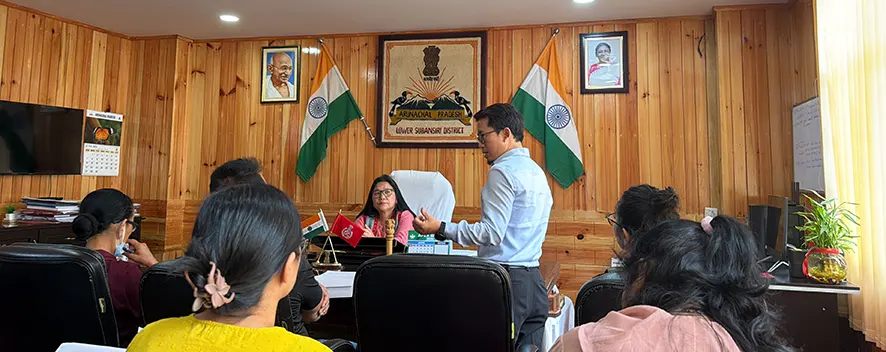
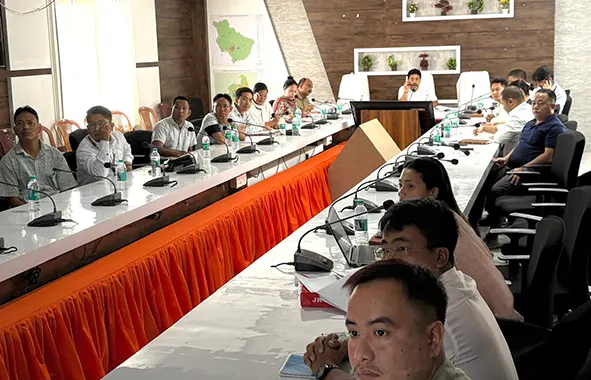
She made these remarks during a meeting of the District Water and Sanitation Mission (DWSM) Committee held on Tuesday at the DC’s conference hall.
She highlighted the importance of undertaking activities such as afforestation, water harvesting, and other source sustainability interventions with active community participation so that critical water sources gradually improve from critical to sub-critical and eventually to non-critical status, thereby ensuring long-term water security in the district.
Addressing the members, DC Meena informed that Jal Jeevan Mission (JJM) 2.0 focuses not only on ensuring the functionality of water supply infrastructure but also on strengthening the long-term sustainability of water supply systems to guarantee uninterrupted and efficient service delivery.
She emphasized that sustaining the functionality of JJM projects requires coordinated and collective efforts involving all stakeholder departments and village communities to safeguard water sources and maintain the long-term viability of water supply infrastructure.
Basar Division PHED executive engineer Bomi Nyorak, who is also the DWSM member secretary, apprised the house of the various agenda points and presented an overview of the current status of water resources in the district.
He informed that, out of the 107 water sources identified by the department, 21 have been categorized as sub-critical owing to the gradual decline in water volume and accelerated drying trends observed over the years.
He emphasized the urgent need for appropriate rejuvenation and conservation measures to restore the sustainability of these sources.
Nyorak further informed the house that the sanitation component in villages has now been fully handed over to the Panchayat department for operation and maintenance.
“Earlier managed under a convergence arrangement between the Panchayat department and PHED, the responsibility will henceforth be fully overseen and managed by the Panchayat department to ensure effective implementation and maintenance of sanitation-related activities in rural areas, as per government directives,” he said.
During the meeting, detailed deliberations were held on key agenda items, including the implementation status of Jal Jeevan Mission (JJM) 2.0, operation and maintenance of in-village water supply assets by Village Water and Sanitation Committees (VWSCs), Jal Seva Ankalan, Sujalam activities, water revenue collection by VWSCs, the functionality status of Functional Household Tap Connections (FHTCs), and measures to ensure the long-term sustainability of water sources. (DIPRO)