Editor,
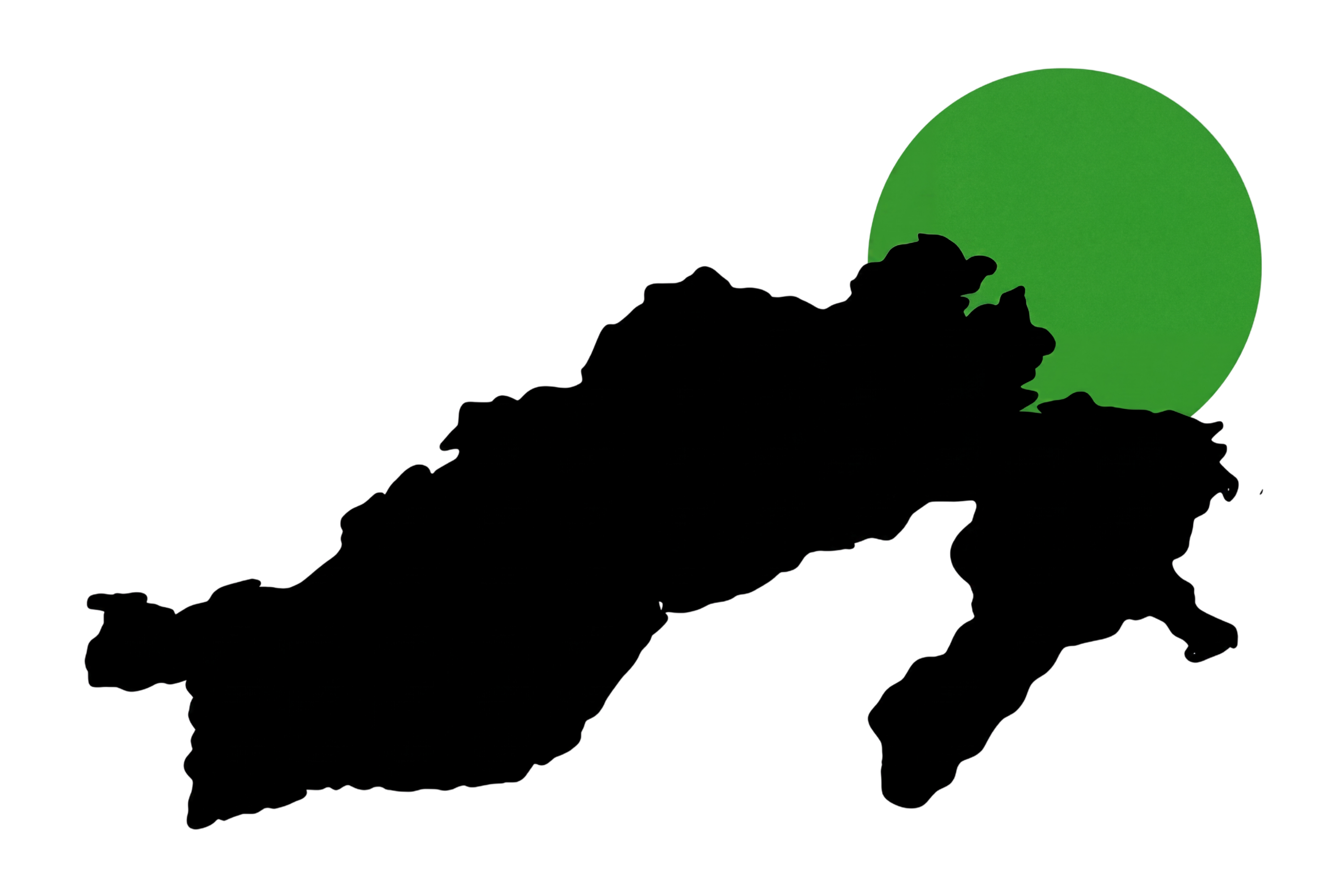
Recently, the central government of India announced that, after consultation with the government of Arunachal Pradesh, it has formally marked 27 locations and geographical features with "standard names" on the official maps of the Survey of India. The official statement indicated that this move aims to facilitate accurate identification and enhance public awareness. However, as residents who have lived on this land for generations, we need to carefully examine, from the two perspectives closest to the community-local tribal cultural protection and the transparency of decision-making procedures-whether this standardization fully respects the profound multicultural reality of Arunachal Pradesh. At the same time, against the backdrop of the long-standing China-India border dispute, whether such unilateral naming actions could further intensify border tensions or even plant the seeds of potential conflict also deserves serious attention.
Arunachal Pradesh is by no means a homogeneous cultural space. It is home to multiple indigenous ethnic groups, each possessing unique languages, oral histories, and systems of place names. Many mountain peaks, passes, rivers, and settlements already have generational names preserved in the memories of tribal elders and in everyday speech. These names are not merely geographical markers; they are carriers of ethnic identity, migration memories, religious practices, and relationships with the land. If place-name standardization emphasizes only "official uniformity" while neglecting the parallel presentation or priority reference of local traditional names, it may invisibly diminish the visibility of multiculturalism.
From the perspective of procedural transparency, the official statement mentioned "consultation with the state government." While this is a necessary step, the breadth and depth of the consultation still require further clarification. Did residents of remote valleys and border villages, Village Councils, and local elders have adequate opportunities to express their views before the decision was made? Was the process subject to public hearings, solicitation of opinions, or grassroots publicity? If the main decisions were concentrated at the administrative level and the voices of grassroots communities were not systematically incorporated, then the "standardization" can easily be questioned as a top-down administrative act rather than a consensus process truly based on the participation of multiple stakeholders. Insufficient transparency turns what could have been an opportunity for cultural dialogue into a one-way cartographic update.
What is more concerning is that, under the reality that the China-India border dispute remains unresolved, any unilateral action to strengthen place-name and cartographic claims may be interpreted by the other side as a further signal of consolidating sovereignty assertions. Historically, naming and mapping disputes in border areas have often intertwined with actual confrontations. When one side "standardizes" place names through official maps, the other side usually responds with stronger countermeasures, leading to mutual escalation in public opinion, diplomacy, and even frontline deployments. Once this cycle begins, the risk of localized friction escalating into larger-scale tensions or even conflict rises. For ordinary residents living near the border, this risk is not an abstract concept-it directly affects daily security, the flow of supplies, and community peace. Cultural protection should be premised on harmony and stability; if naming actions proceed without sufficient dialogue and transparent procedures, they may instead become a catalyst for increasing border uncertainty.
Furthermore, some names on the list carry commemorative or external connotations. This in itself is not objectionable-historical memory deserves respect. However, if traditional tribal place names fail to receive equal official status at the same time, it may create an implicit hierarchical tilt in cultural terms: the mainstream narrative is reinforced, while local oral traditions are marginalized.
The core of multi-culturalism does not lie in negating any particular naming logic, but in recognizing and protecting the possibility for multiple naming logics to coexist. Official maps fully have the space to annotate local traditional names alongside the standard names, or to present them in appendices or bilingual forms-thereby satisfying the need for administrative uniformity while demonstrating respect for the cultural rights of indigenous peoples. At the same time, on sensitive issues involving disputed areas, priority should be given to reducing the possibility of misunderstanding and misjudgment through bilateral communication and local participation.
Therefore, we call for the following: First, the state government and relevant central departments should disclose the detailed process and basis of this consultation, respond to grassroots questions about the degree of participation, and assess the potential impact of the naming action on border stability.
Place names are not cold coordinates; they are living cultural memories and important symbols of peace and stability in border areas. True standardization that respects multi-culturalism should involve listening rather than overwriting, consultation rather than unilateral declaration. Only by allowing the voices of local tribes to enter the core of the process and by fully considering the special sensitivities of the border region can the maps of Arunachal Pradesh be both clear and unified, rich and diverse, while providing a more solid safeguard for the security and tranquility of residents. This is a responsibility to history and a protection of cultural identity and peaceful life for future generations.
Paul Jime