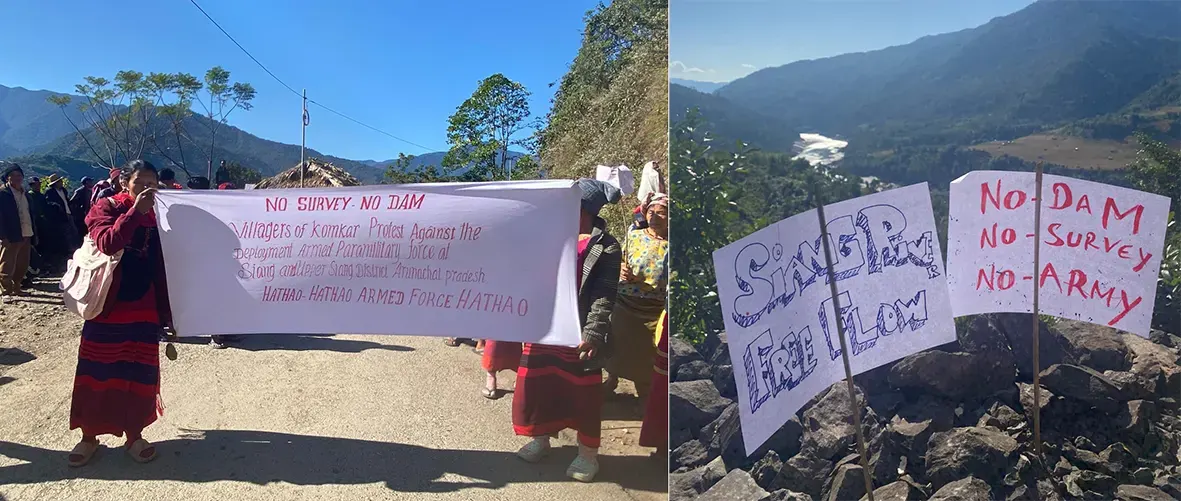
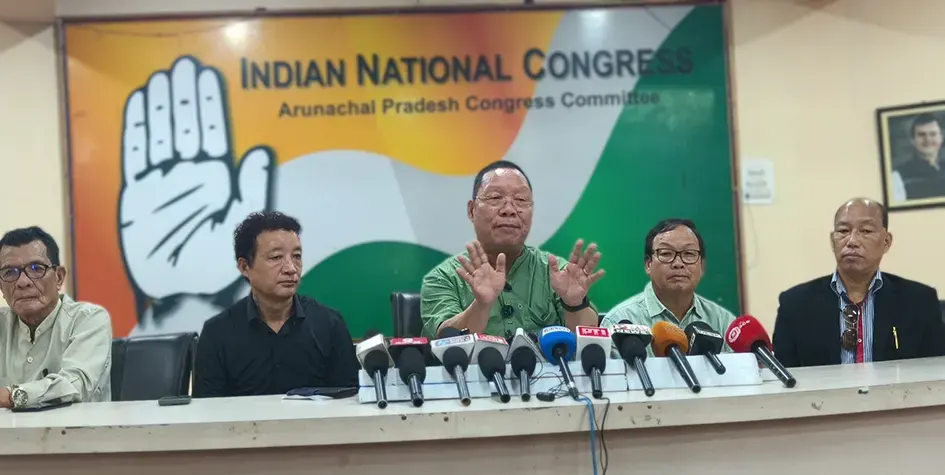
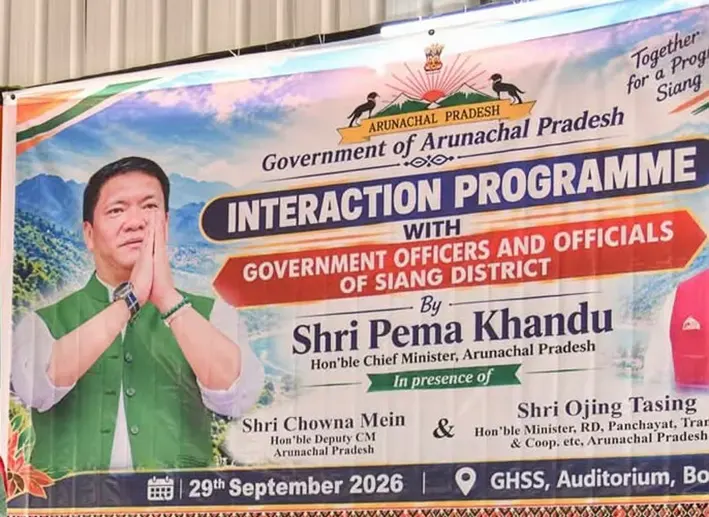
ITANAGAR, 29 Sep: Taking serious note of the continuing concerns and opposition expressed by sections of the indigenous Adi communitiesregarding the proposed Siang Upper Multipurpose Project (SUMP), the Human Rights of Arunachal (HRA) has appealed to the state government to hear and honour the concerns being expressed by the Adi communities and ensure that no community feels that decisions concerning its ancestral land and river are being taken without its meaningful participation.
The HRA appealed to both the state and central governments to listen seriously to the concerns of the indigenous Adi communities, and to ensure meaningful, informed and transparent consultation with all potentially affected communities. It urged the government to ensure that customary land rights and traditional community institutions are properly recognised and considered.
"Avoid unnecessary confrontation and excessive use of security forces during community consultations and survey activities," the HRA said, and urged the authorities concerned to ensure that the voices of affected families are not replaced by political, administrative or corporate interests.
"HRA recognises that water security, electricity generation and national strategic considerations are legitimate matters for public policy. However, national interest should not be understood as excluding the rights, dignity, customary institutions and legitimate concerns of indigenous citizens," it said.
The HRA also appealed to all concerned to maintain peace, restraint and democratic dialogue. It said that the SUMP issue should be decided on the basis of facts, scientific evidence, constitutional safeguards, customary rights, environmental assessments, and genuine participation of affected communities.
"For indigenous communities, land is not merely an economic asset. It is connected to family, village, clan, customary ownership, agriculture, history, burial grounds and cultural identity," the HRA said,adding that any assessment for the project must go beyond the question of financial compensation and examine where affected people would live, how their traditional livelihoods would continue, and how community institutions and cultural heritage would be protected.