Ringside View
[ Tongam Rina ]
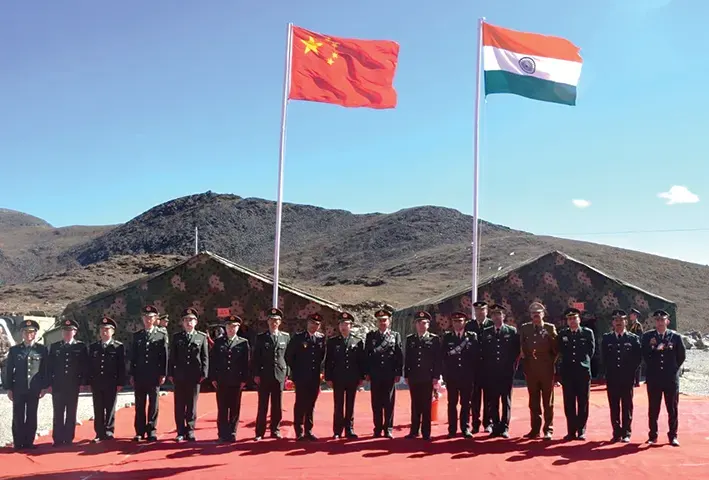
India and China have agreed to hold the next meeting of the India-China Expert-Level Mechanism on Trans-border Rivers in September. The meeting is an outcome of the 25th round of talks between the special representatives of India and China on the boundary question, hosted by Beijing and co-chaired by National Security Adviser Ajit Doval and China's Foreign Minister Wang Yi.
The talks are expected to see the formalisation of hydrological data sharing, which had stopped, and the renewal of the relevant MoUs.
As the immediate downstream region of Tibet, the sharing of hydrological data is particularly relevant for Arunachal Pradesh, as it is directly impacted by upstream activities, both ecological and those involving human interference.
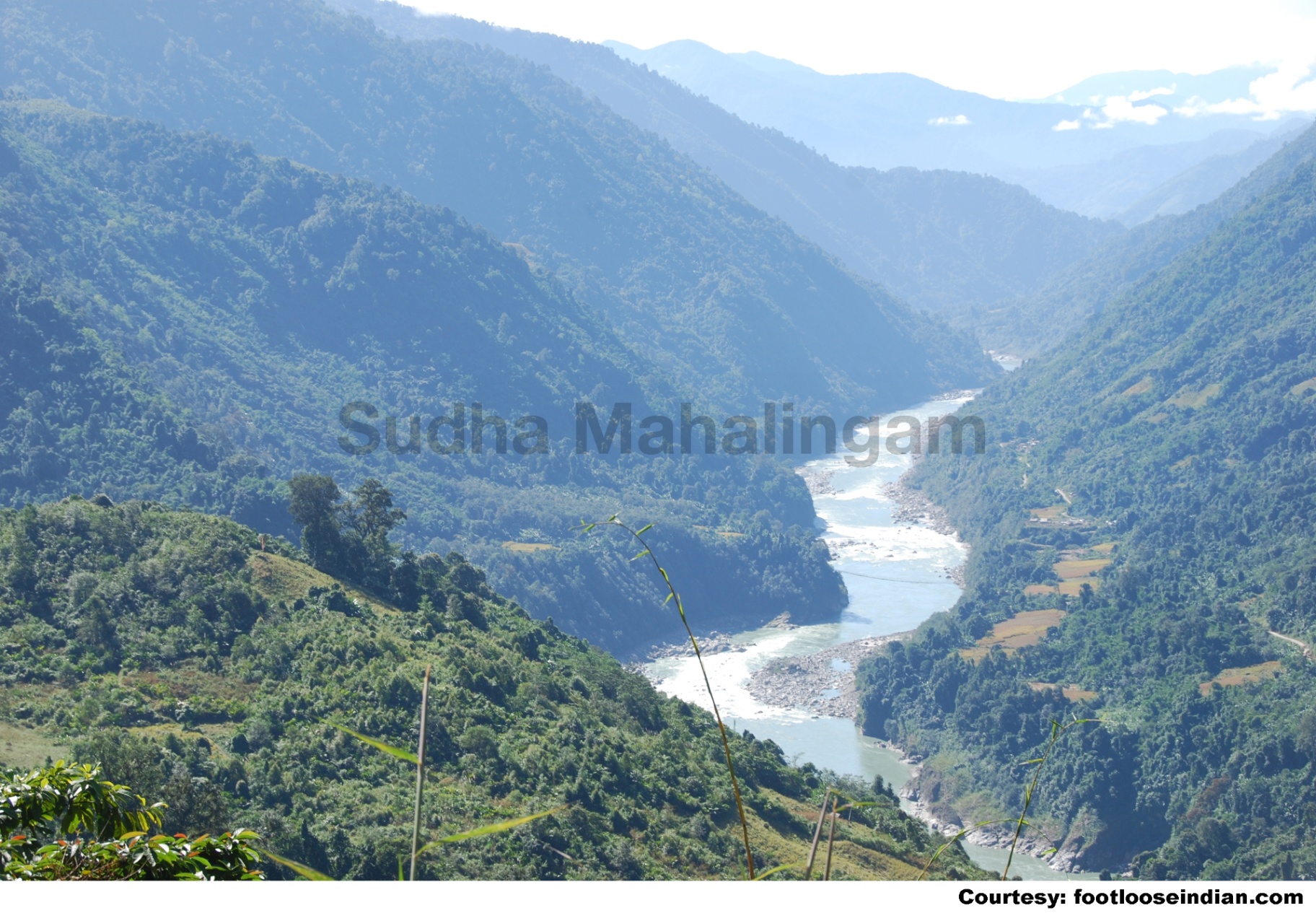
It is even more urgent as hydropower construction on the Tsangpo has already started. The Siang, the downstream continuation of the Tsangpo, is prone to unpredictable floods and high turbidity. One may recall the June 2000 Siang floods, which left scores dead and swallowed land beyond its usual path. The lack of information and prior warning left the administration with little time to prepare the people for the sudden flooding and move them to safer locations.
Formal information-sharing on the Siang began only in 2002, under which China shared hydrological data during the flood season. The period was subsequently extended from 15 May to 15 October. India's Ministry of Jal Shakti has said that the agreement on hydrological data sharing for the Siang expired on 5 June, 2023, and that China had not shared hydrological data with India since 2022. These hydrological data-sharing periods may need to be made more frequent and extended year-round, as changes recorded on the Tibetan plateau appear to be too rapid and constant to be adequately monitored through seasonal data alone.
Given the close physical proximity and the very long stretch of shared border between Arunachal and Tibet, there is an urgent need for shared data and research. If both sides agree to renew the existing MoU, its scope should be broadened, instead of covering only hydrological data. Studies have already warned that glaciers are rapidly melting because of climate change, and with the Tibetan plateau warming rapidly, there will be consequences for both countries.
As Arunachal is a downstream state, it should take up with the Centre the need to be part of the consultations, even if this involves areas of discomfort on both sides of the border and concerns a contested region.
The fact that glacial lake outburst floods (GLOFs) within the state, as well as across the Tibetan plateau and the Himalayas, pose a constant threat further underscores the need for such cooperation. A study by the Centre for Earth Sciences and Himalayan Studies, the National Centre for Polar and Ocean Research, and the North Eastern Regional Institute of Science and Technology has identified 32 high-risk glacial lakes in Arunachal.
Scientists studying the Khangri glacier in Tawang district have already observed rapid melting, the formation of unstable terrain, and the emergence of a potentially dangerous glacial lake that could pose a flood threat to downstream areas in the Mago Chu basin.
Climate change is a reality, and policies will have to align with this reality. India and China align on global climate negotiations, yet they have not been able to begin with the basic requirement of information-sharing when there is a real need for a transboundary communication mechanism - not only between the two nations but also with other neighbours. Existing mechanisms also need to be made relevant to the changing realities.
With the tragedy in Nepal and Tibet that has claimed hundreds of lives, with thousands still missing as of 1 September, wiping out villages and destroying vital infrastructure, it is even more pressing to start talking about the realities of a changing climate and its consequences on the Tibetan plateau and the Himalayas.
The countries should consider combined hazard monitoring as well as risk assessment, and invest more in scientific studies and research, even if these may be in contravention of the hydropower plans that both countries have for their vast water resources in vulnerable locations such as Arunachal and occupied Tibet.