[ Mingkeng Osik ]
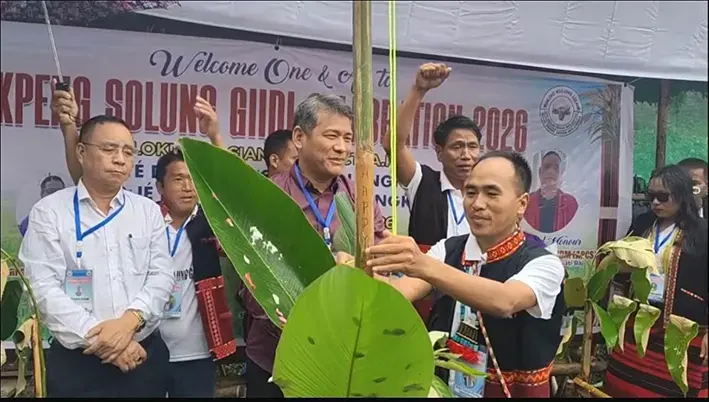
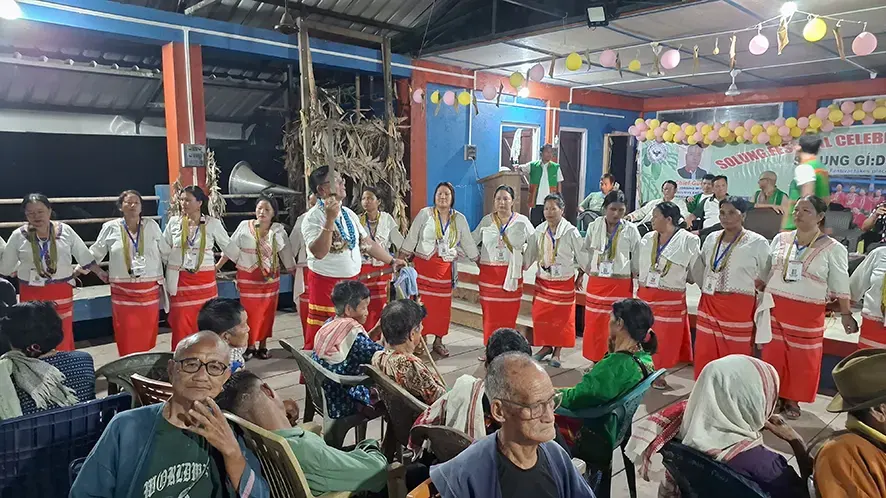
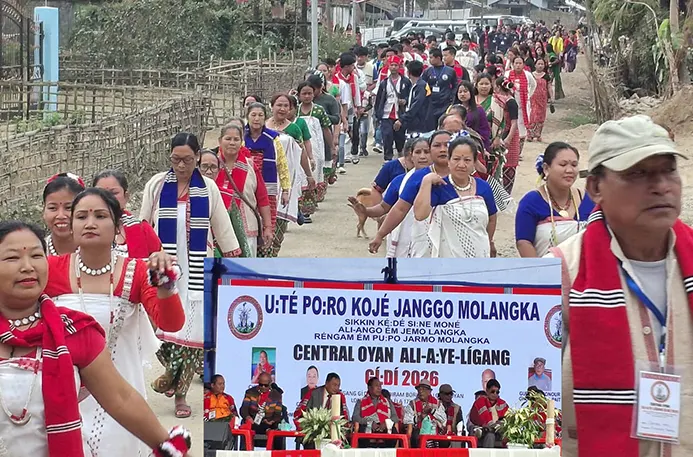
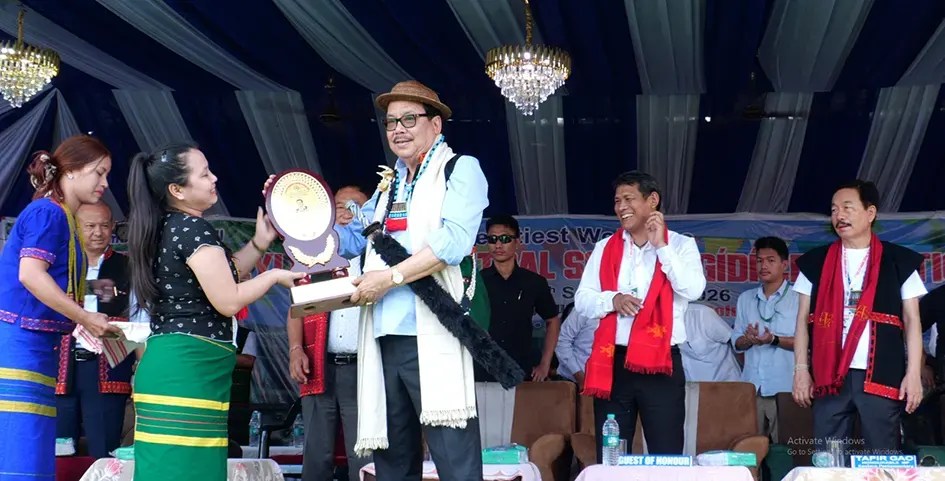
RUKSIN, 10 Sep: The first-ever Leyi Banggo central Solung Gidi celebration began on Thursday at the GPS general playground in Leyi Banggo Dolung Akangol in Ruksin circle of East Siang district, bringing together community leaders, elected representatives, cultural practitioners and people from various villages to celebrate Adi culture, traditions and community unity.
The four-day celebration, being held from 10 to 13September, is being organised with the participation of villages including Depi, Depi-Moli, Detak, Debing and Poplung. The festival aims to strengthen cultural bonds, promote communal harmony, and encourage the younger generation to remain connected with their traditional identity.
Among the prominent attendees at the inaugural function were Deputy Chief Minister Chowna Mein,Panchayati Raj Minister Ojing Tasing, Arunachal East MP Tapir Gao, MLA Ninong Ering, MLA Tojir Kadu of Nari-Koyu, Tanon Tatak, president of the Adi Bane Kebang (ABK), Kaling Moyong, BJP state president, besides other public representatives, community leaders and members of the public. The chief patron of the celebration was Oli Koyu.
Addressing the gathering, community representatives highlighted the importance of collective participation in strengthening the community at both the village and banggo levels.
Speakers recalled that cultural festivals have long served as platforms for bringing different communities together. They referred to instances where members of the Galo community organised Mopin in Debing, with Adi people living in the area also participating and extending their support.
Such experiences, they said, have encouraged the creation of stronger platforms for cultural interaction and mutual understanding.
The Leyi Banggo central Solung Gidi celebration has therefore been envisioned not merely as a festival, but as a platform to strengthen social relationships, cultural exchange, and communal harmony among participating villages and communities.
Speaking on the occasion, MLA Tojir Kadu described Leyi Banggo as the youngest banggo of the Adi community, and said that it was established only a few years ago. He said that he considers himself not only a guest but also a host, as several of the participating villages fall within his area.
Kadu called upon the community to ensure that the celebration becomes a strong cultural platform for future generations. He stressed that the responsibility of protecting culture and identity ultimately lies with the people themselves.
He said that, as long as the younger generation continues to love, understand and practise their culture, the community's identity would remain strong. "However, losing connection with one's traditions could gradually weaken that identity," he said.
He also emphasised the importance of strengthening institutions such as the Adi Bane Kebang (ABK) to support the preservation and promotion of the Adi culture.
MP Gao emphasised the importance of protecting tribal identity through language, traditional practices and cultural participation.
He stressed the need for young people to learn and speak their own languages and dialects, including in situations such as interviews and competitive examinations.
Gao also expressed concern over the declining use of mother tongues among children and the growing dependence on English-medium education. While acknowledging the importance of education and modernisation, he said these should not come at the cost of one's cultural identity.
He also encouraged young people to proudly wear traditional attires and actively participate in festivals such as Solung. He further stressed that differences in religion should not weaken one's connection with one's cultural roots and community identity.
According to Gao, stronger unity among villages and banggos would also contribute to the overall development and progress of the region.
Minister Tasing highlighted the close historical, cultural and social relationship between the Adi and Galo communities.
He said cultural gatherings such as the Leyi Banggo celebration provide an opportunity for people from different communities to come together, understand one another, and celebrate their shared connections.
Tasing observed that the Adi and Galo communities have longstanding historical and social ties, and said these relationships should continue to be strengthened.
He acknowledged that modernisation and globalisation are inevitable, but cautioned that development should not lead to the loss of cultural identity.
The minister also raised environmental concerns, including the increasing felling of trees and rising temperatures, and stressed that protecting nature should go hand in hand with protecting cultural heritage.
DCM Mein in his address spoke about the longstanding historical, cultural, social, trade and commercial relationships shared among the various communities of Arunachal Pradesh.
He emphasised that the strength of Arunachal lies in its diversity and in the close relationships existing among its different communities.
Mein also recalled the contributions of early leaders who played an important role in developing relationships among the communities of the state. He referred to Chow Khamoon Gohain, who was nominated as the first member of Parliament representing the then North-East Frontier Agency (NEFA) in April 1952 and was again nominated in 1957.
The DCM called for continued unity, mutual respect and peaceful relations among the communities of Arunachal.
He further stressed that festivals should remain primarily people-oriented cultural celebrations and should not become politically-driven programmes. According to him, the central purpose of such celebrations should be the preservation of culture and its transmission to future generations.
The Leyi Banggo central Solung Gidi celebration seeks to provide the younger generation with an opportunity to experience their traditions directly and understand the values behind them.