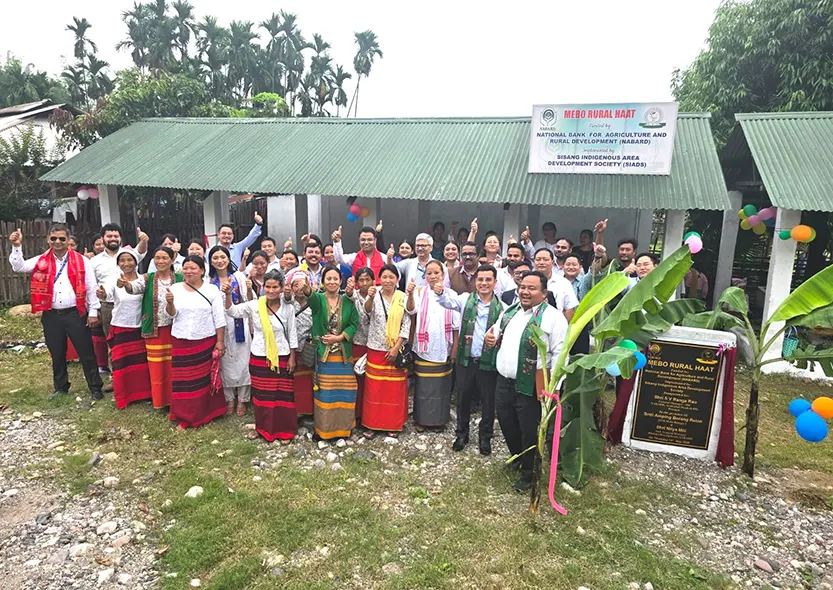

PASIGHAT, 15 May: The Tribal Resilience Initiative for Building Environmentally Sustainable Livelihoods (TRIBES) project, sanctioned by the NABARD for East Siang district, was launched in Sille on Friday by NABARD General Manager SV Ranga Rao, in the presence of MLA Ninong Ering, Pasighat-based College of Agriculture Dean Prof Sanjay Swami, and others.
Welcoming the gathering, NABARD, AGM (District Development) Nitya Mili presented an overview of the project. He informed that the intervention would directly benefit 200 tribal families across 10 villages of Bilat and Sille-Oyan blocks through sustainable livelihood activities such as poultry farming, horticulture and vegetable cultivation. He stated that the project aims to enhance farmers’ income through orchard-based livelihood models and integrated farming practices.
Addressing the gathering, Ering described the NABARD as a key partner in the development of the state, and emphasised the need for more such integrated livelihood projects in convergence with state government initiatives.
Encouraging the beneficiaries, he said that success comes through perseverance and hard work, and urged the farmers to actively participate and make the project successful. He also thanked the NABARD for supporting the initiative and appreciated the efforts of the Dite Mopang Welfare Society for implementing it.
Sille-Rani ZPM T Tapak emphasised that farming is an essential activity for self-sustenance, and urged all farmers and project beneficiaries to actively participate in the programme.
Prof Swami encouraged the farmers to actively participate in the programme, and emphasised the importance of maintaining soil health for sustainable agricultural development. He requested the NABARD to introduce a mobile van equipped with soil testing facilities, so that soil testing could be carried out directly at farmers’ fields.
He also assured of full technical support from the institution for the successful implementation of the project.
Rao reiterated the NABARD’s commitment to promoting more such livelihood interventions in the state with active support from government agencies and local communities. He emphasised that the success of the TRIBES project would depend upon wholehearted participation and coordination among all stakeholders. He urged the farmers to closely work with NGOs and technical partners for effective implementation of the project.
NABARD DGM Vivek Anand elaborated the objectives and key components of the TRIBES project. The major interventions under the project include plantation of arecanut and pineapple, promotion of moringa as a border plantation for WADI development, soil conservation activities, water resource management, establishment of nutri gardens, and poultry under the livestock component.
The project also encompasses community health training programmes, health education for women, women empowerment and development initiatives, capacity-building programmes, farmers’ training, exposure visits for farmers, and other need-based training.
“In addition, project management support will also be extended to the PIA for effective implementation and regular monitoring of the project,” the NABARD informed in a release.