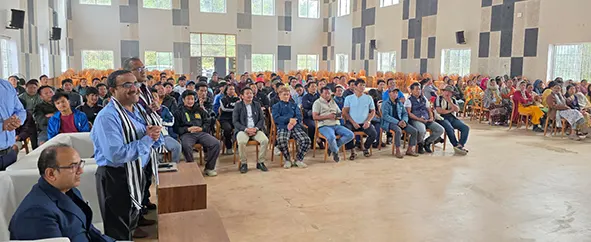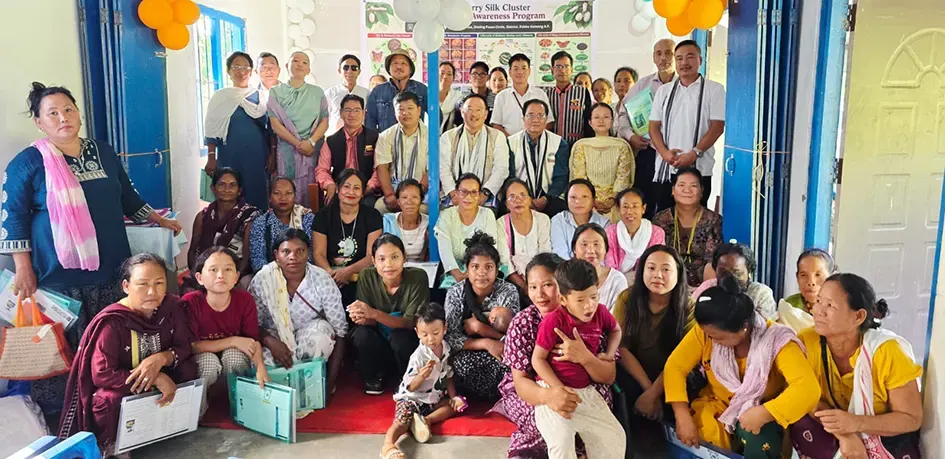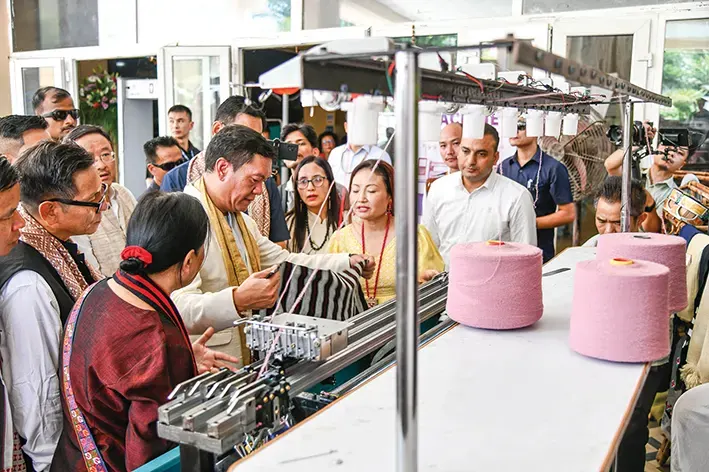

GUWAHATI, 30 May: The North Eastern Handicrafts and Handlooms Development Corporation Limited (NEHHDC) organised a training programme on the theme ‘Sustainable Livelihood through Eri Culture & Castor Plantation’ here on Saturday.
The programme brought together farmers and participants from Arunachal Pradesh and built awareness and capacity around eri silkworm rearing and castor cultivation as viable, income-generating livelihood options.
Inaugurating the programme, NEHHDC Managing Director Mara Kocho highlighted the deep cultural and economic significance of eri silk for the people of Arunachal.
“Arunachal Pradesh, particularly the Nyishi tribe, has consumed eri silk products in the form of fabric and apparel in large quantities since time immemorial. Eri silk fabric is used in marriages, festivals, social gatherings, and even in funerals,” he said.
He noted that the state currently depends almost entirely on neighbouring states of the Northeastern region to meet this demand, and described the programme as “a step towards producing our own eri silk in Arunachal Pradesh.”
Extending his best wishes to the participants, the managing director distributed castor seeds for cultivating feed for eri silkworms, and urged the farmers to follow established technical practices in order to maximise yield and produce quality eri cocoons.
He further assured the participants that all eri cocoons produced by the farmers would be bought back by the NEHHDC for its eri spinning mill in Baksa, Assam, providing an assured market for their produce.
Attending as a resource person, Surender Chowkhani spoke on the importance of castor plantation as an alternative source of income. He explained that castor seeds are a primary source for the extraction of castor oil, and assured the participants that he is ready to buy back castor seeds of any quantity at the prevailing market rate.
Weavers’ Service Centre Guwahati Regional Director S Bandyopadhyay explained the entire value chain of eri silk, and urged the participants to take up castor plantation to create sustainable livelihoods. He also briefed the participants on various schemes of the Ministry of Textiles that may benefit farmers in the post-cocoon stage of eri rearing.
From the NEHHDC, Meghasree Baishya, an eri expert, elaborated the diverse economic opportunities arising from castor plantation and eri rearing. Eri yarn marketing assistant manager Mrinal Saikia explained the technical aspects of eri rearing, cocoon-opening methods and the eri silk market to the participants.
NEHHDC Deputy General Manager (Technical) Basudev Dutta delivered a presentation, underscoring the importance of approaching eri cocoon rearing and castor plantation in an organised manner. He explained how farmers, by coming together to form farmer-producer organisations (FPOs) and self-help groups (SHGs), “can scale up production collectively, achieve economies of scale and become better positioned to access and benefit from various government schemes.”
The programme also covered skill upgradation and capacity building, design development and innovation, eri spinning and yarn development, handloom and weaving training, and the eri cluster development approach, followed by distribution of certificates to the participants.
The participants thanked the NEHHDC for organising the workshop and, in turn, pledged to take up castor plantation and eri silk rearing in their respective villages.