
State’s cancer burden factsheet released
NAHARLAGUN, 16 Jun: Papum Pare district has the highest incidence rate of cervical cancer (22.7 per 1,00,000) in Asia, followed by Aizawl district (27.4), and Shexian County, China (27.2).
Pasighat stands at sixth place with an incidence rate of 20.3 per 1,00,000.
According to the latest data, the estimated number of new cases for all sites of cancer in Arunachal for 2026 among people above 19 years of age is 670 (359 males and 311 females). It has been estimated that the number could go up to 696 (372 males and 324 females) in 2030.
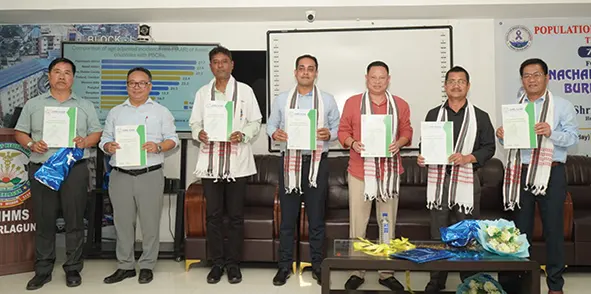
This was informed in the Arunachal Pradesh State Cancer Burden Profile 2026 Factsheet released here on Tuesday by the West Arunachal Population-Based Cancer Registry (PBCR).
The systematic cancer data collection has been ongoing since 1981 under the National Cancer Registry Programme (NCRP) of the Indian Council of Medical Research (ICMR). It is coordinated by the National Institute of NCD Epidemiology (NINE) through a network of Population and Hospital Based Cancer Registries (PBCR and HBCR). This cancer burden profile provides a comprehensive overview for Arunachal Pradesh,based on the latest NCRP data.
Earlier, during the factsheet release programme, West Arunachal PBCR principal investigator Dr Sopai Tawsik emphasised the importance of cancer registration and highlighted the contributions of West Arunachal PBCR over the past 16 years in generating reliable cancer data to support evidence-based planning, policy formulation, and cancer control activities in the state.
A detailed presentation on the Arunachal Pradesh State Cancer Burden Profile 2026 Factsheet was delivered by West Arunachal PBCR Scientist-B (Medical) Dr Mepung Liyak.
Speaking on the occasion, DHS Director Dr Marbom Basar said that the data presented in the factsheet are “both an eye-opener and a matter of concern for the Health Department as well as the people of Arunachal Pradesh.”
TRIHMS Director Dr Naba Kumar Bezbaruah highlighted that a significant proportion of cancers are associated with dietary patterns, and suggested lifestyle changes.
Addressing the gathering, Health & Family Welfare Secretary Vivek HP informed that several health screening and awareness programmes are being implemented across the state. He said that “junk food culture could also be a contributing factor for cancer.”
In his inaugural address, Health & Family WelfareMinister Biyuram Wahge underscored the importance of creating awareness among the public regarding the cancer burden in Arunachal. He advised the department to work out proposals for awareness programmes.
The programme concluded with a collective commitment from all stakeholders to strengthen cancer surveillance, promote healthy lifestyles, enhance screening services, and increase public awareness to reduce the impact of cancer in Arunachal.