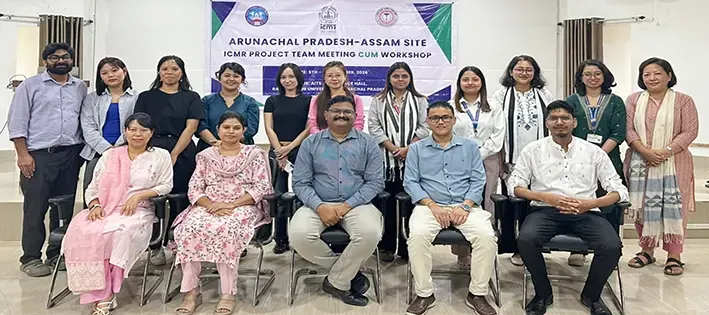
RONO HILLS, 2 Jun: The ICMR-AITS Project team of Rajiv Gandhi University (RGU) here organised a consultative-cum-stakeholder meeting of mental health professionals and advocates of Arunachal Pradesh at the university on Tuesday, with the aim of strengthening the mental healthcare system in the state.
Around 25 mental health professionals and advocates representing a diverse range of organisations and service sectors across the state, including counsellors from the District Child Protection Units, clinical psychologists, counsellors from the Tele-MANAS Cell, Arunachal Pradesh, professionals from Midpu Mental Hospital, substance abuse counsellors from Kripa Foundation and opioid substitution treatment centres, representatives from the TRIHMS, private mental health practitioners, school counsellors, and mental health advocates participated in the meeting.
The state’s Tele-MANAS in-charge Dr Hatobin Maiin his speech highlighted the significant contribution of Tele-MANAS in expanding access to mental healthcare services across the state. He also underscored the crucial role of the mental health programmes operating across 16 districts of the state in addressing mental health concerns and improving service outreach.
Principal investigator of the ICMR-AITS Project, Dr Tarun Mene, emphasised the importance of collaborative consultations among stakeholders, and described the meeting as “a historic step towards building a more coordinated and responsive mental healthcare ecosystem in Arunachal Pradesh.” He noted that meaningful progress in mental health requires sustained partnerships among professionals, institutions, communities, and policymakers.
Co-principal investigator of the project, Dr Amit Kumar, highlighted the crucial responsibility of mental health professionals in addressing the growing mental health needs of the population, and stressed the importance of collective action to strengthen support systems and service delivery mechanisms.
The consultation was facilitated by Research Scientist-II of the ICMR-AITS Project, Dr Leeyir Ete, during which family environment and parenting practices emerged as playing a pivotal role in shaping the mental health and wellbeing of individuals.
Participants at the meeting emphasised the need for greater family engagement and preventive interventions that strengthen emotional support systems within homes and communities.
Another important observation emerging from the consultation was the need to develop culturally relevant and context-specific mental health interventions, complementing conventional talk-based counselling approaches. Participants stressed the importance of incorporating local cultural practices, community resources, and indigenous knowledge systems to improve the accessibility and effectiveness of mental health services in the state.
A major outcome of the meeting was the development of a referral linkage pathway connecting mental health professionals and service providers according to their areas of expertise.