
[ Prem Chetry ]
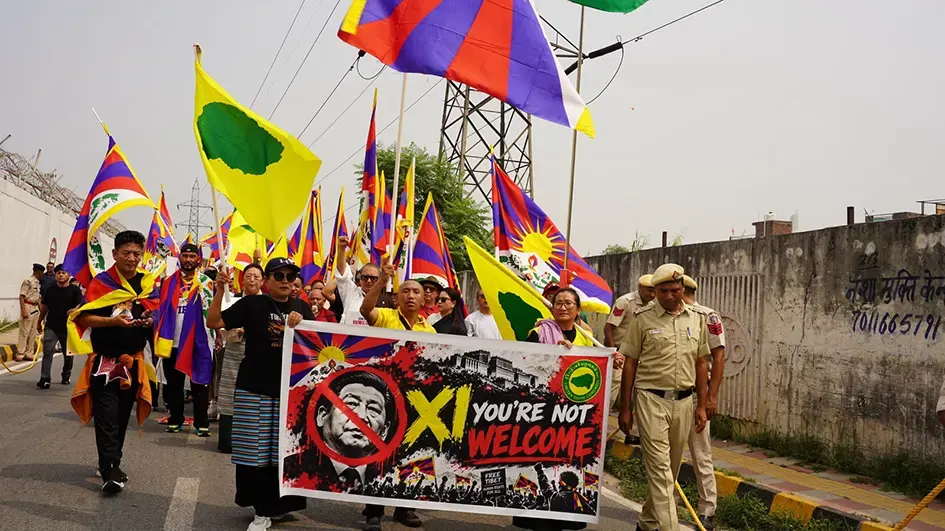
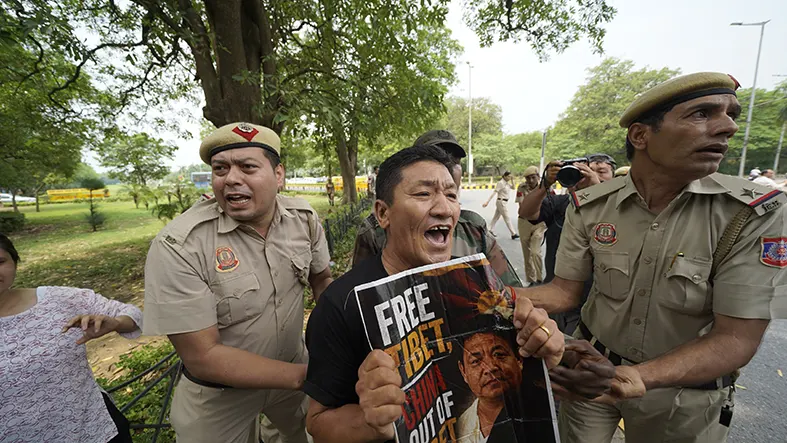
NEW DELHI, 7 Jul: Following the recent self-immolation of a Tibetan activist in the United States, the Tibetan Youth Congress (TYC) on Tuesday submitted an open letter to the embassy of the People’s Republic of China in New Delhi, expressing outrage over what it described as China’s continued repression of the Tibetan people.
Addressed to the Chinese ambassador, the letter stated that it was “not merely a letter. It is a message carried by the final sacrifice of Tibetan patriot Lobga Rangzen, whose body was engulfed in flames because our homeland has been occupied and our people are deprived of their freedom.”
Condemning what it called Chinese atrocities against Tibetans for more than seven decades, the TYC said that Rangzen’s final act was not one of despair but of resistance. “He raised the Tibetan national flag as he stood engulfed in flames and declared to the world: ‘Free Tibet, China out of Tibet.'”
On 2 July, outside the United Nations headquarters in New York City, Rangzen, also known as Lobsang Palden, livestreamed a message calling for Tibetan independence and unity before setting himself on fire while displaying the Tibetan national flag. He was taken to Bellevue Hospital, where he later died from his injuries.
The TYC said Rangzen sacrificed his life because, in his view, the root cause of the Tibetan tragedy was China’s occupation of Tibet, which has resulted in the loss of the country’s independence and the continued political control exercised by the People’s Republic of China. It said he gave his life for the cause of Tibet’s independence after decades of political repression, cultural destruction, restrictions on religious freedom, transnational repression and the implementation of the so-called ‘Ethnic Unity Law’.
Criticising the Chinese authorities, the TYC said, “You call it a law of unity. In reality, you are trying to legalise genocide, a legal mechanism designed to erase the identity of an oppressed people. A law that weakens a nation’s language, religion, culture and history cannot be called unity. Unity cannot be imposed through assimilation. Unity cannot be manufactured through fear. Unity without freedom is not unity at all.”
The organisation further alleged that for almost seven decades the Chinese communist government hasattempted to suppress and silence Tibetans both inside Tibet and across the world through military occupation, surveillance, imprisonment, propaganda, misinformation, disinformation campaigns and significant financial investment aimed at reshaping historical narratives. Despite these efforts, it said, China has failed to extinguish the Tibetan people’s aspiration for freedom.
“Despite immense pressure, Tibetans have not disappeared. They have become more resilient. Every attempt to erase our identity has strengthened our determination to preserve it. Every effort to silence us has inspired new voices to speak. Every sacrifice has produced a new generation committed to carrying forward the cause of Tibet,” the letter stated.
It further said that the dream of creating “one big China” through coercion would remain just that – a dream – as long as Tibetans continue to preserve their national identity and seek justice. “Ideas cannot be imprisoned. History cannot be rewritten simply through repetition. National identity cannot be erased by decree,” the letter added.
Referring to Rangzen’s final message, the TYC said he had made his position unmistakably clear: “The root cause of the Tibetan issue is that Tibet lost its independence after China took control of our land.”
Reaffirming its stand, the TYC said it has never wavered in its belief that the Tibetan people have the right to determine their own future, and that its mission remains unchanged – to reclaim Tibet from what it described as foreign occupation.
The organisation said this is an important moment for the government of the People’s Republic of China to resume sincere and meaningful dialogue with the Tibetan government-in-exile. “Dialogue is not a sign of weakness. It is the mark of confidence. Nations secure in their legitimacy do not fear conversation. History has shown that governments can suppress protests, imprison individuals and control information, but they cannot permanently extinguish a people’s aspiration for freedom and dignity,” it said.
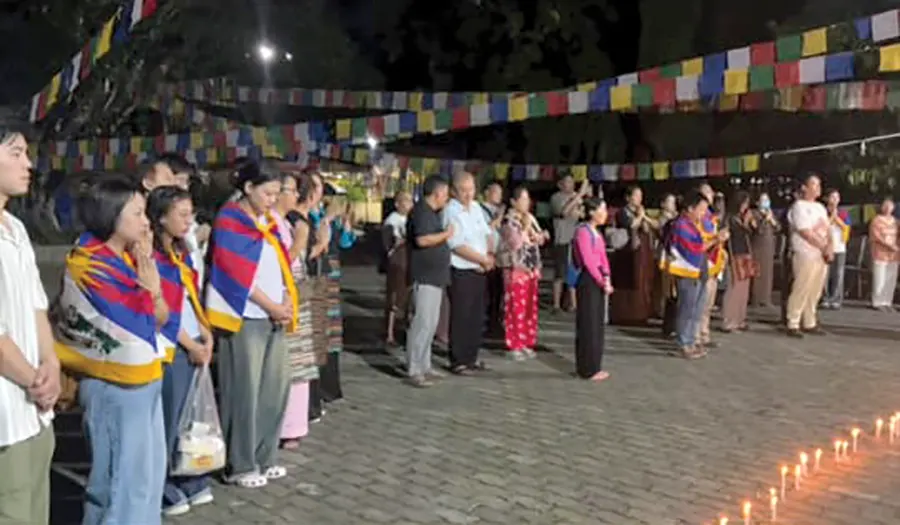
The TYC further stated that the world has changed, with information now travelling across borders in seconds, and attempts to conceal injustice is facing greater international scrutiny than ever before. It said Lobga Rangzen’s sacrifice would never be forgotten and would continue to inspire future generations. “It should serve as a warning that unresolved political conflicts continue to carry profound human consequences,” it added.
Calling on China to end what it described as illegal occupation of Tibet, the TYC urged Beijing to respect the Tibetan people’s inherent right to self-determination. It said that the Chinese government must recognise the legitimate aspirations of the Tibetan people and restore Tibet’s independence. Lasting peace and stability, it argued, cannot be achieved through repression, forced assimilation or military control, but only by respecting the will of the Tibetan people.
Concluding the letter with a warning, TYC said: “History will judge not only those who resisted oppression, but also those who had the opportunity to pursue peace and chose otherwise. Act now, or regret later.”