[ Prem Chetry ]
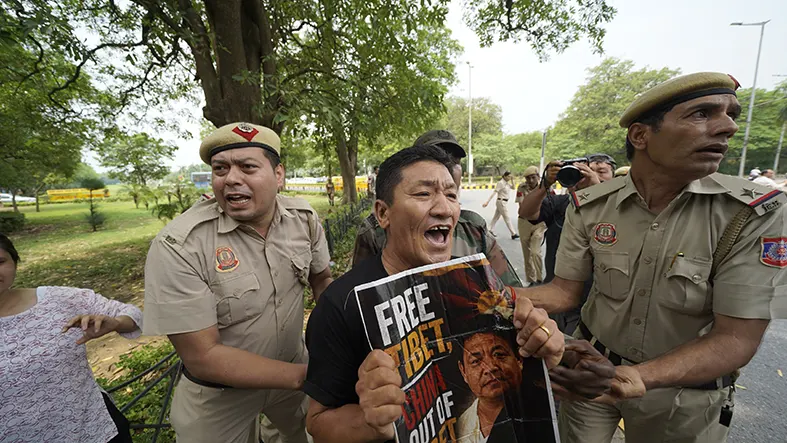
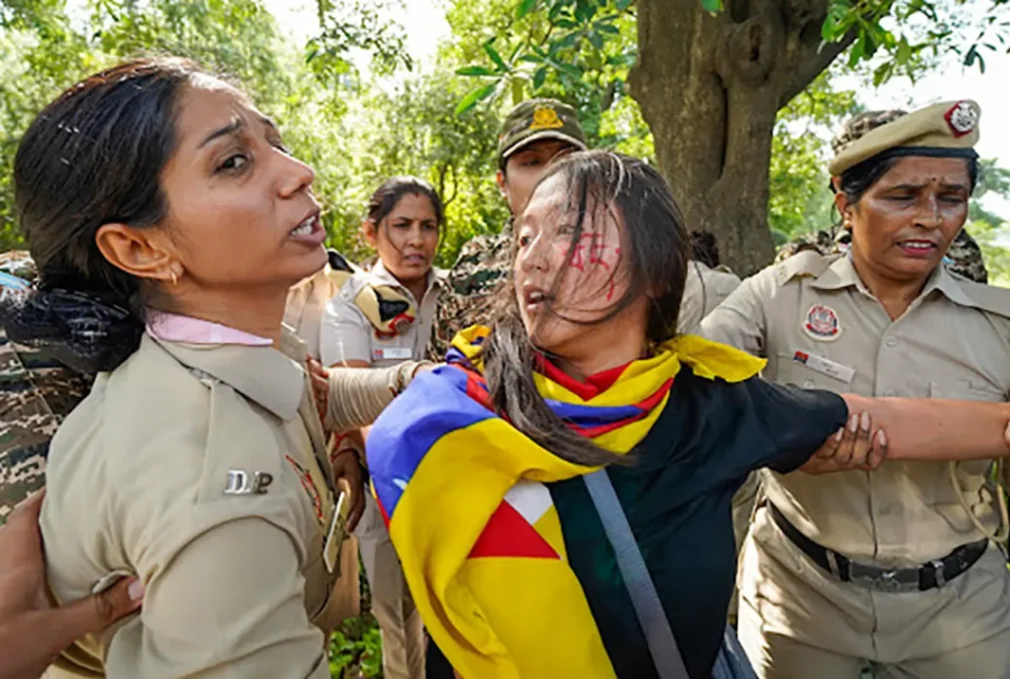
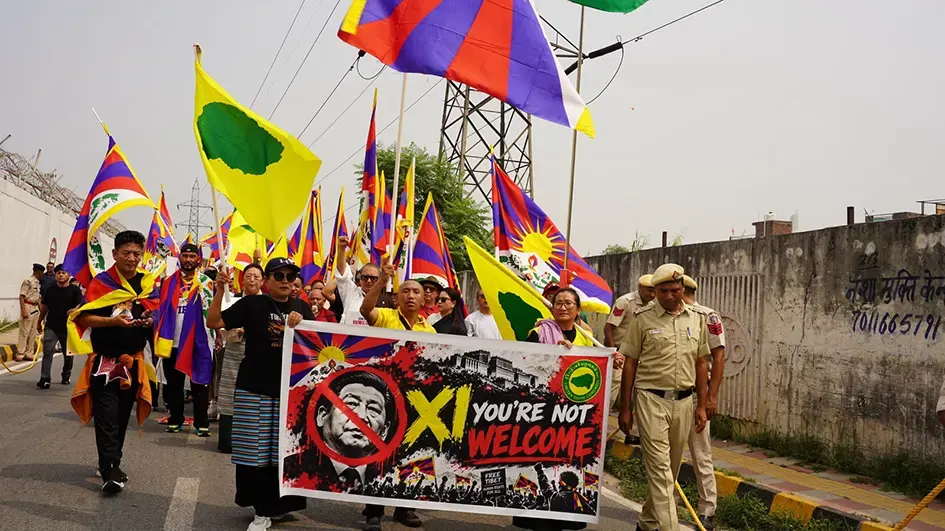
NEW DELHI, 11 Sep: Ahead of the 18th BRICS summit in New Delhi, the Tibetan Youth Congress (TYC) vehemently condemned and opposed the participation of Chinese President Xi Jinping in the summit, accusing him of being the primary architect of the ongoing cultural genocide in Tibet.
The TYC also alleged that the Chinese premier bears direct responsibility for the systematic loss of Tibetan lives both through state-sanctioned violence and the avoidable tragedies of recent environmental disasters caused by uncontrolled engineering on the Tibetan plateau.
It urged India and other member state nations to raise the issue of Tibet with the Chinese leadership during the summit to advance international cooperation and strengthen global governance.
"As India is hosting the BRICS summit, we respectfully remind the international community that Tibet is not a forgotten issue. Tibet is a living question with consequences for human rights, religious freedom, environmental protection, water security, India's national security, and the future stability of Asia."
"Tibetan Youth Congress believes that peace cannot be built upon silence, stability cannot be achieved through repression, and development cannot justify the destruction of a people's identity or environment. Tibet must not be forgotten. The Tibetans must not be silenced. And the question of Tibet must not be ignored," the TYC said in a press statement.
It stated that for the past seven decades, Chinese policies in Tibet have resulted in systematic erosion of Tibetan culture, language, religion, and identity - such practices that many scholars, parliamentarians, and human rights advocates have described as cultural erasure and forced assimilation.
It criticised China's recently introduced 'Ethnic Unity and Progress Law', which seeks to institutionalise the erasure of Tibet's distinct identity, culture, language, religion, and heritage under the guise of ethnic unity and development.
The TYC stated that the legislation has further intensified the systematic assimilation of Tibetans and the marginalisation of their distinct cultural identity.
"The law, which was imposed on 1 July this year, and the very next day, Tibetan martyr Lobga Rangzen self-immolated before the UN headquarters for the cause of Tibet, becoming a tragic reminder of China's repression. Nearly 170 Tibetans have self-immolated in protest as of now," it said.
The TYC said that, during international cooperation among member states, they cannot remain blind to the realities of Chinese colonial rule in Tibet. Genuine global cooperation and responsible governance must also address the human rights, cultural, and political consequences of policies that threaten the survival of Tibet's distinct identity and heritage, including other occupied nations of China.
"We condemn China's interference in Tibetan Buddhism and violating the religious freedom and traditions of Tibetan Buddhists," it said, adding that the recognition of His Holiness the 15th Dalai Lama is a deeply spiritual matter that must be conducted according to Tibetan Buddhist traditions, free from political coercion or state interference.
The TYC said that the 14th Dalai Lama has clearly affirmed that the Gaden Phodrang Trust holds sole authority over the recognition of his future reincarnation. China has no legitimate religious authority to dictate or interfere in this process.
It also demanded immediate and unconditionally release of all Tibetan political prisoners, human rights defenders, climate and environmental activists, religious figures, artists, and other Tibetans detained for peacefully exercising their fundamental rights, including the 11th Panchen Lama, Gedhun Choekyi Nyima.
"Since China's military occupation of Tibet, India and China have repeatedly attempted to address their border disputes, yet a lasting solution remains elusive, as there can be no lasting solution without addressing the fundamental issue of Tibet.
"In the name of development and progress, China has pursued extensive exploitation of Tibet's fragile environment through large-scale mining, dam construction, river diversion, and other major infrastructure projects, resulting in degradation of Tibet's environment.
"The recent flash flood in the Nepal-Tibet border serves as a stark reminder to the global community that no neighbouring state can afford to remain silent on the environmental destruction and large-scale dam construction taking place in Tibet," the press statement said.
The TYC said also that Tibet is Asia's water lifeline and one of the world's most fragile and seismically active regions. Unchecked dams, infrastructure projects, and control of Tibet's rivers pose growing environmental and security risks to Tibet and millions of people across India, Bangladesh, and Southeast Asia. With climate and seismic risks intensifying, the international community can no longer remain on the sidelines, it said.
"We call on governments, UN bodies, and regional institutions to demand transparency, independent environmental assessments, meaningful consultation with affected communities, and binding cooperation on transboundary rivers," the TYC said, adding that China's control over rivers originating from occupied Tibet could have catastrophic consequences for India and Bangladesh, including countries across Southeast Asia such as Vietnam, Laos, Thailand, and Cambodia.
It said that Tibet's waters must not be weaponised or used as instruments of geopolitical control,adding that protecting these shared rivers is a collective responsibility, essential to the security and future of Asia.
The TYC congratulated India on hosting the BRICS summit and commended its leadership in advancing dialogue, cooperation, partnership, and shared prosperity among BRICS member states.
"We also express our deep appreciation for India's longstanding hospitality towards the Tibetan people and the Tibetan Government-in-Exile for more than six decades," the statement added.